
Written by: Segun Akomolafe
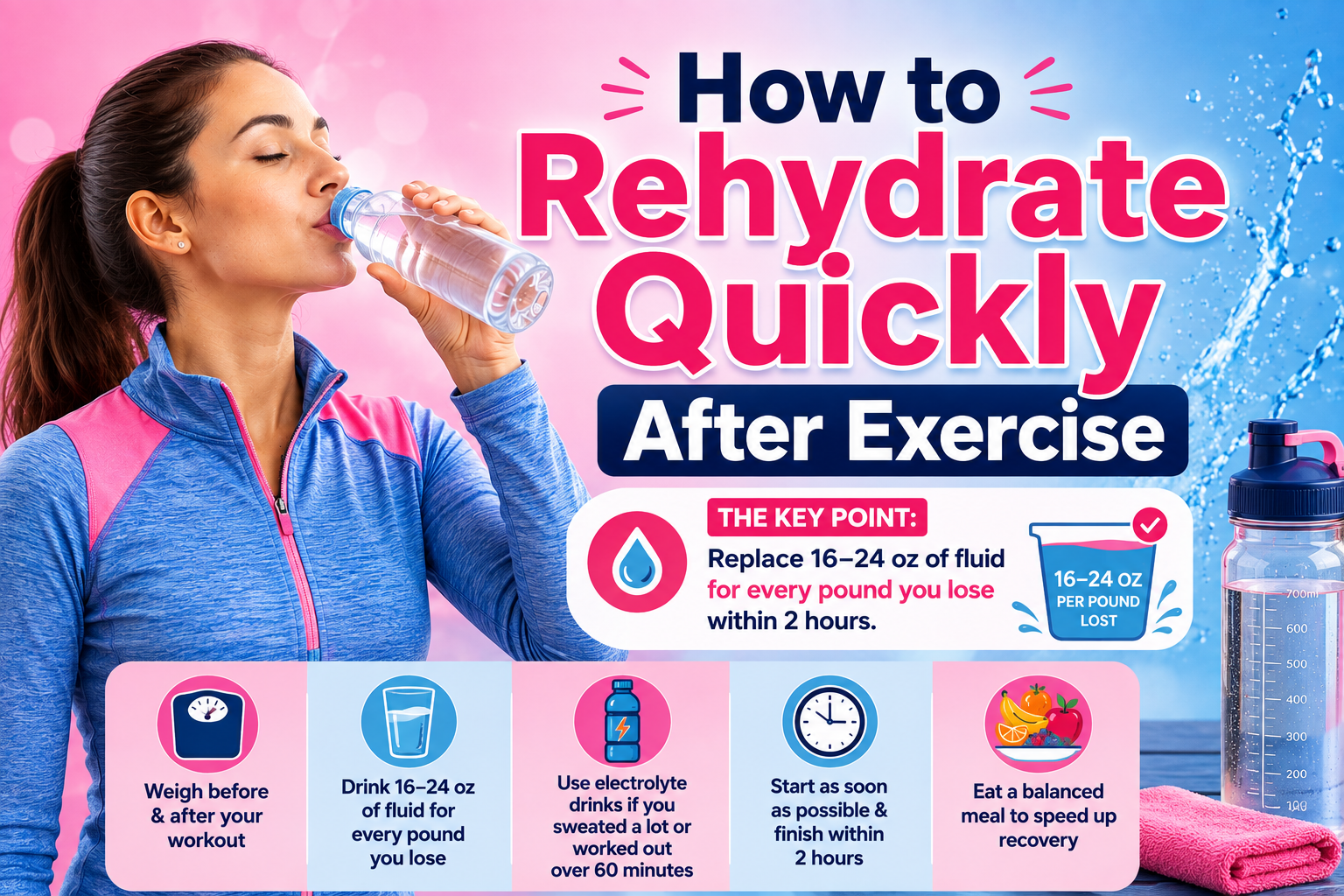
Sweat is essentially your body pulling water and sodium straight from your bloodstream to cool you off, and that fluid doesn’t walk back in by itself once you stop moving. The key to hydrating quickly after a workout usually comes down to one simple ratio: replace about 16 to 24 ounces of fluid for every pound you lose on the scale in the two hours after your workout is done. If you sweated through your shirt or trained in a hot place, add some sodium and you’re most of the way there already. The math is not the hard part, it is the timing.
Here’s how much fluid you really lose in a workout, which drinks beat plain old water, and how long real rehydration takes after you’ve finished your last rep or crossed the finish line.
Quick Answer
If you don’t have a minute or 60 seconds, there’s a short version. Weigh yourself before and after your workout and drink 16 to 24 ounces of fluid for each pound of weight you lose, starting as soon as reasonably possible and finishing in about two hours. If it was less than an hour, stay with plain water. If you were out there longer or sweating heavily, bring in an electrolyte drink or something with sodium. That is how you get rehydrated fast after exercise, no complex formulas needed.
Why Rushing Rehydration Actually Matters
Most people consider rehydration as a second thought, something to do when they find a bottle of water. But when you lose fluid, your blood volume drops and that means your heart has to work harder to pump the same amount of oxygen around your body, and it also eats away at your ability to cool yourself down. The National Athletic Trainers’ Association Journal states that rehydration should occur within two hours of finishing exercise and should be about 150 percent of the fluid lost, because some of what you drink is processed as urine before your body fully absorbs it.
Simply put, if you want to be properly hydrated an hour or two from now, drink more than what the scale says you lost, not less. That’s a big reason why knowing how to rehydrate quickly after exercise actually pays dividends, especially if you’re training again the next morning, or heading straight into a full day at work.
How Much Fluid You’re Actually Losing
Sweat rate isn’t one size fits all, and the sport you’re doing matters more than most people assume. A large-scale analysis of 1,303 athletes published in the Journal of Sports Sciences found that average whole body sweat rates ranged from about 0.83 liters per hour in baseball players up to 1.51 liters per hour in American football players, with endurance athletes landing somewhere around 1.28 liters per hour. Two people doing what looks like the same workout can genuinely lose very different amounts of fluid.
The easiest way to get a number that actually applies to you, instead of a generic guideline, is to weigh yourself right before and right after a typical session, without eating or using the bathroom in between. Every pound you lose works out to roughly 16 ounces of sweat.
Weight Lost After Exercise | Fluid Needed to Rehydrate | Recommended Timeframe |
|---|---|---|
1 lb (about 0.45 kg) | 16 to 24 oz (480 to 720 ml) | Within 2 hours |
2 lb (about 0.9 kg) | 32 to 48 oz (950 ml to 1.4 L) | Within 2 to 3 hours |
3 lb (about 1.4 kg) | 48 to 72 oz (1.4 to 2.1 L) | Spread across 3 to 4 hours |
4+ lb (1.8+ kg) | 64+ oz (1.9+ L), add sodium | Spread across the rest of the day |
Notice the amounts always sit a little above what actually came off the scale. That’s the 150 percent rule doing its job, and it’s the same math sports scientists lean on when they build rehydration plans for athletes at every level, not just elite ones.
The Fastest Drinks for Rehydrating After a Workout
Not every drink hydrates you at the same speed, and that honestly surprises a lot of people. A randomized trial published in the American Journal of Clinical Nutrition tested thirteen commonly consumed drinks and measured how much of each one the body actually retained versus how much came right back out as urine. Full fat milk and skimmed milk both outperformed plain water, each posting a Beverage Hydration Index of roughly 1.5, meaning the body held onto noticeably more fluid from milk over four hours than from the same volume of water.
That doesn’t mean you should ditch water and start chugging milk after every jog around the block. But it does explain why some drinks feel like they work better for rehydrating after a workout, because in a measurable sense, they actually do.
Quick guide to what to reach for
- Under 60 minutes of moderate effort: plain water covers it
- Over 60 minutes or heavy sweating: water plus an electrolyte drink or oral rehydration solution
- Hot, humid conditions: prioritize sodium, since losses climb faster than most people expect
- Recovery focused sessions: milk or a milk based recovery drink, which research shows the body retains unusually well
- No drink on hand: water rich foods like watermelon, oranges, or a bowl of soup
Situation | Best Choice | Why It Works |
|---|---|---|
Short, easy workout (under 60 min) | Water | Covers normal fluid loss without extra sugar or sodium |
Heavy sweating or over 60 minutes | Electrolyte drink or ORS | Replaces sodium and speeds up fluid retention |
Hot or humid weather | Higher sodium electrolyte drink | Sweat sodium losses rise sharply in the heat |
Muscle recovery focus | Milk or a milk based drink | Shows a higher Beverage Hydration Index than water |
On the go, nothing to drink | Water rich foods (watermelon, oranges, soup) | Adds fluid and electrolytes through food |
Sweat also carries sodium, and how much varies enormously from one person to the next, more than most people realize until they actually taste the salt crusted on their skin after a long run. If you’re a heavy or salty sweater, plain water by itself probably won’t cut it, even on a moderately paced workout.
Read more: How to Stay Hydrated During Exercise: 7 Simple Tips
A Simple Timeline for Rehydrating Fast
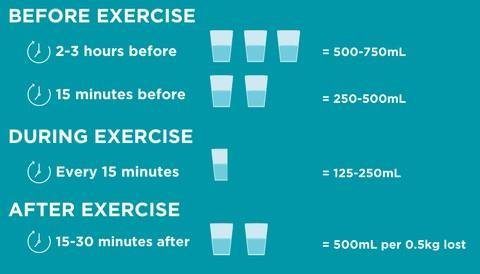
Timing changes things more than people expect. Drinking the right total amount too slowly, or dumping it all in at once way too fast, both work against you in different ways.
In the First 10 to 15 Minutes
Start sipping right away, even before you’ve fully caught your breath. Cool water tends to get absorbed a touch faster than room temperature water and usually feels better on a hot stomach anyway.
Within the First 30 to 60 Minutes
This is where most of the actual rehydrating happens. If you sweat heavily, this is the window to bring in electrolytes instead of waiting until you’re already feeling foggy or dealing with a cramp.
By the Two Hour Mark
You should have replaced roughly 150 percent of what you lost by now. If you weighed yourself right after finishing, this is a good moment to check again. Your weight should be close to where you started, or just slightly under it.
Time After Exercise | What To Do | Goal |
|---|---|---|
0 to 15 minutes | Start sipping water or a diluted electrolyte drink | Begin replacing fluid before thirst kicks in |
15 to 60 minutes | Drink steadily, add sodium if sweat was heavy | Cover the bulk of your fluid deficit |
1 to 2 hours | Finish remaining fluid, eat a meal with some salt | Reach roughly 150 percent of fluid lost |
2 to 24 hours | Continue normal fluid intake, watch urine color | Confirm you’re fully rehydrated |
If you’re wondering how to rehydrate quickly after exercise when you genuinely don’t have two hours to spare, you don’t need the full window to feel normal again. Most of the deficit gets handled in that first hour, as long as you start early instead of waiting around for thirst to remind you.
Signs You Haven’t Rehydrated Enough
Your body tends to flag this pretty clearly once you know what to actually watch for, and the symptoms usually show up later than you’d expect, sometimes hours after your workout is technically over.
- Urine that’s still dark yellow a few hours after you finish
- A headache that shows up an hour or two post workout
- Muscle cramps, especially in your calves, later that same day
- Feeling unusually tired well after you’ve cooled down and showered
- Dry mouth that plain water doesn’t seem to fix
- Lightheadedness when you stand up too quickly
Mistakes That Slow Down Rehydration
A handful of habits quietly work against you here, and most people don’t even realize they’re doing them.
- Chugging a large amount of water all at once instead of spacing it out, which just sends you to the bathroom faster
- Relying only on thirst, since thirst usually shows up after you’re already behind
- Skipping sodium after a long, sweaty session and then wondering why you still feel off
- Treating last night’s coffee or alcohol as unrelated to how well you rehydrate the next day
- Assuming a sports drink automatically beats water, even for a short, easy workout
Fixing even two or three of these habits is often the real answer to how to rehydrate quickly after exercise, more than any specific drink or supplement you choose.
Read more: 8 Water-Rich Foods That Help You Stay Hydrated
Does It Actually Matter How Fast You Rehydrate
Rehydrating fast isn’t about panic, and it isn’t about being perfect either. It’s about giving your body what it needs before the next demand shows up, whether that’s another training session, a full day at work, or just feeling like yourself again by dinner. Putting off full rehydration until tomorrow leaves you training or working in a mild deficit, and that adds up over a week even when any single day feels fine on its own.
For most people who train regularly, understanding how to rehydrate quickly after exercise becomes second nature after a handful of sessions. Weigh in occasionally, keep an eye on urine color, and adjust upward whenever it’s hot outside or your session runs long.
Read more: How Much Water Should You Drink a Day? A Complete Hydration Guide
Conclusion
None of this needs to be complicated. Weigh yourself, aim to drink roughly 150 percent of what you lost, lean on plain water for shorter sessions and bring in electrolytes for longer or sweatier ones, and give yourself about two hours to finish the job. That’s really the whole story behind how to rehydrate quickly after exercise, and once it becomes routine, you’ll stop overthinking it and just feel better, faster, after every single workout.
FAQs
Here are direct answers to the questions that fitness experts ask on how to rehydrate quickly after exercise.
How fast can I fully rehydrate after a workout?
Most people replace the bulk of their fluid loss within one to two hours by drinking 16 to 24 ounces per pound lost, adding sodium if they sweated heavily or trained in the heat. Use electrolyte sports drinks to replace cellular hydration lost during exercise and promote optimal post-exercise recovery to avoid muscle cramps during intense workouts and speed up your workout recovery time with proper hydration.
Is plain water enough to rehydrate quickly after exercise?
Plain water works well for sessions under an hour. For longer or sweatier workouts, add an electrolyte drink, milk, or a rehydration solution, since water alone won’t replace the sodium you’re losing. Replenish vital minerals to maximize your post-workout recovery, avoid muscle cramps and fight exercise-induced dehydration to return to peak physical performance quickly.
What are the signs I haven’t rehydrated properly after exercise?
Dark yellow urine, a delayed headache, muscle cramps, dry mouth, and lingering tiredness hours after your workout usually mean you need more fluid and, often, more sodium. Track your sweat rate and consume electrolyte drinks to prevent heat illness, boost athletic performance and ensure optimal recovery.
Related Contents:
- How to Stay Hydrated During Exercise: 7 Simple Tips
- How Much Water Should You Drink a Day? A Complete Hydration Guide
- 8 Water-Rich Foods That Help You Stay Hydrated
- 8 Best Workouts to Keep You Healthy
- 7 Easy Ways To Improve Your Daily Fitness
- 12 Tips for Healthy Weight Loss
- How Do Fitness Trackers Measure Calories Burned? Expert Analysis
- Top 20 Ways to Relieve Stress and Anxiety
- The Basics of Hydration: How Water Affects Your Energy, Fitness, and Athletic Performance