
Written by: Segun Akomolafe
So you’ve heard about people making money online while they sleep, and someone mentioned affiliate marketing. Sounds almost too good to be true, right? Well, it’s not magic — but it is one of the most beginner-friendly ways to earn passive income online. This guide covers everything you need to know about affiliate marketing for beginners, step by step, with no fluff.
Whether you’re a website owner, content creator, or just someone curious about digital income streams, stick around. You’ll learn exactly how the whole thing works, what it takes to get started, and — yes — what to realistically expect.
What Is Affiliate Marketing?
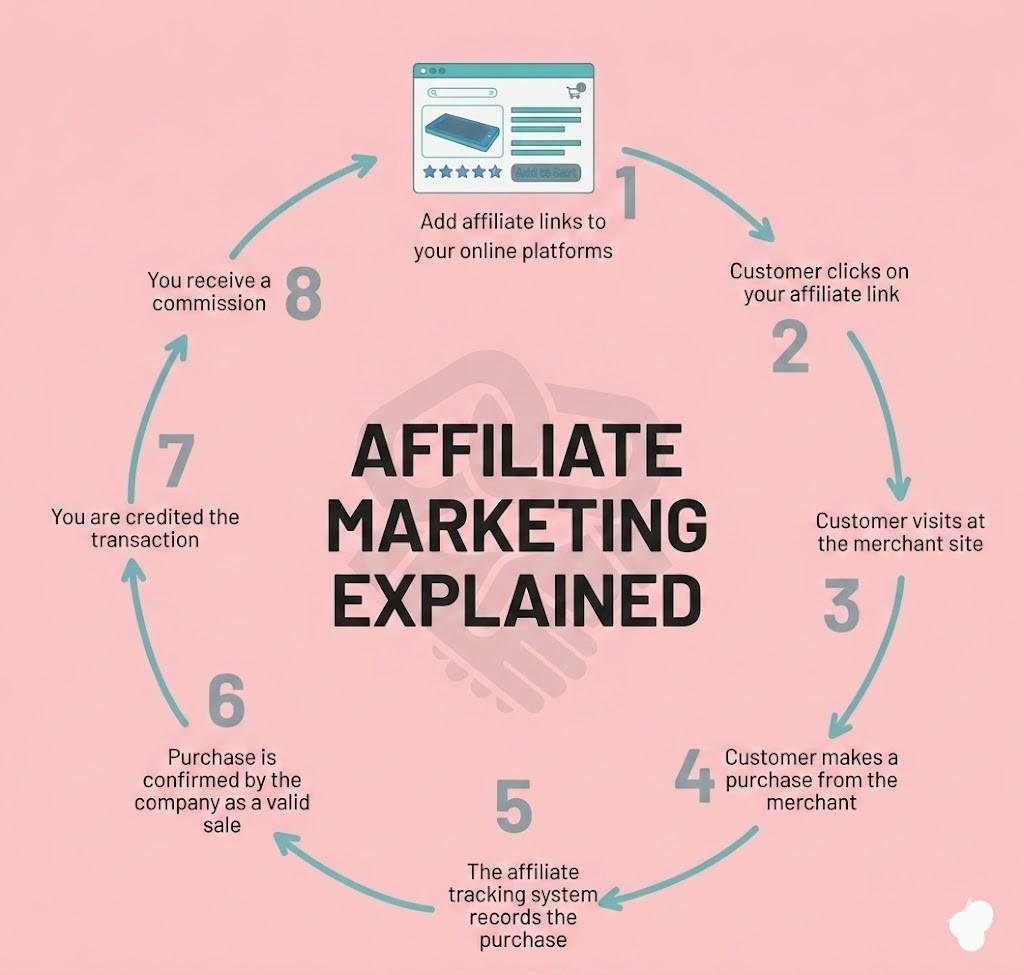
Affiliate marketing is a performance-based model where you earn a commission by promoting a company’s product or service. You share a unique link; someone clicks it and makes a purchase; you get paid a percentage. Simple as that.
Think of it like being a salesperson, except you’re working on your own schedule, from anywhere, without holding any inventory or dealing with customer service. For anyone exploring affiliate marketing for beginners, this is probably the most attractive part — low overhead, flexible, and scalable.
The global affiliate marketing industry is now worth over $17 billion, and it’s growing fast. Brands love it because they only pay for results. You’ll love it because you don’t need to create a product to profit from one.
Read more: Influencer Marketing You Need To Know
The 4 Key Players in Affiliate Marketing
Before you dive in, it helps to understand who’s involved. Affiliate marketing for beginners can feel overwhelming, but the structure is actually quite clean. There are four main players:
| Player | Who They Are | What They Do |
|---|---|---|
| The Merchant | The brand or product creator | Creates the product and runs the affiliate program |
| The Affiliate | You — the promoter | Promotes products using a unique tracking link |
| The Consumer | Your audience | Clicks your link and (hopefully) makes a purchase |
| The Network | Platforms like ShareASale, CJ | Connects merchants with affiliates and tracks payments |
Each player has a role. Your job as an affiliate is to bridge the gap between the merchant and the consumer — and do it in a way that feels natural and helpful, not pushy.
How Affiliate Marketing Works: Step by Step
Here’s the actual process, broken down simply:
- Step 1 — You join an affiliate program (Amazon Associates, ShareASale, ClickBank, etc.)
- Step 2 — You get a unique tracking link for the product you want to promote
- Step 3 — You share that link in your blog, YouTube video, email newsletter, or social media post
- Step 4 — A visitor clicks your link and lands on the product page
- Step 5 — If they buy (within the cookie window), you earn a commission
- Step 6 — The affiliate network tracks the sale and logs your earnings
- Step 7 — You get paid on a set schedule — weekly, bi-weekly, or monthly
That’s the whole loop. The beauty of affiliate marketing for beginners is that once your content is live, it keeps working for you. A post published today could still drive commissions six months from now.
Read More: What is Digital Marketing?
Types of Affiliate Programs You Should Know
Not all affiliate programs are created equal. The type you choose affects how much you earn, how you promote, and how fast you see results. Here’s a quick comparison:
| Program Type | How You Earn | Best For | Example |
|---|---|---|---|
| Pay Per Sale (PPS) | Commission on each sale | Bloggers & review sites | Amazon Associates |
| Pay Per Lead (PPL) | Commission per sign-up or form fill | Finance & SaaS niches | Credit card offers |
| Pay Per Click (PPC) | Earn per click on your link | High-traffic websites | Some ad networks |
| Recurring Commissions | Monthly % from subscriptions | Software & membership | ConvertKit, SEMrush |
Recurring commissions are often the holy grail for affiliate marketers. If someone signs up for a $99/month SaaS tool through your link and you earn 30%, that’s nearly $30 every month — from one referral.
How to Get Started with Affiliate Marketing (Even with Zero Experience)
One of the biggest questions in affiliate marketing for beginners is: ‘Where do I even start?’ Here’s a practical path that works:
- Pick a niche you actually care about — fitness, personal finance, tech gadgets, cooking, travel
- Choose your content platform — a website, YouTube channel, newsletter, or Instagram page
- Sign up for relevant affiliate programs — start with Amazon Associates or ShareASale
- Create helpful content that naturally includes your affiliate links (reviews, how-tos, comparisons)
- Drive traffic through SEO, social media, email, or short-form video
- Track your performance and double down on what converts
You don’t need a massive audience to start earning. Even 500 engaged readers a month can generate real income if you’re promoting the right products to the right people.
How Much Can You Realistically Earn?
Here’s the honest truth: most beginners don’t make much from content marketing in their first three months. But once content builds up and SEO kicks in, things can shift quickly. Commission rates vary widely by niche:
| Niche | Typical Commission Rate | Average Conversion Rate | Earnings Potential |
|---|---|---|---|
| Software / SaaS | 20–40% (recurring) | 2–5% | High |
| Finance & Credit Cards | $50–$200 per lead | 1–3% | Very High |
| Health & Wellness | 10–30% per sale | 2–4% | Medium–High |
| Fashion & Lifestyle | 5–15% per sale | 1–3% | Medium |
| Amazon Products | 1–10% per sale | 5–10% | Low–Medium |
The sweet spot is finding a niche with decent commissions AND solid buyer intent. Someone searching ‘best project management software for freelancers’ is way closer to buying than someone browsing ‘what is affiliate marketing.’
Benefits and Honest Challenges of Affiliate Marketing
This section contains a detailed lists of the benefits and honest challenges of affiliate marketing for beginners
The Benefits
- Low startup cost: You don’t need to create or stock products
- Passive income potential: Your content works around the clock
- Flexible and location-independent: You can work from anywhere
- Scalable: more content means more potential earnings over time
- No customer service headaches: the merchant handles all of that
The Real Challenges
- It takes time — most affiliates see real results only after 6–12 months
- Algorithm changes on Google or social platforms can tank your traffic overnight
- Commission rates can be cut at any time (Amazon has done this multiple times)
- Competition is fierce — especially in popular niches
Knowing both sides going in makes affiliate marketing for beginners a much more realistic journey. It’s not a get-rich-quick scheme. But with consistency, it absolutely works.
Read More: The 4 Best AI Apps For Marketers
Frequently Asked Questions (FAQs)
Here are answers to the most important questions beginners ask about affiliate marketing.
1. Do I need a website to start affiliate marketing?
Not necessarily. You can promote affiliate links through YouTube, TikTok, Instagram, or email newsletters. However, having a website gives you more control, better SEO reach, and long-term traffic stability.
2. How long does it take to earn money from affiliate marketing?
Most beginners start seeing income within three to six months of consistent effort. Results depend heavily on your niche, content quality, traffic volume, and the affiliate programs you’ve chosen to promote.
3. Is affiliate marketing legal and legitimate?
Yes, it’s completely legal. However, you must disclose affiliate relationships to your audience per FTC guidelines. Always ensure your affiliate disclosures are clear, conspicuous and placed immediately before your affiliate links or recommendations. Transparency actually builds trust and can improve your conversions over time significantly.
Conclusion
Affiliate marketing for beginners doesn’t have to be complicated. At its core, it’s about connecting people with products they already want to buy — and earning a commission when they do. You don’t need a huge following or a big budget to get started. You just need a niche, a platform, a little patience, and the willingness to keep showing up.
The best time to start was a year ago. The second best time? Today. Pick your niche, join an affiliate program, and create that first piece of content. The results might surprise you.
Related Contents:
- Influencer Marketing You Need To Know
- The Ultimate Guide to Instagram Marketing
- The Ultimate Guide to Growing Your Online Business
- The Ultimate Guide to YouTube Marketing
- The 4 Best AI Apps For Marketers
- How to Measure Influencer Marketing ROI
- What is Digital Marketing?
- How to Measure Digital Marketing Success: Essential Metrics and Analytics Guide
- Micro-Influencers vs. Mega-Influencers: Which Delivers Better ROI?
- How to Start Affiliate Marketing While Growing Your Audience