
Written by: Segun Akomolafe
The weekend arrives and you basically make a sincere promise to yourself that this week will be different, you will eat healthily, lose weight and follow your plan. However, you are too tired to prepare meals on Wednesday so you once more eat fast food. Sound familiar? You’re not alone. It is not about the strength of your will, rather you have not found the weight loss power of meal prep.
Here’s the scoop: people who meal prep drop an average of 6.2 pounds over 12 weeks without trying to diet. Why? When you’ve got healthy food ready to go, you’ll eat it. No snap choices. No battles with yourself. Just outcomes. And the kicker? You don’t need to be living in the kitchen or spend all day cooking to make it happen.
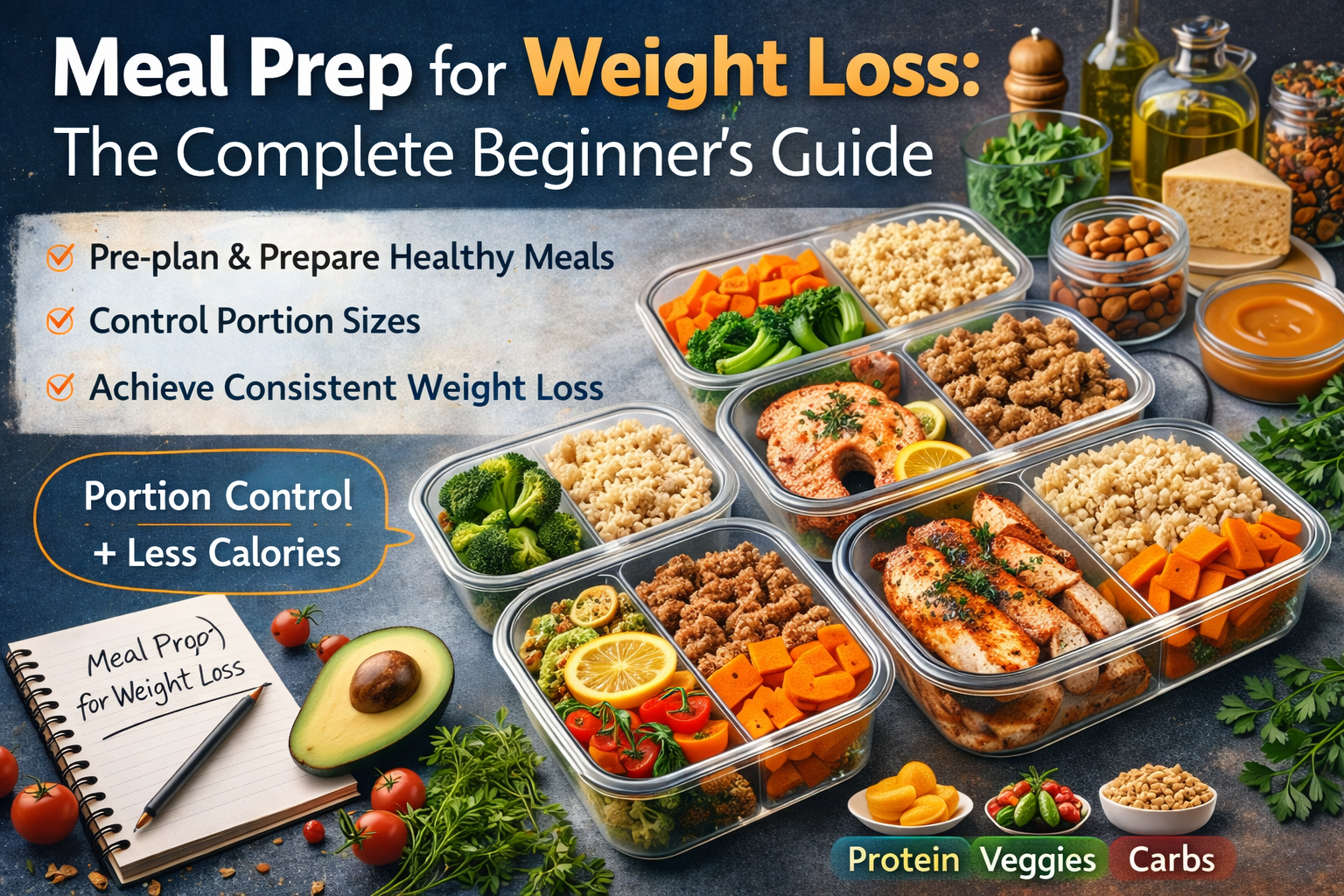
What Makes Meal Prep for Weight Loss Different
Most people think meal prep is just cooking in bulk and eating the same boring meals all week. That’s why they quit after a few days. Real meal prep for weight loss is strategic. It’s about preparing components—not complete meals—so you can mix and match throughout the week. It’s actually a very simple and easy thing.
Think of it like having a salad bar in your fridge. You’ve got grilled chicken, roasted vegetables, quinoa and pre-portioned dressings. Monday, you make a bowl. Tuesday, you wrap it in a tortilla. Wednesday, you toss it over greens. Same ingredients, different experiences. This approach keeps your taste buds happy while your waistline shrinks.
The weight loss happens because you’re controlling portions and ingredients. Restaurant meals average 1,200 calories. Your prepped meal? Around 400-600 calories with the right balance of protein, carbs, and fats. Over a week, that’s a deficit of 4,200-5,600 calories—enough to lose 1-1.5 pounds without feeling deprived.
Read more: How to Build a Sustainable Workout Routine
The Three Pillars of Successful Meal Prep
After working with hundreds of people on their weight loss journeys, I’ve identified three non-negotiable pillars that make meal prep for weight loss actually work:
Pillar 1: Protein-Centered Preparation
Your protein source is the anchor of every meal. Grill 3-4 pounds of chicken breast, bake salmon fillets, or prepare ground turkey. Protein keeps you full longer, preserves muscle mass during weight loss, and requires more calories to digest than carbs or fats.
Pillar 2: Carb and Vegetable Variety
Roast a sheet pan of vegetables—broccoli, bell peppers, zucchini, and Brussels sprouts. Cook two types of carbs: brown rice and sweet potatoes. This variety prevents boredom and provides different nutrients your body needs for optimal fat burning.
Pillar 3: Portion Control Containers
Invest in glass containers with dividers. They force proper portions automatically. One section for protein (size of your palm), one for carbs (size of your fist) and the rest for vegetables. No measuring, no guessing, no overeating.
Cooked meals typically last 3–4 days in the refrigerator. Freeze meals for longer storage but consume within 1–3 months.
Read more: 12 Tips for Healthy Weight Loss
Your Weekly Meal Prep Schedule
Success in meal prep for weight loss comes from having a system. Here’s a proven schedule that takes 2-3 hours on Sunday but saves you 10+ hours during the week:
|
Time |
Task |
What You’ll Prep |
|---|---|---|
|
0-30 min |
Protein preparation |
Season and cook 3-4 lbs of chicken, salmon, or turkey |
|
30-60 min |
Vegetable roasting |
Roast 3-4 cups each of broccoli, peppers, zucchini |
|
60-90 min |
Carb cooking |
Cook 4 cups brown rice and bake 4 sweet potatoes |
|
90-120 min |
Assembly & storage |
Portion into containers, label with dates, refrigerate |
Read more: Strength Training for Beginners: A Detailed Guide
Common Mistakes That Sabotage Weight Loss
Even with the best intentions, these mistakes can stall your progress with meal prep for weight loss:
Mistake 1: Making Too Much Too Soon
Beginners prep 20 meals their first week, then burn out. Start with 5-7 meals. Master the basics before scaling up. Quality over quantity wins every time.
Mistake 2: Ignoring Seasoning and Flavor
Plain chicken and steamed broccoli might work for three days, but by day four, you’ll hate it. Use herbs, spices, and marinades liberally. Flavor doesn’t have calories—use it to your advantage.
Mistake 3: Not Planning for Snacks
Hunger strikes between meals. If you don’t have healthy snacks prepped, you’ll hit the vending machine. Portion out nuts, cut vegetables with hummus, or prepare protein balls. These small preparations prevent big setbacks.
Read more: 8 Best Workouts to Keep You Healthy
Smart Shopping for Meal Prep Success
Effective meal prep for weight loss starts at the grocery store. Your shopping list should focus on whole foods with minimal processing. Here’s what belongs in your cart:
Proteins: Chicken breast, ground turkey, salmon, eggs, Greek yogurt, and cottage cheese. Buy in bulk when on sale and freeze what you won’t use within 3-4 days.
Vegetables: Focus on cruciferous vegetables (broccoli, cauliflower), leafy greens (spinach, kale) and colorful peppers. Frozen vegetables are equally nutritious and often cheaper than fresh.
Carbohydrates: Brown rice, quinoa, sweet potatoes, oats and whole wheat pasta. These provide sustained energy without blood sugar spikes.
Healthy Fats: Avocados, olive oil, nuts, and seeds. These keep you satisfied and support hormone production crucial for fat loss.
Budget tip: Meal prepping actually saves money. The average American spends $250-$350 monthly eating out. With meal prep, you’ll spend $150-$200 on groceries while eating healthier. That’s $100-$150 in monthly savings plus weight loss. It’s a win-win.
Read more: The Complete Guide to Healthy Grocery Shopping
Your First Week Action Plan
Ready to start? Here’s your step-by-step plan for your first successful week of Meal Prep for Weight Loss:
Saturday: Plan and Shop
Choose 2-3 protein sources, 3-4 vegetables, and 2 carb options. Write your shopping list. Hit the grocery store. Total time: 60 minutes.
Sunday: Prep Session
Follow the schedule in the table above. Cook your proteins, roast vegetables, prepare carbs, and portion everything into containers. Total time: 2-3 hours.
Monday-Friday: Grab and Go
Each morning, grab your prepared containers. Heat if needed, or eat cold. No decisions, no stress, just healthy eating that supports your weight loss goals.
The beauty of this system is its flexibility. Traveling? Prep smaller portions. Extra busy? Focus on proteins and buy pre-cut vegetables. The framework adapts to your life, not the other way around.
Read more: Top 20 Ways to Relieve Stress and Anxiety
What to Expect: Real Results Timeline
Let’s talk about realistic expectations. Within your first week of consistent meal prep for weight loss, you’ll notice increased energy and less afternoon crashes. Your clothes might feel slightly looser as initial water weight drops.
By week two, the scale starts moving. Expect 1-2 pounds of actual fat loss. You’ll spend less time thinking about food because meals are ready. Decision fatigue disappears.
After a month, you’ve developed a habit. Meal prep feels normal, not burdensome. You’ve lost 4-8 pounds. Friends and family notice the changes. More importantly, you feel in control of your eating for the first time in years.
The long game: People who stick with meal prep for 12 weeks lose an average of 15-20 pounds while building sustainable eating habits. They don’t feel deprived because they planned variety. They don’t rebound because they learned to prepare foods they enjoy.
Read more: The Complete Guide to Protein Supplements
Frequently Asked Questions (FAQs) on Meal Prep for Weight Loss
Here are the top rated answers to the frequently asked questions on meal prep for weight loss.
1. How long does meal-prepped food stay fresh in the fridge?
Most proteins and vegetables stay fresh for 4-5 days when stored properly in airtight containers. Freeze portions you won’t eat within this timeframe to extend shelf life safely.
2. Can I meal prep if I don’t like eating the same food repeatedly?
Absolutely. Prep components instead of complete meals. Mix proteins with different vegetables and seasonings throughout the week. This creates variety while maintaining the convenience of prepared ingredients.
3. What containers work best for meal prep and portion control?
Glass containers with dividers work best. They’re microwave-safe, dishwasher-friendly and help with portion control. Look for BPA-free options with secure lids to prevent leaks during transport.
Transform Your Body Through Smart Meal Prep
The difference between wanting to lose weight and actually losing weight often comes down to one thing: preparation. When healthy food is ready to eat, you’ll eat it. When it’s not, you’ll grab whatever’s convenient—and convenient usually means high-calorie.
Start this Sunday. Pick your proteins, vegetables, and carbs. Spend 2-3 hours preparing. Watch how your entire week transforms. No more lunch meetings at fast-food restaurants. No more evening binges because you’re too tired to cook. Just consistent, healthy eating that moves the scale in the right direction.
Remember, you don’t need perfection. You need progress. Even prepping three meals instead of seven puts you ahead of where you were. Build the habit first, then optimize later. Your future self—and your healthier body—will thank you for starting today.
Related Contents:
- The Best workouts to Maintain Healthy Weight Loss
- 12 Tips for Healthy Weight Loss
- 8 Best Workouts to Keep You Healthy
- The Complete Guide to Healthy Grocery Shopping
- Top 20 Ways to Relieve Stress and Anxiety
- The Complete Guide to Protein Supplements
- The 10 Best Yoga Mats For Daily Workout
- How to Build a Sustainable Workout Routine
- Strength Training for Beginners: A Detailed Guide