
Written by: Segun Akomolafe
Debt feels like a weight on your shoulders. Every month, you make payments that barely touch the principal while interest charges pile up. Whether you’re dealing with credit cards, student loans, or personal debt, the path to freedom isn’t as mysterious as it seems. The right strategy transforms years of payments into months of focused action.
This article reveals proven methods on how to pay off debt quickly while protecting your financial future. You’ll discover exactly how to structure payments, leverage your income, and avoid the traps that keep people stuck in debt for decades.
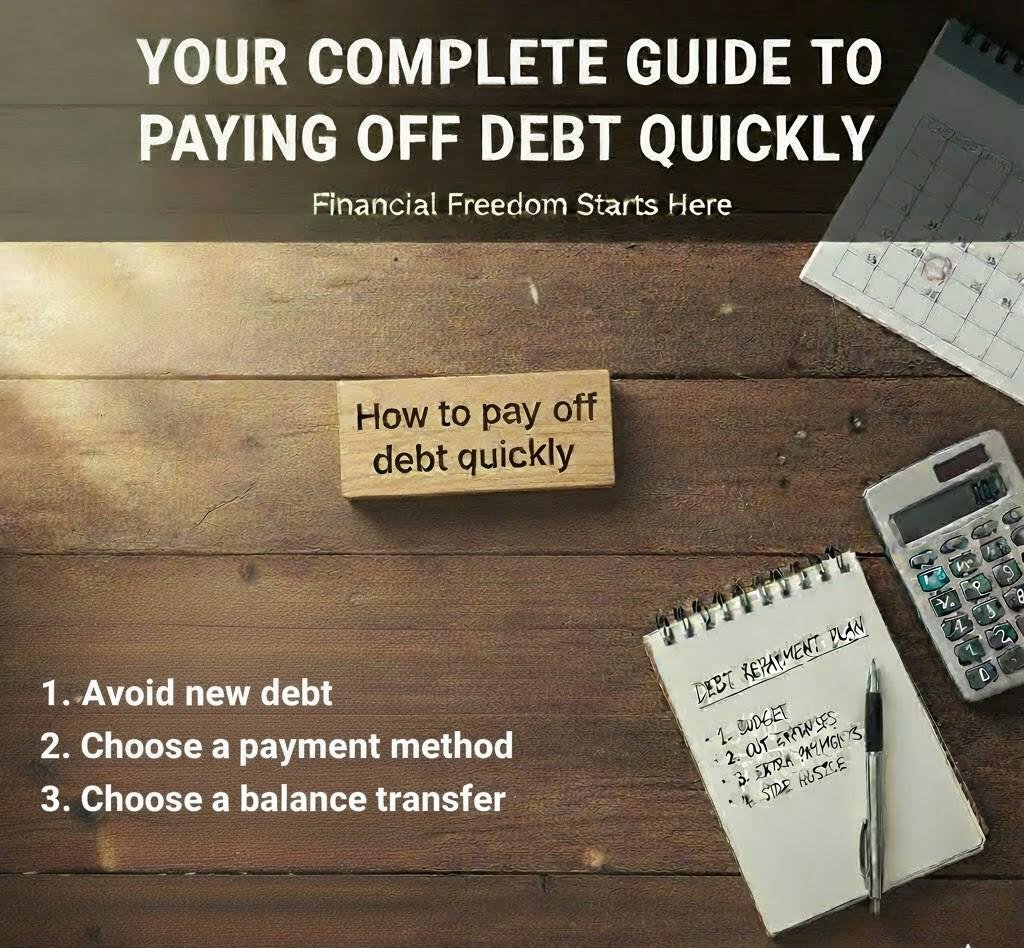
Why Most People Stay in Debt Longer Than Necessary
The average person pays only the minimum amount due each month. This approach feels manageable but creates a devastating reality: a $5,000 credit card balance at 18% interest takes over 13 years to pay off with minimum payments alone. You’ll pay more than $5,800 in interest charges on top of the original debt.
Lenders design minimum payments to maximize their profit, not your freedom. Every month you carry a balance, you’re essentially paying rent on money you’ve already spent. The cycle continues because most borrowers never change their approach.
Breaking free requires a fundamental shift in how you view debt. It’s not about restricting your life—it’s about redirecting resources to reclaim your income. Once you eliminate debt payments, that money becomes yours to build wealth, enjoy experiences, and secure your future.
Read more: A Deep Dive into Secured vs Unsecured Loans
The Debt Avalanche Method: Maximum Interest Savings
The avalanche method targets your highest-interest debt first while maintaining minimum payments on everything else. This approach saves the most money over time because you’re eliminating the costliest debt before it accumulates more interest.
Here’s how to pay off debt quickly in practice. List all your debts from highest to lowest interest rate. Channel every extra dollar toward the debt at the top of the list. Once you eliminate that balance, roll the entire payment amount to the next highest-interest debt. The payment “avalanche” grows larger with each debt you eliminate.
Let’s say you have three debts: a credit card at 22% interest with a $3,000 balance, a personal loan at 12% with $5,000, and a car loan at 6% with $8,000. Now, how can you pay off the debt quickly? The short answer is to focus all extra payments on that credit card first. When it’s gone, take the full amount you were paying on the card and add it to your personal loan payment. The momentum builds naturally.
The avalanche method delivers cold, hard math in your favor. You’ll pay significantly less interest than any other repayment strategy. However, it requires patience since your highest-rate debt might not be your smallest balance. If you need quick wins to stay motivated on how to pay off debt quickly, the next method might suit you better.
The Debt Snowball Method: Psychological Momentum
The snowball method flips the script by targeting your smallest debt first, regardless of interest rate. You maintain minimum payments on all debts while throwing every extra dollar at the smallest balance. Once you eliminate that first debt completely, you roll its payment into the next smallest balance.
This approach works because of human psychology. Eliminating a debt creates a powerful sense of accomplishment. That first “paid in full” notice triggers motivation that spreadsheets can’t replicate. You see tangible progress fast, which keeps you engaged in the process.
Consider someone with five debts ranging from $500 to $10,000. Paying off that $500 balance in the first month creates immediate momentum. Next month, they attack the $800 balance with both the old minimum payment and the freed-up $500 payment. The snowball grows with each eliminated debt.
The snowball method costs more in total interest compared to the avalanche approach. But here’s the reality: the best debt payoff method is the one you’ll actually stick with. If quick wins keep you motivated and on track, the extra interest cost becomes worthwhile insurance against giving up entirely.
Read more: Savings Vs. Investing: Which One Should You Choose?
Balance Transfer Cards: Slash Interest Charges
A balance transfer credit card offers 0% APR for a promotional period, typically 12-21 months. You move high-interest credit card debt to this new card and pay zero interest during the promotional window. This strategy can save thousands in interest charges if you use it correctly.
The key is discipline. How? Simply calculate exactly how much you must pay each month to eliminate the entire balance before the promotional period ends. If you transfer $6,000 to an 18-month 0% card, you need to pay at least $334 monthly to clear it completely. Miss that deadline, and you’ll face deferred interest charges on whatever balance remains.
Most balance transfer cards charge a one-time fee of 3-5% of the transferred amount. Run the math: if you’re paying 18% interest on a credit card, a 3% transfer fee pays for itself in just two months. The remaining promotional period represents pure savings.
Watch out for these traps: using the new card for purchases, missing a payment (which can void the promotional rate), or transferring more debt than you can realistically pay off during the 0% period. Treat the transfer card as a debt elimination tool only, not a spending card.
Debt Consolidation: Simplify Multiple Payments
Debt consolidation combines multiple debts into a single loan with one monthly payment. This strategy works best when you secure a lower interest rate than your current average rate. Instead of juggling five different payment dates and amounts, you handle one straightforward payment.
Personal loans from banks or credit unions offer fixed rates typically ranging from 6-36%, depending on your credit score and income. If you’re carrying credit card balances at 20%+ interest, consolidating into a 10% personal loan cuts your interest costs in half while simplifying your finances.
The real benefit extends beyond interest savings. One payment means one due date to remember. You eliminate the mental load of tracking multiple accounts, which reduces the chance of missed payments that damage your credit score. Automatic payments become simple when there’s just one account to manage.
However, consolidation isn’t a magic solution. You’re not eliminating debt—just restructuring it. If you consolidate credit cards but keep using those cards for new purchases, you’ll end up with both the consolidation loan and new credit card debt. Close or freeze those paid-off cards to avoid this trap.
Read more: 15 Best Online Banks For Reliable Savings
Increase Your Income: The Accelerator Strategy
Every debt payoff strategy ultimately depends on one factor: how much money you can throw at your debts. Cutting expenses helps, but there’s a floor to how much you can reduce spending. Income, however, has no ceiling. Even an extra $500 monthly can shave years off your debt timeline.
Side hustles range from obvious (freelancing your professional skills) to creative (renting out parking spaces or storage). The gig economy makes it possible to earn money on your schedule through driving, delivery, tutoring, or virtual assistance. Choose work that doesn’t burn you out—consistency matters more than hourly rate.
Negotiate your primary income too. Research shows that 70% of managers expect salary negotiation, yet most employees never ask. If you’re underpaid relative to market rates, a single successful negotiation can permanently increase your debt payoff capacity. That $5,000 raise becomes $416 monthly in extra debt payments.
Windfalls deserve special mention. Tax refunds, bonuses, gifts, or inheritance money should go straight to debt if you’re serious about fast payoff. One $3,000 tax refund applied to debt saves you years of interest charges. It’s not as exciting as a vacation, but freedom from debt beats two weeks on a beach.
Consider this: if you earn an extra $400 monthly through a side hustle and apply it to a $15,000 debt at 15% interest, you’ll pay it off 3.5 years faster and save over $3,200 in interest compared to minimum payments alone. Your temporary sacrifice creates permanent benefit.
Cut Expenses Without Sacrificing Quality of Life
The goal of how to pay off debt quickly isn’t deprivation—it’s redirection. Every dollar you free up from unnecessary expenses accelerates your debt freedom date. Start by examining expenses that provide the least value relative to their cost.
Subscriptions bleed money invisibly. The average person pays for 3-4 streaming services, fitness apps they don’t use, and automatic renewals they forgot existed. Audit your bank statements from the last three months and cancel anything you haven’t used. That $50 monthly in forgotten subscriptions becomes $600 yearly toward debt.
Housing represents your largest expense category. If you’re renting, consider downsizing temporarily or taking on a roommate. Yes, it’s uncomfortable. But six months of shared housing might eliminate a debt that would otherwise take three years to clear. Calculate the trade-off honestly.
Transportation costs offer major savings opportunities. If you carry a car payment, consider selling and buying a reliable used vehicle with cash. A $400 monthly car payment represents $4,800 annually that could obliterate debt instead. Factor in lower insurance costs on an older vehicle, and the savings multiply.
Food spending varies wildly between people. Meal planning and grocery shopping replace expensive takeout without reducing food quality. Learning five simple, repeatable meals transforms your food budget. You’re not eating ramen for months—you’re cooking intentionally instead of defaulting to convenience.
The key question for every purchase: “Does this bring enough value to justify delaying my debt freedom?” Sometimes the answer is yes. But asking the question prevents mindless spending that extends your debt sentence.
Read more: 20 Tips For First-Time Home Buyers
Negotiate With Creditors: Lower Rates and Payments
Most people that think of how to pay off debt quickly don’t realize that creditors would rather receive some payment than none. If you’re struggling with payments, call your creditors before you fall behind. Explain your situation and ask for temporary hardship programs, reduced interest rates, or modified payment plans.
Credit card companies frequently offer hardship programs that lower your interest rate to 0-6% for 6-12 months. You’ll need to close the account, but that’s a small price for slashing interest charges. Many people pay off significant balances during these programs because every payment goes to principal instead of interest.
For other debts, request an interest rate reduction based on your payment history. If you’ve made on-time payments for a year, you’ve proven reliability. A simple phone call asking for a lower rate succeeds more often than you’d expect. Be polite but persistent: “I’ve been a good customer and I’d like to stay with you, but I’m considering transferring my balance to a card with a lower rate unless we can adjust mine.”
Debt settlement represents a more aggressive approach for debts you genuinely cannot pay. You negotiate to pay less than the full amount owed in exchange for closing the account. This damages your credit score and carries tax implications (forgiven debt counts as income), but it beats bankruptcy for some situations.
Never ignore creditors or avoid their calls. Communication keeps options open. Once you default completely, your leverage disappears and collection actions begin. Stay ahead of problems by addressing them directly.
Build a Small Emergency Fund: Stop the Debt Cycle
This seems counterintuitive: why save money when you have debt? Because without emergency savings, every unexpected expense forces you deeper into debt. Your car needs $800 in repairs, so you charge it to the credit card you just paid down. The cycle continues.
Start with $1,000 in a separate savings account. This small buffer handles most minor emergencies without derailing your debt payoff plan. Once you’re debt-free, expand this to 3-6 months of expenses. But that initial $1,000 provides psychological and practical protection.
Keep this emergency fund separate and accessible but not too convenient. A high-yield savings account at an online bank works perfectly. You can transfer money quickly if needed, but it’s not connected to your debit card for impulse purchases. The separation creates intentional friction that preserves the fund for true emergencies.
Define “emergency” clearly. Medical bills, essential car repairs, and unexpected job loss qualify. New shoes because they’re on sale don’t qualify. The clearer your definition, the less likely you’ll raid the fund for non-emergencies that extend your debt timeline.
As you pay off debts, funnel some of those freed-up payments into growing your emergency fund. The goal is breaking the cycle where unexpected expenses create new debt. Financial stability requires both eliminating existing debt and preventing new debt from forming.
Avoid These Common Debt Payoff Mistakes
Paying only minimums feels safe but guarantees maximum interest payments and minimum progress. Even an extra $25 monthly makes a measurable difference in your payoff timeline. Calculate your current trajectory at minimum payments, then see how adding just $50 monthly changes the outcome. The difference shocks most people into action.
Closing paid-off accounts can hurt your credit score by reducing available credit and average account age. Keep old accounts open with no balance unless they carry annual fees. This maintains your credit utilization ratio—the percentage of available credit you’re using—which significantly impacts your credit score.
Ignoring spending habits that created debt means you’ll likely return to debt after paying it off. Identify the root causes: emotional spending, lack of budgeting, lifestyle inflation, or poor financial education. Address these issues while paying down debt so you don’t repeat the cycle.
Using retirement savings or home equity to pay off debt trades one problem for another. Retirement accounts exist to secure your future. Raiding them for debt creates tax penalties, loses compound growth, and leaves you vulnerable in retirement. Similarly, securing unsecured debt against your home puts your housing at risk. These moves should be absolute last resorts.
Trying to tackle everything simultaneously leads to burnout. Choose one strategy—avalanche, snowball, or consolidation—and commit to it for at least three months. Constant strategy changes create confusion and reduce progress. Consistency beats perfection every time.
Read more: Best Bank Bonuses And Promotions in the US
Track Progress and Celebrate Milestones
Numbers alone don’t sustain motivation for months or years. Create visual representations of your progress: debt payoff thermometers on the refrigerator, spreadsheets with colorful charts, or apps that show your shrinking balances. Watching the number decrease makes the effort tangible.
Set specific milestones beyond just “pay off all debt.” Celebrate eliminating each individual debt, reaching 25% paid off, or your first month of zero credit card interest charges. These intermediate goals maintain momentum during the long middle period when the finish line still seems distant.
Rewards should be proportional and not counterproductive. Don’t celebrate paying off $5,000 in debt with a $500 splurge. Instead, enjoy a nice (but modest) meal, a day trip, or a small purchase you’ve been wanting. Acknowledge progress without undermining it.
Share your journey selectively. Supportive friends and family can provide accountability and encouragement. Online communities focused on debt payoff offer both motivation and practical advice from people who understand the challenge. Avoid sharing with people who might judge, discourage, or tempt you away from your goals.
Document your progress through photos, journal entries, or videos. When motivation wanes, review these records to remember how far you’ve come. The person struggling through month eight needs to see evidence from months one through seven that the plan works and progress is real.
Read more: How to Improve Your Credit Utilization Ratio?
Life After Debt: Protect Your Freedom
Debt freedom represents a beginning, not an ending. The discipline and strategies you developed paying off debt become tools for building wealth. Those monthly payments you eliminated? They now fund retirement accounts, investments, and experiences you delayed during debt payoff.
Create a sustainable budget that includes enjoyment. Extreme restriction during debt payoff makes sense as a temporary measure, but permanent deprivation leads to binge spending. Build realistic budgets that include entertainment, dining out, and hobbies. Financial health requires balance.
Automate wealth-building just like you automated debt payments. Set up automatic transfers to retirement accounts, investment accounts, and savings goals. When money moves automatically, you never “decide” to save—it just happens. This removes willpower from the equation.
Use credit cards strategically if you choose to use them at all. Pay the full balance every month without exception. Credit cards offer rewards and consumer protections, but only if you never pay interest. The moment you carry a balance, any rewards get swallowed by interest charges.
Teach others what you learned from “how to pay off debt quickly”. Your experience paying off debt provides valuable knowledge for friends, family, or online communities. Helping others reinforces your own commitment to staying debt-free while creating accountability. Plus, explaining concepts to others deepens your understanding.
Take Your First Step Today
Debt payoff requires a plan, consistency, and time. But every month you delay starting is another month of interest charges and postponed freedom. You don’t need to have everything figured out to begin.
Your first action on how to pay off debt quickly: list every debt you owe with its balance, interest rate, and minimum payment. This complete picture might feel overwhelming, but you can’t defeat an enemy you haven’t measured. Seeing the total amount often provides the shock needed to commit fully to change.
Choose your primary strategy: avalanche for maximum math efficiency or snowball for psychological wins. Calculate how much extra you can pay monthly beyond minimums. Set up automatic payments for at least the minimum on every debt so you never miss a payment and damage your credit.
Consolidate/Negotiate: Consider consolidating high-interest debt into a lower-interest loan and contact creditors to negotiate lower rates.
Freedom from debt transforms your entire financial life. The money that once disappeared into interest payments becomes fuel for your dreams. Your stress decreases as your options increase. The payoff period might span months or years, but the freedom lasts forever.
Here’s a simple recap of the main strategies learned in this detailed guide on how to pay off debt quickly:
- Use debt consolidation to simplify multiple payments
- Use balance transfer cards to slash interest charges
- Use the debt snowball method to gain psychological momentum
- Use the debt avalanche method to maximize interest savings
- Cut expenses without sacrificing quality of life
- Negotiate with creditors to lower rates and payments
- Increase your income with the accelerator strategy
- Build a small emergency fund to stop the debt cycle
Take control of your financial future today. List your debts, choose your strategy, and make your first extra payment. Your future self will thank you for starting now instead of someday.
People Also Ask:
How long does it take to pay off debt?
The timeline depends on your debt amount, interest rates, and payment capacity. A focused strategy with extra payments can reduce years of minimum-payment timelines to months of aggressive payoff. One extra tip on how to pay off debt quickly is to calculate your specific timeline using online debt calculators that factor in your extra payment amount.
Should I pay off debt or save money first?
Build a small emergency fund of $1,000 first, then focus on debt payoff. This prevents new debt when unexpected expenses arise. Once debt-free, expand emergency savings to 3-6 months of expenses for complete financial security.
Does paying off debt improve my credit score?
Yes, paying off debt improves your credit utilization ratio and demonstrates payment reliability. However, keep paid-off credit card accounts open to maintain available credit. Your score improves gradually as you reduce balances and maintain on-time payments.
What’s the fastest way to pay off credit card debt?
Combine the avalanche method (targeting highest interest rates) with balance transfers to 0% APR cards. Add every dollar of extra income to payments while cutting discretionary expenses temporarily. This triple approach eliminates credit card debt fastest while minimizing interest charges.
Related contents: