
Written by: Segun Akomolafe
Starting the new year with a solid financial foundation means having money set aside for unexpected expenses. Whether it’s a medical emergency, car repair, or sudden job loss, a reserve fund provides the security you need to navigate life’s uncertainties without derailing your financial goals. This comprehensive guide will walk you through the essential steps to build and maintain a good reserve fund in the new year.
Understanding What a Reserve Fund Really Means
A reserve fund, commonly known as an emergency fund, is a dedicated savings account containing three to six months’ worth of living expenses. This financial cushion protects you from having to rely on credit cards or loans when unexpected costs arise. Think of it as your financial safety net—money that sits quietly in the background until you genuinely need it.
The purpose of this fund differs from your retirement savings or vacation budget. It’s strictly for true emergencies: medical bills, home repairs, car breakdowns, or temporary loss of income. Having this buffer reduces financial stress and prevents you from making desperate decisions during difficult times.
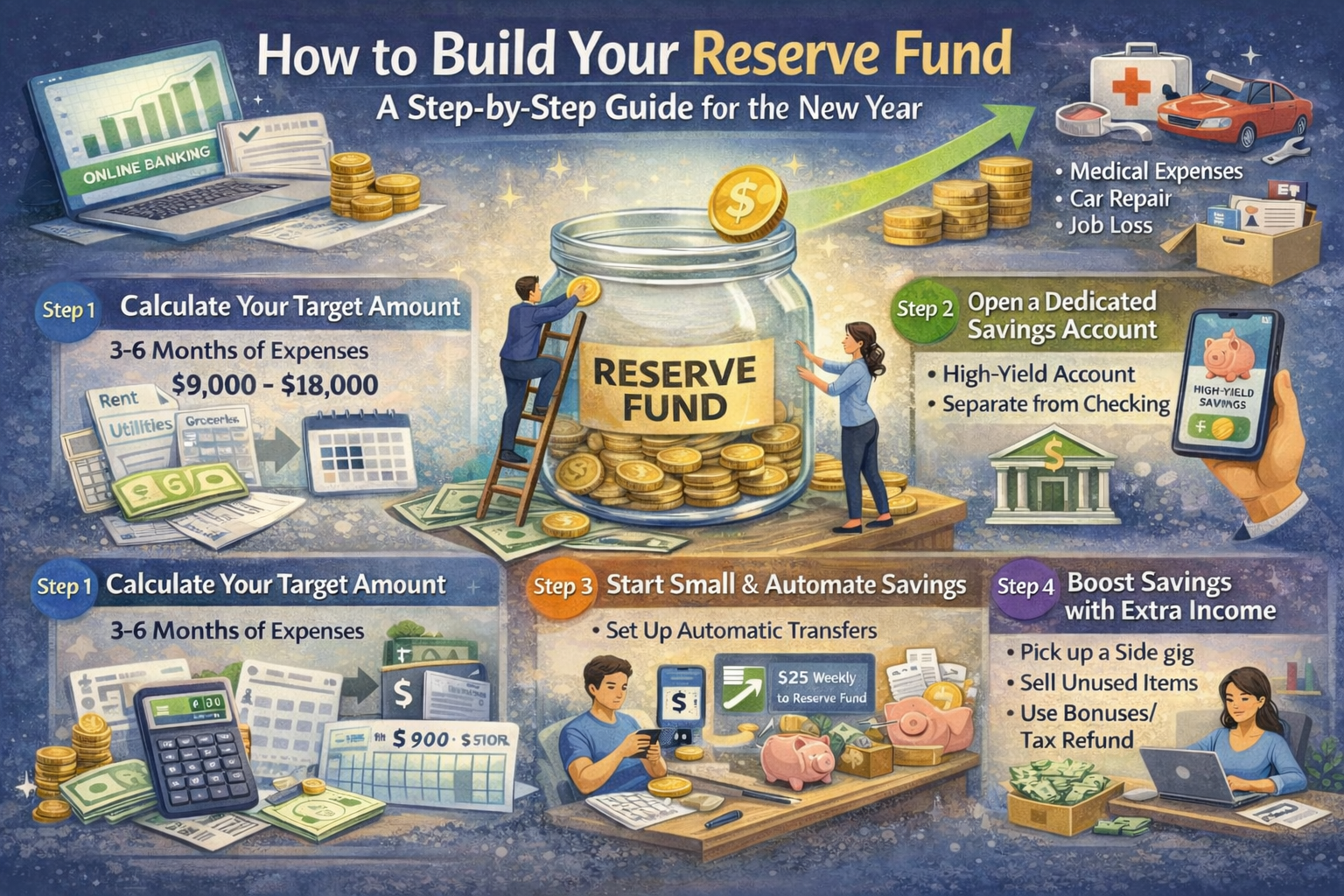
Step 1: Calculate Your Target Amount
Before you can learn how to build your reserve fund effectively, you need to know your target number. Start by calculating your monthly essential expenses, including rent or mortgage, utilities, groceries, insurance, transportation, and minimum debt payments.
Multiply this monthly total by three for a starter emergency fund or by six for more comprehensive coverage. If you’re self-employed or work in an unstable industry, consider aiming for nine months of expenses. For example, if your essential monthly costs total $3,000, your initial target should be between $9,000 and $18,000.
Don’t let these numbers intimidate you. Building a reserve fund is a marathon, not a sprint. Even starting with $500 puts you ahead of nearly half of Americans who couldn’t cover an unexpected $400 expense without borrowing.
Read more: How to Create a Debt-Free Budget: 5 Key Strategies
Step 2: Open a Dedicated Savings Account
Keep your reserve fund separate from your regular checking account to avoid the temptation of dipping into it for non-emergencies. Look for a high-yield savings account that offers competitive interest rates while keeping your money accessible.
Online banks typically offer better interest rates than traditional brick-and-mortar institutions because they have lower overhead costs. Your reserve fund should be liquid—meaning you can access it quickly without penalties—but not so accessible that you’re tempted to use it for everyday purchases.
Consider accounts that don’t charge monthly maintenance fees and have no minimum balance requirements when you’re just starting out. The goal is to make saving as frictionless as possible.
High-Yield Savings Accounts (HYSA): Look for accounts offering competitive rates. As of this month, institutions like American Express (3.30% APY) and LendingClub (up to 4.20% APY) are top choices.
Read more: 20 Ways to Save Money in the New Year
Step 3: Start Small and Build Momentum
Understanding how to build your reserve fund means recognizing that consistency matters more than the amount. If you can only save $25 per week, that’s $1,300 per year—a solid start toward your emergency fund goal.
Set up automatic transfers from your checking account to your reserve fund on payday. This “pay yourself first” approach ensures you’re consistently contributing before other expenses consume your paycheck. Most people find that once the transfer is automatic, they quickly adjust their spending to accommodate it.
If automatic transfers feel too restrictive initially, try the 50/30/20 budget rule: allocate 50% of your income to needs, 30% to wants, and 20% to savings and debt repayment. Dedicate at least half of that 20% to your reserve fund until you reach your target.
Read more: How to Track Your Monthly Expenses: A Complete Guide to Financial Control
Step 4: Boost Your Savings with Strategic Moves
Accelerating how to build your reserve fund requires finding extra money in your budget. Start by reviewing your subscriptions and recurring expenses. Cancel services you rarely use and redirect those savings to your emergency fund.
Consider these additional strategies:
Redirect windfalls: Tax refunds, work bonuses, cash gifts, or side hustle earnings should go directly into your reserve fund until you reach your goal. These unexpected influxes can dramatically shorten your timeline.
Sell unused items: That exercise equipment gathering dust or designer clothes you never wear can be converted into emergency fund contributions through online marketplaces.
Pick up a side gig: The gig economy offers countless opportunities to earn extra income. Whether it’s freelancing, ridesharing, or online tutoring, dedicate this supplemental income exclusively to building your reserve fund.
Reduce one major expense: Could you lower your car insurance by shopping around? Reduce your grocery bill by meal planning? Save on utilities by adjusting your thermostat? Channel any savings directly to your emergency account.
Read more: How to Pay Off Debt Quickly
Step 5: Protect Your Fund from Yourself
One of the biggest challenges in learning how to build your reserve fund is keeping it intact once you’ve accumulated savings. Establish clear guidelines for what constitutes a true emergency before you need to make an emotional decision.
True emergencies include unexpected medical expenses, essential car repairs, urgent home repairs, or loss of income. Non-emergencies include vacations, holiday shopping, concert tickets, or a great sale on something you want but don’t need.
If you must tap into your reserve fund, make replenishing it your top financial priority. Treat it like any other bill that must be paid monthly until you’re back to your target amount.
Read more: A Deep Dive into Secured vs Unsecured Loan
Step 6: Optimize Your Savings Over Time
As your reserve fund grows, ensure you’re maximizing its potential. Review your savings account annually to confirm you’re earning competitive interest rates. Don’t hesitate to move your money if another bank offers significantly better returns.
Once you’ve reached your initial three-month target, continue contributing while you work toward the six-month goal. After hitting your ultimate target, you can redirect some of those automatic savings toward other financial goals like retirement or a down payment on a home.
Keep your reserve fund amount aligned with your current lifestyle. If you get married, have children, buy a house, or experience other major life changes, recalculate your essential monthly expenses and adjust your target accordingly.
Read more: How to Improve Your Credit Utilization Ratio?
Step 7: Maintain and Review Regularly
Understanding how to build your reserve fund extends beyond accumulation—it requires ongoing maintenance. Set a calendar reminder to review your emergency fund quarterly. Check that your target amount still reflects your current expenses and that your money is earning competitive interest.
If you use part of your reserve fund, immediately resume contributions to restore it. Life happens, and that’s exactly why this fund exists. Don’t feel guilty for using it appropriately; feel proud that you had it available when needed.
Read more: 20 Tips For First-Time Home Buyers
Start Building Your Financial Security Today
Learning how to build your reserve fund is one of the most valuable financial skills you’ll ever develop. It transforms your relationship with money from constant anxiety about “what if” scenarios to confidence that you’re prepared for life’s inevitable surprises.
Remember, the perfect time to start was yesterday, but the second-best time is right now. Open that savings account today, set up your automatic transfer, and take the first step toward financial peace of mind. Your future self will thank you.
Related Contents:
- Debt Snowball vs. Avalanche Method: Which Pays Off Debt Faster?
- How to Track Your Monthly Expenses: A Complete Guide to Financial Control
- How to Create a Debt-Free Budget: 5 Key Strategies
- How to Pay Off Debt Quickly
- A Deep Dive into Secured vs Unsecured Loan
- How to Improve Your Credit Utilization Ratio?
- 20 Tips For First-Time Home Buyers
- Savings Vs. Investing: Which One Should You Choose?
- 20 Ways to Save Money in the New Year
- Best Bank Bonuses And Promotions in the US