
Written by: Segun Akomolafe
As you ascend the stairs while carrying groceries, you may experience a burning sensation in your legs halfway up. When reaching for an item on the top shelf, your shoulder may also exhibit discomfort. Does this sound like you? These simple movements shouldn’t be hard, but for many, they are.
The issue isn’t that you’re weak—it’s that regular gym workouts usually focus on training muscles separately instead of teaching your body to work as a whole. This is where functional fitness makes a difference. Keep reading to learn how to build functional fitness for everyday life, making you stronger, more flexible and ready for whatever comes your way.
What Functional Fitness Actually Means
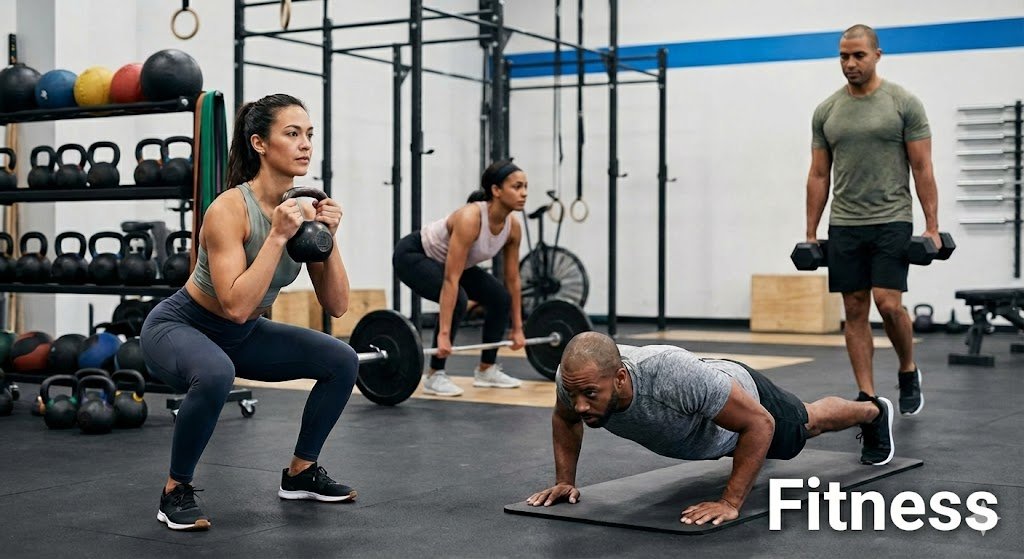
Here’s something most fitness programs get wrong: they focus on making you look good instead of helping you move well. Functional fitness flips that script entirely. It’s training that mimics the movements you do every day—squatting, pushing, pulling, twisting and carrying things.
Think about the last time you moved furniture, played with your kids, or hauled a suitcase through an airport. Those activities require your entire body to work together, not just isolated muscle groups. Research from the National Library of Medicine confirms that functional training enhances speed, muscular strength, power, balance and agility far more effectively than traditional isolated exercises.
When you understand how to build functional fitness for everyday life, you’re not just preparing for the gym. You are preparing for life itself. That means fewer injuries, less pain, and the ability to stay independent and active well into your later years.
Functional fitness training was ranked #9 on the American College of Sports Medicine’s official 2025 Top 20 Fitness Trends — up from previous years. This positions it alongside HIIT and strength training as one of the most professionally endorsed workout methods globally, validating it as a long-term fitness strategy, not just a passing trend.
Read more: How to Build a Sustainable Workout Routine
The Science Behind Functional Training
A groundbreaking meta-analysis involving 911 healthy individuals found that high-intensity functional training produced significant positive effects in improving strength, power, speed, endurance, and agility. These aren’t just marginal improvements either—the study showed large effect sizes across all fitness metrics.
What makes functional training so effective? It engages multiple muscle groups simultaneously, forces your body to stabilize itself, and improves the neural pathways that coordinate complex movements. Unlike machine-based exercises that lock you into one plane of motion, functional movements require balance, coordination, and core stability.
The real-world impact is undeniable. Research on older adults revealed that functional exercise training significantly improved gait speed, balance, and the ability to perform daily activities independently. While that study focused on seniors, the principles apply to everyone—train the way you move, and you’ll move better.
Progression: Start with bodyweight only to master form. Gradually add resistance (dumbbells, kettlebells or resistance bands) or increase complexity (e.g., moving from a stationary lunge to a walking lunge).
Core Movements That Build Real-World Strength
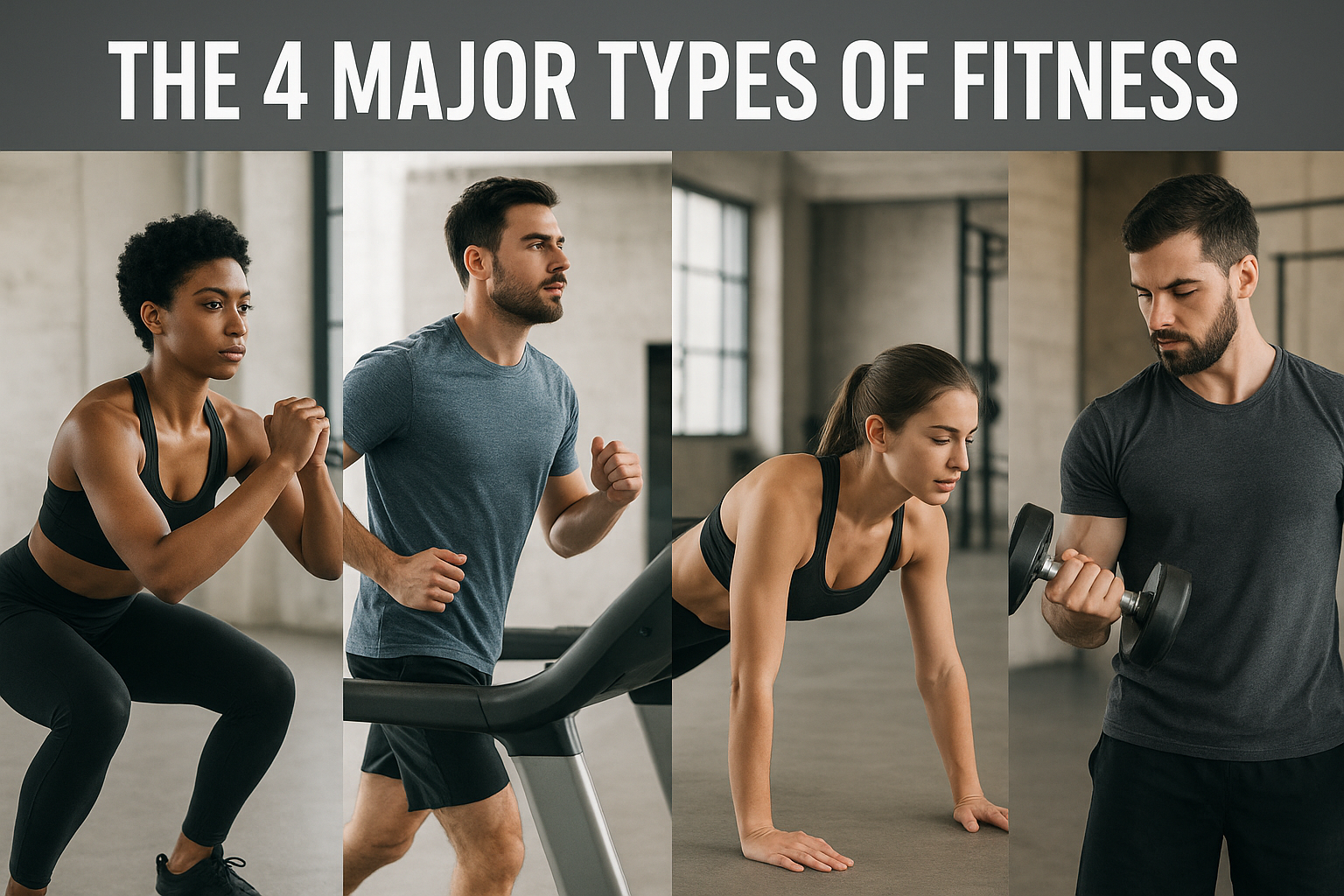
Learning how to build functional fitness for everyday life starts with mastering fundamental movement patterns. These aren’t flashy exercises, but they’re the foundation of everything you do:
1. The Squat Pattern
Every time you sit down or stand up, you’re squatting. Yet most people do it poorly, loading their knees instead of their hips. A proper squat strengthens your glutes, quads, and core while protecting your lower back and knees.
Start with bodyweight squats, focusing on sitting back like you’re aiming for a chair. Keep your chest up and weight in your heels. Once you’ve mastered form, add goblet squats holding a dumbbell or kettlebell at chest height. Aim for 3 sets of 12-15 reps twice weekly.
2. The Hip Hinge
This is the movement you use when picking something up from the floor. Done right, it protects your spine and builds powerful glutes and hamstrings. Done wrong, it’s a recipe for back pain.
Deadlifts and Romanian deadlifts teach the hip hinge pattern perfectly. Stand with feet hip-width apart, push your hips back while keeping your back flat, and lower the weight down your legs. The movement happens at your hips, not your spine. Master this, and you’ll never throw your back out grabbing groceries again.
3. Pushing and Pulling
Opening heavy doors, moving furniture, pulling yourself up—life requires both push and pull strength. Push-ups and rows should be staples in your routine.
For pushing, standard push-ups work great, but you can modify them on your knees or against a wall if needed. For pulling, inverted rows using a suspension trainer or low bar are perfect. The goal is balanced strength—if you can do 10 push-ups, you should be able to do 10 rows.
4. Carrying and Loaded Movements
Carrying heavy objects might be the most functional movement of all. Farmer’s carries (walking while holding weights at your sides) build grip strength, core stability, and total-body endurance simultaneously.
Start with weights you can carry for 30-40 seconds, then gradually increase either the weight or distance. This single exercise translates directly to carrying groceries, luggage, or kids without feeling exhausted.
Read more: The Best workouts to Maintain Healthy Weight Loss
Essential Functional Movement Patterns
Here’s how these movements translate to daily activities:
| Movement Pattern | Daily Application | Key Exercises | Muscles Worked |
|---|---|---|---|
| Squat | Sitting, standing, lifting from low surfaces | Goblet squats, air squats, box squats | Quads, glutes, core, hamstrings |
| Hip Hinge | Picking up objects, bending over | Deadlifts, Romanian deadlifts, kettlebell swings | Glutes, hamstrings, lower back, core |
| Push | Opening doors, moving furniture, getting up from floor | Push-ups, overhead press, chest press | Chest, shoulders, triceps, core |
| Pull | Pulling doors, lifting groceries, yard work | Rows, pull-ups, lat pulldowns | Back, biceps, grip, core |
| Carry | Groceries, luggage, children, moving boxes | Farmer’s carries, suitcase carries | Full body, grip, core stability |
| Rotation | Reaching, twisting, sports movements | Wood chops, Russian twists, medicine ball throws | Obliques, core, shoulders |
Note: All exercises can be modified for fitness level and should be performed with proper form.
Building Your Functional Fitness Routine
The beauty of understanding how to build functional fitness for everyday life is that you don’t need fancy equipment or hours in the gym. A simple routine done consistently will transform how you move and feel.
Here’s a practical weekly structure:
Monday: Lower Body Focus;
- Goblet squats: 3 sets of 12 reps
- Romanian deadlifts: 3 sets of 10 reps
- Walking lunges: 3 sets of 10 reps per leg
- Farmer’s carries: 3 sets of 40 seconds
Wednesday: Upper Body Focus;
- Push-ups: 3 sets of 10-15 reps
- Inverted rows: 3 sets of 10 reps
- Overhead press: 3 sets of 10 reps
- Plank holds: 3 sets of 30-45 seconds
Friday: Full Body Integration
- Kettlebell swings: 3 sets of 15 reps
- Step-ups with weight: 3 sets of 10 reps per leg
- Medicine ball slams: 3 sets of 12 reps
- Turkish get-ups: 3 sets of 3 per side
Each session should take 30-45 minutes including warm-up and cool-down. The movements flow naturally from one to the next, keeping your heart rate elevated while building strength.
Read more: The 10 Best Yoga Mats For Daily Workout
Common Mistakes That Sabotage Functional Fitness Progress
Even with the best intentions, people make predictable mistakes when learning how to build functional fitness for everyday life. Avoid these pitfalls:
Going Too Heavy Too Soon
Functional movements require coordination and balance. Loading up heavy weights before you’ve mastered the pattern is asking for injury. Spend at least two weeks perfecting form with just bodyweight or light weights before progressing.
Ignoring Mobility Work
Tight hips, stiff shoulders, and limited ankle mobility prevent you from moving correctly. Spend 5-10 minutes before each workout doing dynamic stretches and mobility drills for the areas you’ll be training. Your body can’t move functionally if it can’t access full ranges of motion.
Training Only in One Plane
Life happens in all directions—forward, backward, side to side, and rotationally. Yet most gym programs only train forward and backward movements. Include lateral lunges, side planks, and rotational exercises to build multi-directional strength.
Neglecting Recovery
Functional training is demanding because it engages your entire nervous system, not just your muscles. Plan at least one full rest day between sessions, and prioritize sleep and nutrition to support recovery.
Adapting Functional Fitness to Your Life
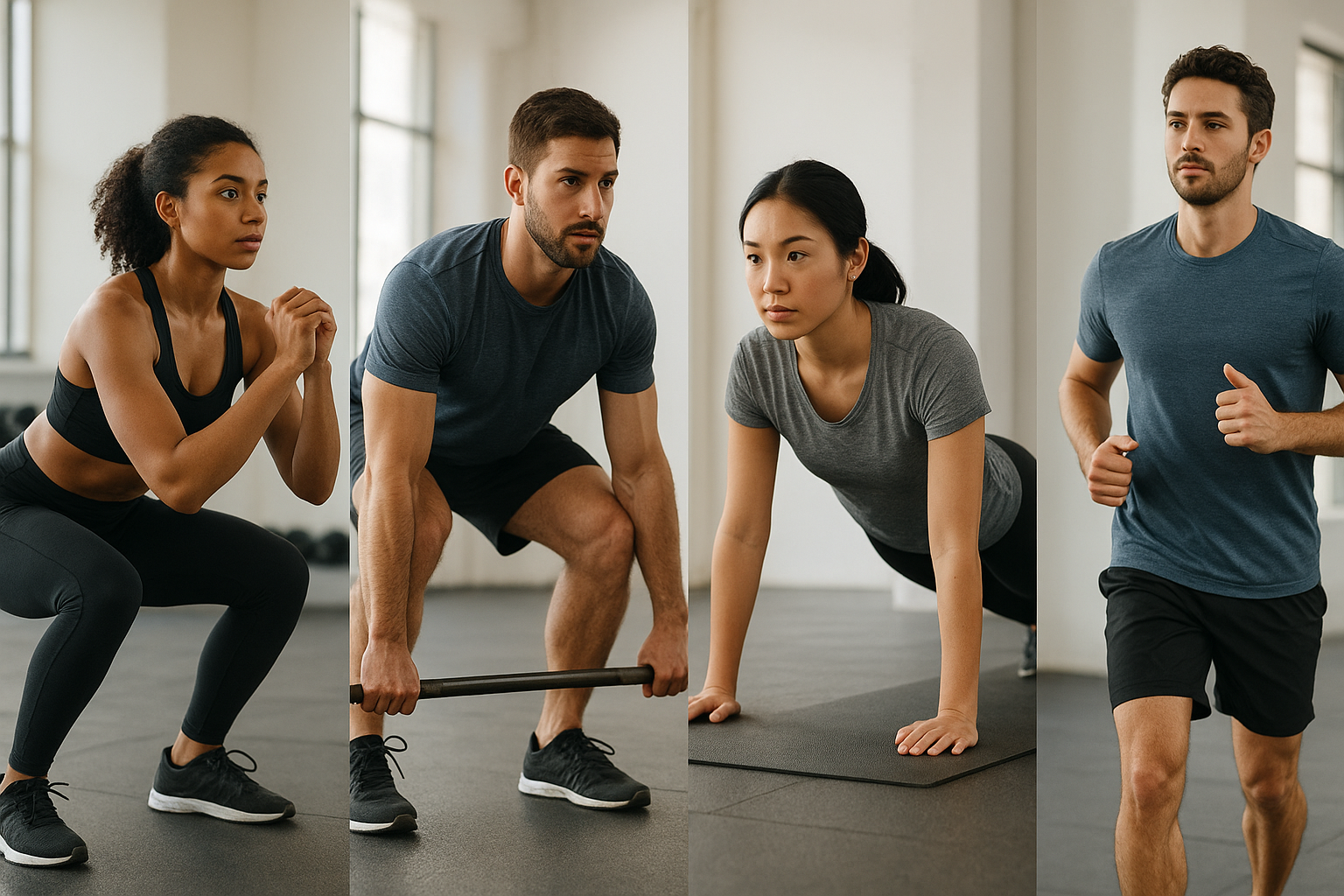
One of the best parts about functional fitness is its scalability. Whether you’re 25 or 75, recovering from an injury or training for a marathon, the principles remain the same—you just adjust the difficulty.
For Beginners:
- Start with bodyweight versions of all exercises
- Focus on 2-3 sessions per week with rest days between
- Master form before adding any weight
- Use wall push-ups, box squats, and assisted rows
For Intermediate Trainees:
- Add external resistance with dumbbells, kettlebells, or bands
- Increase training frequency to 3-4 times weekly
- Progress exercises by adding weight, reps, or complexity
- Incorporate single-leg movements and unstable surfaces
For Advanced Athletes:
- Use heavier loads and complex movement combinations
- Train 4-5 times per week with varied intensities
- Add explosive movements like box jumps and medicine ball throws
- Periodize your training with strength and power phases
The key is progressive overload—gradually increasing difficulty over time. This could mean adding 5 pounds to your goblet squat, doing one more rep per set, or shortening your rest periods. Small, consistent improvements compound into major changes.
Read more: The Complete Guide to Protein Supplements
Injury Prevention Through Functional Movement
Here’s a sobering statistic: research shows that individuals with lower fitness levels are significantly more likely to be injured, and improving fitness lowers injury risk by allowing people to perform activities at a lower percentage of their maximal capability. This means they fatigue less rapidly and maintain better form throughout activities.
Functional training protects you in two ways. First, it strengthens the muscles and connective tissues around your joints, making them more resilient to stress. Second, it teaches your body proper movement patterns so you instinctively move safely even when tired or distracted.
The most vulnerable areas—lower back, shoulders, and knees—get special protection from functional training because these movements require core stability and joint coordination. When you properly load your hips during a squat or maintain a neutral spine during a deadlift, you’re rehearsing the exact mechanics that prevent injury during daily activities.
Warning signs you need to address before they become injuries:
- Persistent muscle soreness in the same spot
- Sharp pain during specific movements
- Reduced range of motion
- Compensatory movement patterns (favoring one side)
- Unusual fatigue in muscles that should be strong
Read more: Top 20 Ways to Relieve Stress and Anxiety
Measuring Your Functional Fitness Progress
Unlike traditional gym programs focused on how much weight you can lift, functional fitness is about real-world capability. Test yourself with these practical assessments every 4-6 weeks:
- Chair Stand Test: How many times can you stand from a seated position in 30 seconds? Aim for 15+
- Reach Test: Can you comfortably reach overhead and behind your back? Full mobility matters
- Single Leg Balance: Can you stand on one leg for 30 seconds with eyes closed? This predicts fall risk
- Farmer’s Carry: Can you carry half your bodyweight (total) for 40 seconds without stopping?
- Push-Up Test: How many quality push-ups can you perform? Target 20+ for men, 10+ for women
These tests reveal functional capacity better than any mirror or scale. If you can carry your body weight in groceries, stand from the floor easily, and maintain balance, you’ve built genuine functional fitness regardless of what you look like.
Read more: The Complete Guide to Healthy Grocery Shopping
Nutrition to Support Functional Movement
You can’t out-train a poor diet, and functional fitness demands proper fuel. Your body needs adequate protein to repair and build muscle, carbohydrates to power intense training, and healthy fats for joint health and recovery.
Daily nutrition targets for active adults:
- Protein: 0.7-1 gram per pound of bodyweight
- Whole food carbohydrates: vegetables, fruits, whole grains, and legumes
- Healthy fats: nuts, avocados, olive oil, and fatty fish
- Hydration: Half your bodyweight in ounces of water daily
Time your nutrition strategically. Eat a balanced meal 2-3 hours before training, or have a light snack 30-60 minutes prior if you train early. Within an hour after training, consume protein and carbohydrates to optimize recovery. This doesn’t need to be complicated—Greek yogurt with fruit, a protein shake with a banana, or chicken with rice all work perfectly.
The Long-Term Benefits of Functional Training
When you commit to learning how to build functional fitness for everyday life, the benefits extend far beyond physical capability. Research confirms that older adults with higher physical activity levels demonstrate better life satisfaction, partly because of improved lower limb strength, cardiorespiratory endurance, and balance.
Think about what this means practically. You’ll climb stairs without getting winded. You’ll play with grandkids without back pain. You’ll carry all the groceries in one trip. You’ll maintain independence and vitality as you age instead of gradually declining into frailty.
The psychological benefits matter too. There’s profound confidence that comes from knowing your body is capable and resilient. When you’re functionally fit, you say yes to more opportunities—hiking trips, sports leagues, physical hobbies—because you trust your body won’t let you down.
Read more: 8 Best Workouts to Keep You Healthy
Your Action Plan for Getting Started With Functional Fitness
The difference between knowing about functional fitness and actually building it is action. This can be your step-by-step plan;
Week 1-2: Assessment and Learning
- Test your baseline with the functional assessments above
- Practice each movement pattern with bodyweight only
- Film yourself to check form
- Focus on feeling the right muscles working
Week 3-6: Building the Foundation
- Follow the 3-day routine outlined earlier
- Add light resistance as form improves
- Track your workouts in a simple notebook
- Notice how daily activities feel easier
Week 7-12: Progressive Overload
- Increase weights by 5-10% when exercises feel easy
- Add one more rep to each set weekly
- Introduce more challenging variations
- Retest your functional assessments to track progress
Beyond 12 Weeks: Making It Lifestyle
- Vary your routine every 4-6 weeks to prevent plateaus
- Set new functional goals (hiking a challenging trail, playing sports)
- Consider working with a coach for personalized programming
- Share your journey and help others discover functional fitness
Frequently Asked Questions (FAQs) on How to Build Functional Fitness for Everyday Life
Here are 5 relevant FAQs about building functional fitness:
1. How long does it take to see results from functional fitness training?
Most people notice improvements in daily activities within 2-3 weeks of consistent training. You’ll feel less winded climbing stairs, experience reduced back pain, and find everyday tasks easier. Measurable strength gains typically appear after 4-6 weeks, while significant improvements in mobility and balance often take 8-12 weeks. The key is consistency. Training 3 times weekly produces much better results than sporadic intense sessions.
2. Can I build functional fitness at home without equipment?
Absolutely. Bodyweight exercises like squats, lunges, push-ups, planks, and step-ups are highly functional and require zero equipment. Add household items for resistance—fill a backpack with books for weighted squats or use water jugs for farmer’s carries. The most important factor isn’t equipment but movement quality and consistency. Many people achieve excellent functional fitness using only their bodyweight and creative household alternatives.
3. Is functional fitness better than traditional gym workouts?
It depends on your goals. If you want to compete in bodybuilding or powerlifting, traditional isolation exercises are necessary. However, for everyday life quality, injury prevention, and overall capability, functional training is superior. Research shows functional training simultaneously improves strength, power, balance, and agility—benefits that isolation exercises can’t match. The best approach often combines both, using functional movements as your foundation with targeted isolation work for weak points.
4. What’s the biggest mistake people make with functional fitness?
Loading too much weight before mastering movement patterns. Functional exercises require coordination, balance, and stability—adding heavy weight too soon compromises form and increases injury risk. Spend at least 2-3 weeks perfecting each movement with bodyweight or light resistance before progressing. The second biggest mistake is training only in the forward-backward plane while neglecting lateral and rotational movements that life actually demands.
5. How does functional fitness help prevent injuries in daily life?
Functional training prevents injuries by strengthening the stabilizer muscles around your joints and teaching proper movement mechanics. When you practice hip hinges, your body learns to load your hips instead of your spine when picking things up. When you train single-leg balance, you develop the stability to catch yourself before falling. Studies confirm that individuals with higher fitness levels sustain fewer injuries because they perform activities at a lower percentage of their maximum capacity, maintaining better form even when fatigued.
Read more: 12 Tips for Healthy Weight Loss
Transform How You Move to Build Functional Fitness for Everyday Life
The truth about how to build functional fitness for everyday life is beautifully simple: train the way you live. Stop isolating muscles on machines and start teaching your body to move as the integrated system it was designed to be.
You don’t need a gym membership, expensive equipment, or hours of free time. You just need the right movements, consistent practice, and the understanding that fitness isn’t about appearance—it’s about capability. It’s about being strong enough, mobile enough, and resilient enough to live the life you want without physical limitations holding you back.
So start today. Pick two exercises from this article and do them right now. Feel how your body moves, notice the muscles working, and recognize that you’re building something valuable. Every rep, every set, every training session is an investment in a body that serves you better—not just in the gym, but in every moment of your life.
Related Contents:
- 12 Tips for Healthy Weight Loss
- 8 Best Workouts to Keep You Healthy
- The Complete Guide to Healthy Grocery Shopping
- Top 20 Ways to Relieve Stress and Anxiety
- The Complete Guide to Protein Supplements
- The 10 Best Yoga Mats For Daily Workout
- How to Build a Sustainable Workout Routine
- The Best workouts to Maintain Healthy Weight Loss