
Written by: Segun Akomolafe
The decentralized finance (DeFi) ecosystem has undergone remarkable growth which now attracts millions of users seeking control over their digital assets. The best DeFi wallet will keep your assets safe, help you to interact with protocols easily, and manage your transactions efficiently.
Users in this system need safe and dependable wallet options to trade, stake, and lend money with DeFi protocols without having to go via a middleman. This guide will help you understand the best DeFi wallets, which features matter most, and how to choose the perfect wallet for your needs. Let’s dive in!
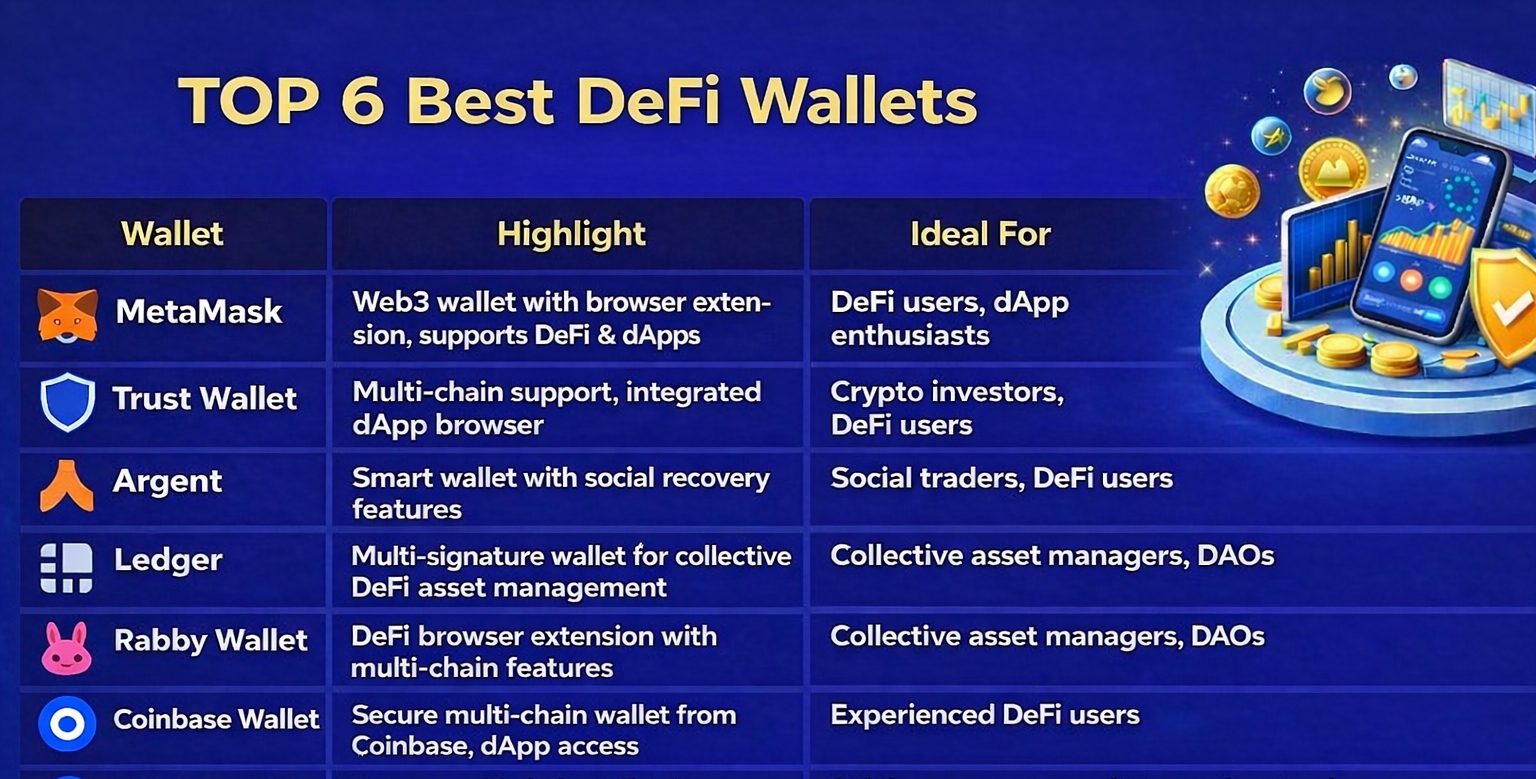
Table of Contents
- What Is a DeFi Wallet?
- How Does It Work?
- Types of DeFi Wallets
- Best DeFi Wallets Compared in a Table
- Top 6 Best DeFi Wallets
- Key Features to Consider
- How to Choose the Right DeFi Wallet
- FAQs on Best DeFi Wallets
What Is a DeFi Wallet?
A DeFi wallet is a non-custodial digital solution that enables users to maintain complete control over their cryptocurrency assets and private keys. Unlike keeping crypto on an exchange (where the platform holds your funds for you), a DeFi wallet puts you in charge of your assets and your private keys. It also acts as your access pass to decentralized finance apps (dApps) across several blockchain networks.
DeFi wallets serve as users’ gateway to decentralized applications—they let users cut out the middlemen and get directly into swapping tokens, adding liquidity to pools to generate returns, and freely participating in lending protocols.
Read more: Debt Snowball vs. Avalanche Method: Which Pays Off Debt Faster?
How Does It Work?
DeFi wallets use pairs of cryptographic keys: public and private. People can move funds to your public key, which is your receiving address. But how will you easily send out funds from your wallet? Your private key is what actually grants you the access to make external transactions.
Anytime you use a DeFi wallet it will ask you to confirm transactions with your signature. This adds a layer of good security so that only you can initiate transfers and interact with protocols from your wallet.
Types of DeFi Wallets
There are 4 main types of DeFi wallets. Each solution gives a different security model and user experience:
1. Browser Extension Wallets: Browser Extension Wallets are tools that sit inside the web browsers. These wallets give you access to the DeFi protocols and makes it possible for you to connect to dApps with a click that keeps keys in the browser storage. MetaMask and Rabby are examples of Browser Extension Wallets.
2. Mobile Application Wallets: Mobile Application Wallets give smartphone users access to DeFi through the native app. These wallets are portable and include QR code scanning. They also use authentication to confirm transactions. Trust Wallet is an example of a Mobile Application Wallet.
3. Hardware Wallets: Physical devices that store keys offline in storage memory use hardware wallets. The hardware wallets keep the keys safe by staying from any internet connected device. They also let you use DeFi apps through companion applications. Ledger leads the security focused segment.
4. Smart Contract Wallets: Think of these as the next-generation, programmable wallets. Instead of just holding your assets, they run on automated smart contract code right on the blockchain. A great example of this innovation in action is Argent.
Read more: A Deep Dive into Secured vs Unsecured Loan
Best DeFi Wallets Compared in a Table
Here is a summarized comparative overview of all wallets analyzed in this guide:
| Wallet Name | Type | Supported Chains | Security Level | DeFi Integration | Mobile Support | Cost |
|---|---|---|---|---|---|---|
| MetaMask | Browser Extension | 100+ (EVM) | High | Excellent | Yes (iOS, Android) | 0.875% swap fee |
| Trust Wallet | Mobile App | 100+ | High | Excellent | Yes | variable network (gas) fee |
| Ledger | Hardware | 50+ | Maximum | Good | Yes | $79-$279 |
| Rabby Wallet | Browser Extension | 80+ (EVM) | High | Excellent | No | Free |
| Argent | Smart Contract | Ethereum, zkSync | Very High | Good | Yes (iOS, Android) | Free |
| Coinbase Wallet | Mobile/Extension | 100+ | High | Good | Yes | Free |
Top 6 Best DeFi Wallets
Looking for the best DeFi wallets? Here is a detailed analysis of top 6 solutions each offering unique advantages for different user needs:
1. MetaMask
Best for: Beginners and general DeFi users.
MetaMask dominates the DeFi wallet landscape with over 30 million monthly active users globally. The platform handles Ethereum and all EVM-compatible chains including Polygon and Arbitrum and Optimism and BNB Chain.
Pros:
- Industry-standard wallet with universal dApp compatibility
- Built-in token swap functionality through MetaMask Swaps
- Portfolio tracking and NFT display capabilities
- Hardware wallet integration support (Ledger, Trezor)
Cons:
- Potential phishing risks through browser extension vulnerabilities
- Limited customer support options
- Network fees can be confusing for beginners
Recent Update: MetaMask has recently added native Bitcoin support, allowing users to send, receive, buy, and swap BTC directly in the app alongside Ethereum and Solana. It is also important to note that modern DeFi wallets increasingly support account abstraction, a groundbreaking upgrade that transforms how users interact with blockchain networks. Unlike traditional wallets that require you to hold native tokens (like ETH) to pay gas fees, account abstraction enables smarter and more flexible wallet functionality.
Read more: How to Create a Debt-Free Budget: 5 Key Strategies
2. Trust Wallet
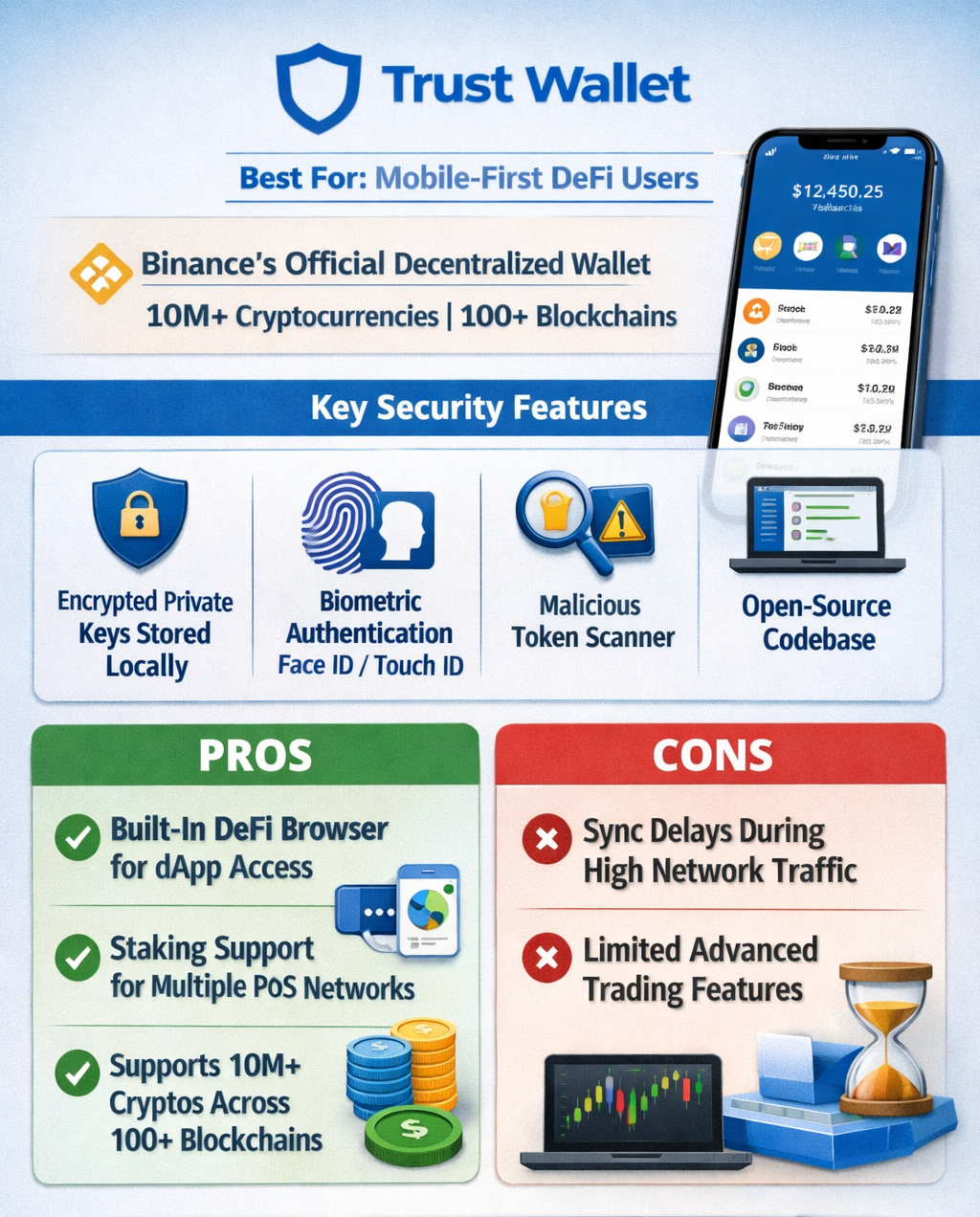
Best For: Mobile-first DeFi users.
Trust Wallet serves as Binance’s official decentralized wallet supporting over 10 thousand cryptocurrencies across 100+ blockchains. The mobile-native application combines comprehensive asset support with user-friendly design principles.
Security Features:
- Encrypted private keys stored locally on device
- Biometric authentication (Face ID, Touch ID)
- Security scanner for malicious tokens
Pros:
- Built-in DeFi browser for mobile dApp access
- Staking capabilities for multiple proof-of-stake networks
- Multi-coin support exceeding most competitors
Cons:
- Occasional synchronization delays during high network activity
- Limited advanced trading features compared to desktop solutions
3. Ledger (Hardware Wallet)
Best For: Security-conscious investors and long-term holders.
Ledger represents the gold standard in hardware wallet security with devices sold in over 200 countries. The offline cold storage solution protects assets through certified secure element chips resistant to physical attacks.
Key Features:
- Ledger Live application for DeFi protocol interaction
- Support for 5,500+ cryptocurrencies
- Bluetooth connectivity for mobile DeFi access
Pros:
- Highest security level through air-gapped storage
- Protection against online hacking attempts
- Recovery phrase backup system
Cons:
- Upfront hardware cost ($79-$279)
- Less convenient for frequent traders
4. Rabby Wallet
Best For: Experienced DeFi power users.
Rabby is an alternative to MetaMask built specifically for multi-chain DeFi operations. For cross-chain arbitrage, Rabby shows your balances from different networks all in one place, simulates the whole transaction process, and highlights any sketchy contracts that have little history. The browser extension wallet addresses common pain points through advanced security features and intelligent transaction simulation.
Pros:
- Pre-transaction simulation showing expected outcomes
- Automatic malicious contract detection
- Multi-chain balance aggregation in single interface
- Superior UX for complex DeFi strategies
Cons:
- No mobile application currently available
- Smaller user base compared to MetaMask
5. Argent
Best For: Users prioritizing social recovery and enhanced security.
Argent pioneered smart contract wallet technology on Ethereum and zkSync Era. The mobile-first solution eliminates seed phrase vulnerability through innovative social recovery mechanisms.
Security Innovation:
- Guardian system for account recovery (no seed phrases)
- Spending limits and transaction delays
- Biometric authentication requirements
Pros:
- No private key management complexity
- Gas-free transactions on Layer 2
- Built-in DeFi earn opportunities
Cons:
- Limited blockchain support (Ethereum, zkSync only)
- Smaller dApp ecosystem compatibility
6. Coinbase Wallet
Best For: Users transitioning from centralized exchanges.
Coinbase Wallet operates as a separate non-custodial solution from Coinbase exchange enabling self-custody with familiar branding. This Defi wallet operates as the premier multi-signature wallet solution managing over $100 billion in crypto assets.
Pros:
- Easy migration from Coinbase exchange
- Username system (no complex addresses)
- Extensive educational resources
Cons:
- Occasional connection issues with certain dApps
- Higher than average network fees
Read more: How to Track Your Monthly Expenses: A Complete Guide to Financial Control
Key Features to Consider When Choosing DeFi Wallets
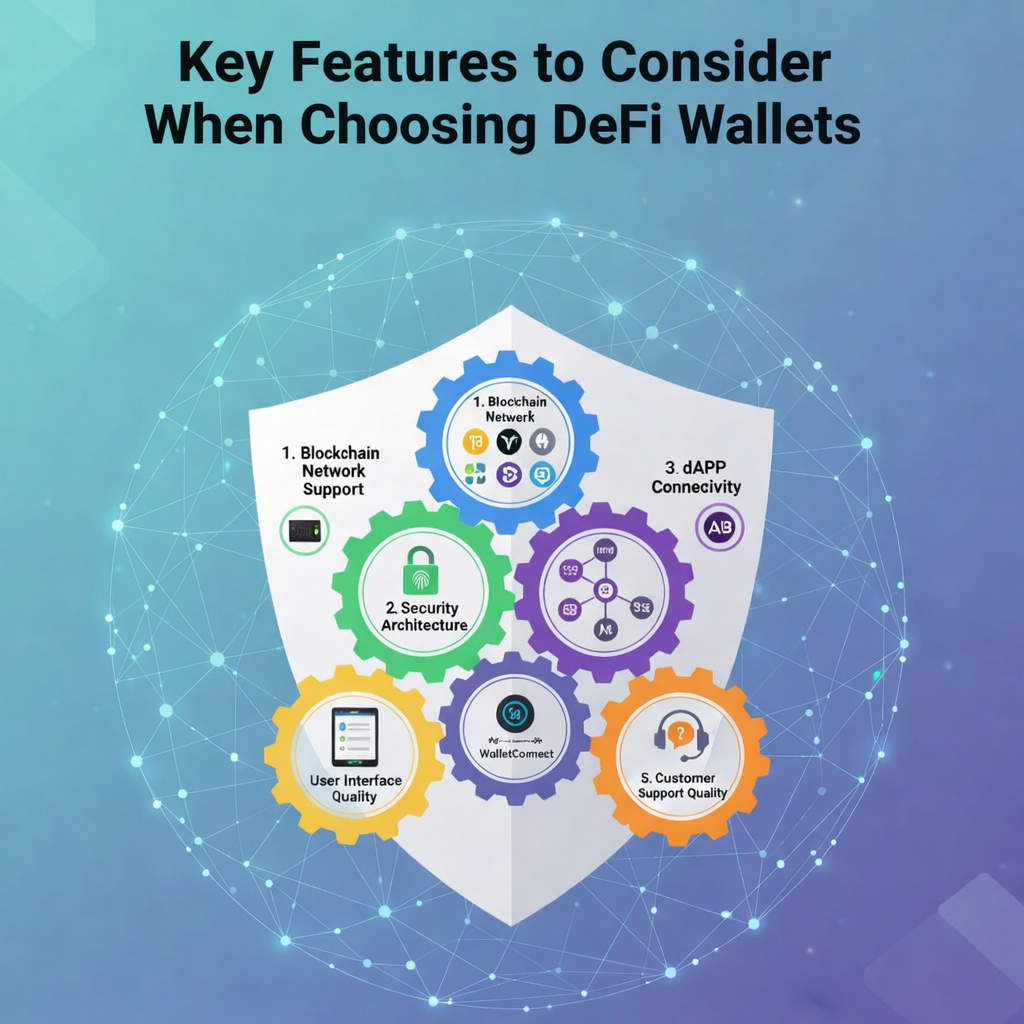
Selecting optimal DeFi wallet solutions requires evaluation of these critical features:
1.Blockchain Network Support: Verify the wallet supports networks you intend to use for DeFi activities. Multi-chain compatibility becomes essential for diversified strategies.
2. Security Features: Look at how the wallet protects your keys. Does it offer good encryption and backup options? These prevent permanent fund loss.
3. dApp Connectivity: Ideally you want something with seamless integration, either through WalletConnect or your browser.
4. User Interface Quality: Intuitive design reduces operational errors while complex interfaces may overwhelm beginners.
5. Customer Support Quality: Reliable assistance proves crucial when encountering technical issues or security concerns.
How to Choose the Right DeFi Wallet
Optimal wallet selection depends on your specific requirements and usage patterns:
Experience Level:
- Beginners: MetaMask, Trust Wallet, Coinbase Wallet for straightforward interfaces and educational resources
- Advanced Users: Rabby excels at multi-chain management
Security Priorities:
- Maximum Protection: Ledger hardware wallets with offline storage
- Standard Security: MetaMask, Trust Wallet with proper operational security
Read more: Savings Vs. Investing: Which One Should You Choose?
FAQs on Best DeFi Wallets
Here are two most frequently asked trending questions and answers on the best DeFi wallets comparison guide.
What’s the safest DeFi wallet in 2026?
Hardware wallets like Ledger and Trezor provide the highest security level through offline private key storage. As for software solutions, Rabby and Argent stand out with fancy security features like transaction simulators and social recovery mechanisms respectively to help keep your assets safe.
Can I use the same wallet for multiple blockchains?
Yes, most modern best DeFi wallets support many blockchain networks. MetaMask and Trust Wallet let you manage assets across 100+ different chains all in one app.
Conclusion
Picking the best DeFi wallet is a good choice for you to easily keep your funds safe and use decentralized finance without hassles. In this guide, we’ve done a good optimized analysis of the best DeFi wallets comparison. Each of the wallets we’ve talked about has its own strengths and weaknesses, whether it’s institutional-grade security or just plain ease of use thanks to that mobile-first design. Take time to understand the specific wallet features and security practices before committing significant assets to any solution.
Related Contents:
- Debt Snowball vs. Avalanche Method: Which Pays Off Debt Faster?
- How to Track Your Monthly Expenses: A Complete Guide to Financial Control
- How to Create a Debt-Free Budget: 5 Key Strategies
- How to Pay Off Debt Quickly
- A Deep Dive into Secured vs Unsecured Loan
- Reserve Fund vs. Savings Account: What’s the Difference?
- Savings Vs. Investing: Which One Should You Choose?
- Basic Financial Concepts You Should Understand
- How to Build Your Reserve Fund: A Step-by-Step Guide for the New Year
- Where to Keep Your Reserve Fund: Best Accounts Compared