
Written by: Segun Akomolafe
You’re living through a transportation revolution. Self-driving cars that once seemed like science fiction are navigating roads worldwide, transforming how you’ll commute, travel, and think about vehicle ownership. Understanding autonomous vehicle systems & levels helps you grasp where this technology stands today and what’s coming tomorrow.
Decoding the Classification Framework
The Society of Automotive Engineers (SAE) created a standardized classification that breaks autonomous technology into six distinct levels, from zero automation to full autonomy. This framework isn’t arbitrary—it defines precisely who controls your vehicle at any moment and under what circumstances.
Level 0 means you’re doing everything. Your car might warn you about lane departure or forward collisions, but it won’t take action. You steer, accelerate, brake, and maintain constant vigilance.
Level 1 introduces single-function assistance. Adaptive cruise control manages speed while you handle steering, or lane-keeping assistance guides steering while you control velocity. You’re still the driver, just with one helpful copilot function engaged.
Level 2 combines multiple functions simultaneously. Your vehicle can steer, accelerate, and brake in specific scenarios like highway driving, but you must keep hands on the wheel and eyes on the road. Tesla’s Autopilot and GM’s Super Cruise operate here. The technology handles tactical maneuvers while you maintain strategic oversight and readiness to intervene instantly.
Level 3 represents a significant leap. Your vehicle drives itself in defined conditions, and you can divert attention to other activities—checking emails, watching videos. However, the system will request you resume control when it encounters situations beyond its capabilities, giving you sufficient transition time. This is where autonomous vehicle systems & levels become genuinely transformative, though Level 3 vehicles remain rare in North America due to regulatory complexity.
Level 4 eliminates the steering wheel requirement within specific operational domains. Your robotaxi navigates designated urban areas completely autonomously. You’re a passenger, not a driver. If conditions exceed system parameters—severe weather, construction zones, unmapped territories—the vehicle either avoids those areas or safely pulls over rather than requesting human intervention.
Level 5 achieves unrestricted autonomy. Your vehicle handles any road, weather condition, or scenario a human driver could manage. No steering wheel, no pedals, no geographic limitations. This remains aspirational, with significant technical and regulatory hurdles still ahead.
Read more: Autonomous Vehicle Safety & Testing Protocols
Technical Architecture Powering Autonomy
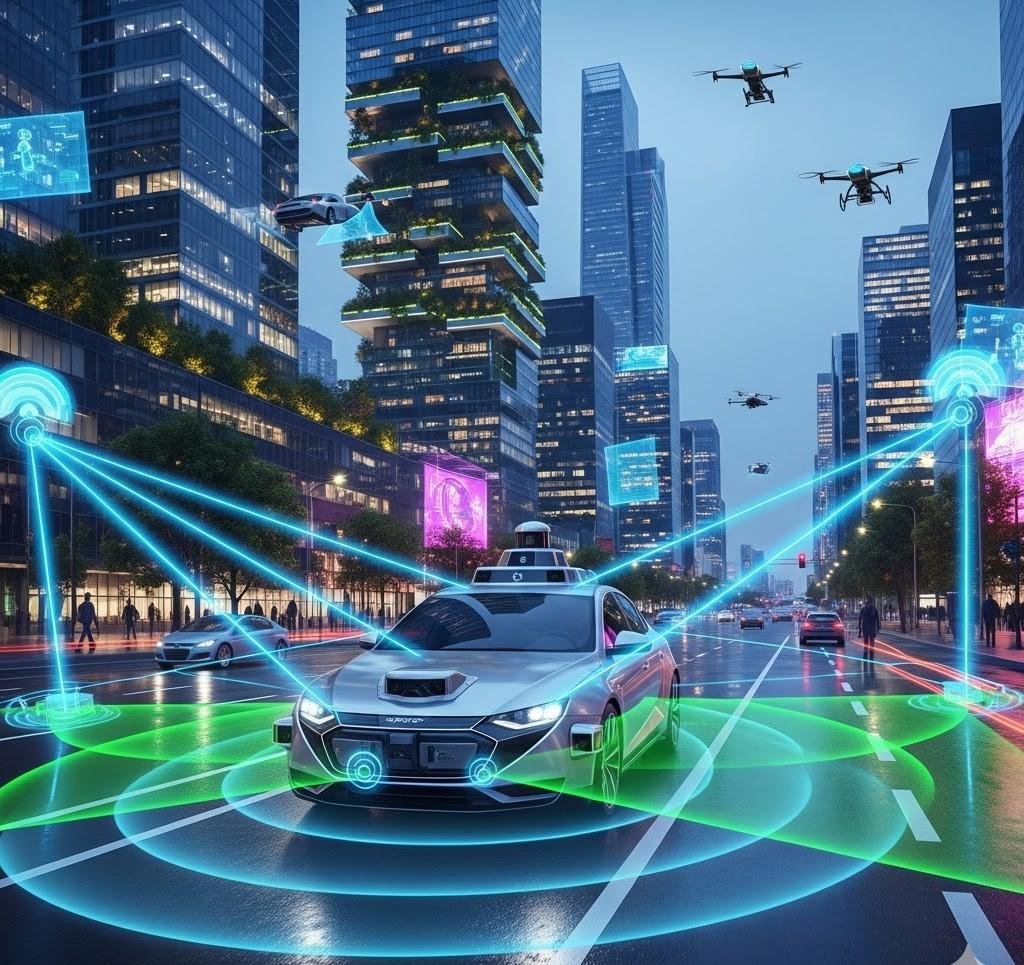
Autonomous vehicle systems & levels rely on sophisticated sensor fusion, combining multiple perception technologies to build comprehensive environmental understanding. You need redundancy—if one sensor fails or provides ambiguous data, others compensate.
LiDAR (Light Detection and Ranging) emits laser pulses, measuring reflection time to create precise three-dimensional maps of surroundings. It excels at detecting objects’ exact position and shape, functioning effectively in darkness, but struggles with heavy rain or fog.
Radar penetrates weather conditions LiDAR can’t handle, detecting objects through precipitation and measuring their velocity via Doppler effect. It’s your reliable backup when visibility drops.
Cameras provide rich visual detail—reading traffic signs, distinguishing signal colors, identifying lane markings. Modern systems employ multiple cameras covering 360 degrees, but they struggle with glare, darkness, and adverse weather.
Ultrasonic sensors handle close-range detection during parking and low-speed maneuvers, supplementing longer-range technologies.
Processing this sensory deluge requires immense computational power. Your autonomous vehicle runs sophisticated neural networks trained on billions of miles of driving data, making split-second decisions about trajectory planning, obstacle prediction, and safe navigation paths.
|
System Component |
Primary Function |
Operational Challenge |
|---|---|---|
|
LiDAR |
3D environmental mapping |
Weather interference |
|
Radar |
Object detection through weather |
Lower resolution than LiDAR |
|
Cameras |
Visual recognition and classification |
Light-dependent performance |
|
Ultrasonic Sensors |
Close-range detection |
Limited range |
|
Computing Platform |
Real-time decision processing |
Heat management and power consumption |
Read more: Understanding V2X Technology in Autonomous Driving
Real-World Deployment and Constraints
Understanding autonomous vehicle systems & levels reveals why full autonomy hasn’t arrived universally. Level 4 robotaxis operate successfully in Phoenix, San Francisco, and other cities with favorable conditions—predictable weather, well-maintained roads, clear lane markings. These systems accumulate millions of autonomous miles, but they’re geofenced to mapped, tested territories.
Your personal vehicle likely maxes out at Level 2, regardless of marketing claims suggesting otherwise. Manufacturers face liability concerns, regulatory uncertainty, and technical limitations preventing higher autonomy in consumer vehicles. The “edge cases”—rare but critical scenarios like construction zones with ambiguous signage, emergency vehicle approaches, or aggressive human drivers—remain challenging for artificial intelligence to navigate safely.
Weather represents a formidable obstacle. Heavy snow obscures lane markings your vehicle needs for navigation. Rain degrades LiDAR performance. Fog reduces camera effectiveness. Human drivers struggle too, but possess common sense, intuition, and generalized intelligence that current AI lacks.
Read more: Autonomous Vehicle Technology Trends: AI, Sensors & Hardware
Safety Implications and Statistics
You might wonder whether autonomous technology makes roads safer or more dangerous. Data suggests a nuanced answer.
Autonomous vehicle systems & levels at Level 2 and above reduce crashes caused by human inattention, delayed reaction time, and impaired driving—factors responsible for roughly 94% of accidents.
However, these systems introduce new failure modes: sensor malfunctions, software bugs, cybersecurity vulnerabilities, and difficulty interpreting unusual scenarios. Early autonomous testing has produced high-profile accidents, though companies argue their technology will ultimately surpass human safety records given sufficient development.
Your safety with partial automation depends critically on understanding system limitations and maintaining appropriate vigilance. Overconfidence in Level 2 systems causes dangerous complacency—you might become inattentive, assuming technology handles everything, then fail to intervene when needed.
Read more: 25 Technology Innovations Driving Business Growth
What This Means for Your Future
The progression through autonomous vehicle systems & levels will reshape your relationship with transportation fundamentally. You might abandon car ownership entirely, summoning autonomous rides on demand. Your commute could become productive work time or relaxation rather than stressful driving. Parking lots might transform into parks or housing as vehicle storage needs plummet.
Accessibility expands dramatically. If you’re elderly, visually impaired, or unable to drive for any reason, Level 4 and 5 autonomy restore mobility and independence previously requiring others’ assistance.
Your insurance costs may decrease as accident rates drop, though liability frameworks are evolving. If your autonomous vehicle crashes, is the manufacturer responsible? The software developer? You? Legal systems worldwide are grappling with these questions.
Read more: Wi-Fi 6 Vs. Wi-Fi 5: What are the differences?
Key Considerations Before Embracing Autonomy
- Geographic availability: Higher automation levels remain limited to specific cities and conditions, so verify your area’s support before purchasing
- System limitations: Weather, construction, unmapped roads, and unusual scenarios can exceed even advanced systems’ capabilities
- Regulatory landscape: Laws governing autonomous operation vary significantly by jurisdiction and continue evolving
- Technology maturity: Current consumer vehicles peak at Level 2, requiring your constant supervision despite marketing suggesting otherwise
- Maintenance requirements: Sensor cleanliness and calibration critically impact performance, demanding regular attention
Read more: Top 5 Electric Scooters for Urban Commuters
Frequently Asked Questions
Here are some of the most relevant questions that users have on autonomous vehicle systems & levels with the respective optimized answers to each of them.
What distinguishes Level 2 from Level 3 autonomy?
Level 2 requires your constant attention and readiness to take control instantly, even while the vehicle steers and manages speed. Level 3 allows you to engage in other activities, trusting the vehicle to drive independently within its operational domain and request intervention with adequate warning time when needed.
Can I legally use Level 3 autonomous features in the United States?
Currently, very few Level 3 systems have received regulatory approval for use on U.S. roads. Some manufacturers offer this technology in Europe or Japan but disable it in North America due to regulatory and liability concerns. Check your specific vehicle’s capabilities and local regulations before relying on any autonomous features.
How do autonomous vehicles handle situations not in their training data?
This represents a significant challenge. Advanced systems use machine learning to generalize from training data, but truly novel scenarios can confuse them. Level 4 and 5 systems are designed to recognize uncertainty and either navigate conservatively or safely stop when encountering unfamiliar situations, rather than making dangerous assumptions.
Will autonomous vehicles work in snow or heavy rain?
Current technology struggles significantly with severe weather. Snow obscures road markings and sensor readings, while heavy rain degrades LiDAR and camera performance. Most Level 4 deployments occur in regions with favorable weather, and systems may disable autonomous functions when conditions deteriorate beyond safe operational parameters.
When will fully autonomous vehicles become widely available?
Predictions vary dramatically. Level 4 robotaxis operate in limited areas now, but widespread Level 5 availability faces substantial technical, regulatory, and infrastructure challenges. Conservative estimates suggest another decade or more before you can purchase a truly steering-wheel-free vehicle capable of driving anywhere. Timelines depend on breakthrough developments in AI, sensor technology, regulation, and public acceptance.
Related Contents:
- Autonomous Vehicle Safety & Testing Protocols
- Understanding V2X Technology in Autonomous Driving
- Autonomous Vehicle Technology Trends: AI, Sensors & Hardware
- Top 5 Electric Scooters for Urban Commuters
- Top 5 Electric Bikes For Daily Commuting
- Top 10 Most Affordable Electric Vehicles
- Wi-Fi 6 Vs. Wi-Fi 5: What are the differences?
- 5G Network: Everything You Need to Know
- 25 Technology Innovations Driving Business Growth