
Written by: Segun Akomolafe
If you’ve struggled to healthily lose weight despite your best efforts, the problem might not be your willpower, it might be your planning. Learning how to create a 7-day meal prep plan for weight loss is one of the most effective strategies for achieving sustainable results. Unlike restrictive diets that leave you hungry and frustrated, a well-structured meal prep plan ensures you have nutritious, portion-controlled meals ready when you need them. This approach eliminates the guesswork, reduces decision fatigue, and helps you stay consistent. That’s the true secret to long-term weight loss success.
According to research from the International Journal of Behavioral Nutrition and Physical Activity, individuals who plan their meals in advance are more likely to maintain a healthy weight and make better food choices. When you remove the daily stress of deciding what to eat, you’re more likely to stick with your goals. This guide will walk you through everything you need to know to create an effective meal prep system that fits your lifestyle.
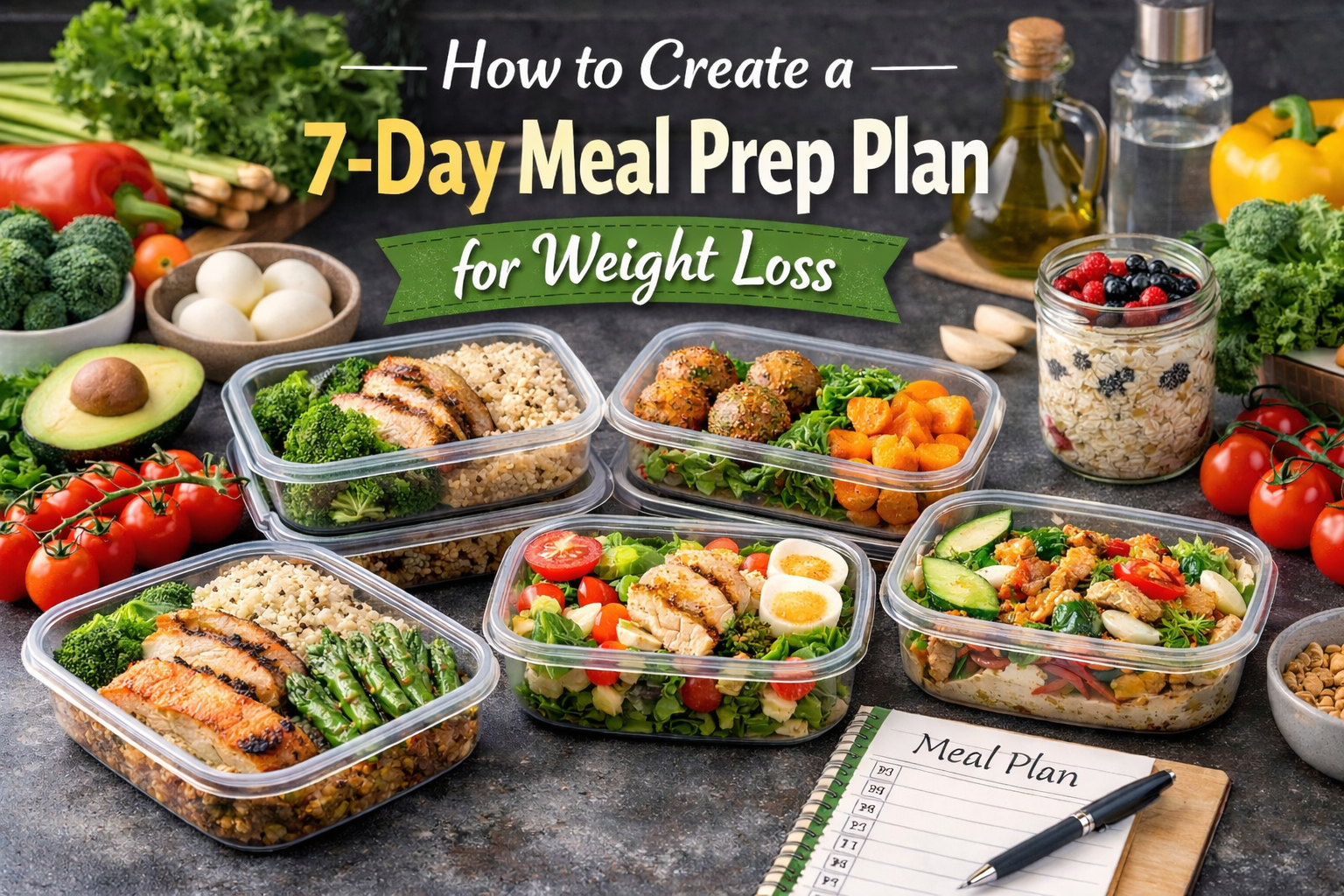
Why a 7-Day Meal Prep Plan Is Your Weight Loss Game-Changer
The seven-day timeframe isn’t arbitrary, it’s strategic. A week gives you enough variety to prevent boredom while maintaining a manageable scope that won’t overwhelm you. When you have the idea of how to create a 7-day meal prep plan for weight loss, you gain control over three critical factors: portion sizes, nutritional balance, and consistency.
First, portion control becomes automatic. When you prepare meals in advance, you’re making decisions from a calm, rational mindset, not when you’re starving at 7 PM after a long day. You can measure proteins, carbohydrates, and fats accurately, ensuring you stay within your caloric goals without the mental burden of tracking every bite.
Second, nutritional balance improves dramatically. Rather than grabbing whatever’s convenient (which is rarely nutritious), you’re eating meals designed with your health in mind. You can ensure adequate protein intake to preserve muscle mass, include plenty of vegetables for micronutrients and fiber, and choose complex carbohydrates that provide sustained energy without blood sugar crashes.
Third, consistency becomes effortless. The biggest challenge in weight loss isn’t what you eat on your “good” days, it’s what happens when life gets hectic. With prepped meals waiting in your fridge, you’ll eat nutritious food even on your busiest days. This consistency is what separates people who lose weight temporarily from those who keep it off permanently.
Read more: Meal Prep For Weight Loss: The Complete Beginner’s Guide
Your Step-by-Step Guide to Creating Your First 7-Day Plan
Now that you understand the benefits, let’s dive into the practical steps of how to create a 7-day meal prep plan for weight loss that actually works for your life.
Step 1: Calculate Your Daily Calorie Target
Before you prepare a single meal, you need to know your target calorie range. A sustainable weight loss goal is 1-2 pounds per week, which requires a daily deficit of 500-1,000 calories below your maintenance level. For most people, this means consuming 1,500-2,000 calories per day, though individual needs vary based on age, gender, activity level and current weight.
How to calculate your daily calorie target for weight loss: Subtract 500–1,000 calories from your TDEE. Multiply your body weight in pounds by 15 for your maintenance baseline, then reduce accordingly. This simple formula creates the precise caloric deficit needed to lose 1–2 pounds per week safely.
Use an online TDEE (Total Daily Energy Expenditure) calculator as a starting point, then adjust based on your results after two weeks. If you’re not losing weight, reduce calories by 100-200. If you’re losing more than 2 pounds per week, increase slightly to preserve muscle mass and maintain energy levels.
Calorie Target: In a nutshell, multiply your current body weight (lbs) by 10–12 (use 10 for sedentary, 12 for active). A 500-calorie daily deficit is the standard for losing ~1 lb per week.
Step 2: Choose Your Protein Sources
Protein is the cornerstone of any effective weight loss plan. It increases satiety, preserves lean muscle mass during calorie restriction, and has a higher thermic effect than fats or carbohydrates (meaning your body burns more calories digesting it). Aim for 0.7-1 gram of protein per pound of body weight daily.
Select 2-3 protein sources for the week: chicken breast, turkey, lean ground beef, fish (salmon, cod, tilapia), eggs, Greek yogurt, or plant-based options like tofu and tempeh. Batch-cook these proteins on your prep day using various methods, baking, grilling, or slow-cooking, to add variety without extra work.
A quick simple tip is to actually pick two recipes, shop once and prep in three hours. Clear containers and simple portions will transform your hectic work week. It is basically advisable that you also portion your food sizes to your personal activity level rather than a one size fits all approach. In simple terms, when it comes to meal prepping, it’s better you do what works best for you.
Step 3: Plan Your Vegetables and Carbohydrates
Fresh vegetables transform boring meal prep into restaurant-quality dishes while adding low calories, making your weight loss journey more enjoyable and sustainable throughout the entire week.
Fill half your plate (50% of your plate) with non-starchy vegetables: broccoli, spinach, bell peppers, zucchini, cauliflower, and Brussels sprouts. This basically uses volumetric eating to stretch your stomach and trigger fullness hormones without the calories.
For carbohydrates, choose nutrient-dense options: sweet potatoes, brown rice, quinoa, oats, or whole wheat pasta. A serving size is typically 1/2 to 1 cup cooked, depending on your calorie targets. Time most of your carb intake around your workouts for optimal energy and recovery.
To avoid eating soggy food on day 5, prep for Mon-Wed and do a quick, 20-minute micro-prep on Wednesday for Thu-Fri. Try to only consume low-Sugar and lower added sugars to boost fat loss.
By cooking carbohydrates and vegetables at the same time in less than twenty minutes, air fryers transform meal preparation by preserving nutrients, using less oil, and producing a crispy texture fit for a good meal prep. For good nutrient density, prioritize vegetables for half of every plate to add volume without excessive calories.
Step 4: Don’t Forget Healthy Fats
Despite what outdated diet advice might suggest, fats are essential for hormone production, nutrient absorption and satiety. Include moderate amounts of olive oil, avocados, nuts, seeds, and fatty fish. Since fats are calorie-dense (9 calories per gram vs. 4 for protein and carbs), portion control is crucial. Measure oils and limit nuts to 1-2 ounces daily.
Make use of the 3-3-3 Rule: Prep 3 meals per day (breakfast, lunch, dinner) and focus on 3 core components per meal: a lean protein, a complex carb or healthy fat, and a vegetable.
Twenty minutes before every meal, sip sixteen ounces of water to boost fullness and cut calories by up to fifteen percent without feeling hungry or deprived.
Read more: The Complete Guide to Protein Supplements
Sample 7-Day Meal Prep Plan for Weight Loss
Here’s a practical example showing how to create a 7-day meal prep plan for healthy weight loss with approximately 1,600 calories per day:
| Day | Breakfast | Lunch | Dinner |
|---|---|---|---|
| Monday | Greek yogurt (1 cup) with berries & almonds | Grilled chicken breast (6 oz) with quinoa & roasted broccoli | Baked salmon (5 oz) with sweet potato & asparagus |
| Tuesday | Scrambled eggs (3) with spinach & whole wheat toast | Turkey and veggie wrap with hummus | Lean beef stir-fry with brown rice & mixed vegetables |
| Wednesday | Protein oatmeal with banana & peanut butter | Chicken salad with mixed greens & olive oil dressing | Grilled tilapia with quinoa & green beans |
| Thursday | Smoothie bowl with protein powder, berries & chia seeds | Turkey meatballs with zucchini noodles & marinara | Chicken breast with roasted Brussels sprouts & sweet potato |
| Friday | Egg white omelet with vegetables & avocado | Salmon poke bowl with brown rice & edamame | Turkey chili with mixed vegetables |
| Saturday | Greek yogurt parfait with granola & fruit | Grilled chicken Caesar salad (light dressing) | Baked cod with roasted vegetables & quinoa |
| Sunday | Protein pancakes with berries | Leftover turkey chili | Grilled chicken with roasted sweet potato & broccoli |
Note: This plan includes around 1,600 calories per day. Add 2-3 snacks (150-200 calories each) like protein shakes, fruit with nut butter, or vegetables with hummus to meet your individual calorie needs. Meals should be portioned into containers right away after cooking and stored in the refrigerator or freezer, depending on when they will be used.
To avoid taste fatigue and keep up your weight loss momentum, batch-cook sauces and marinades separately to change the flavors of the same proteins throughout the week. To keep prepped food from tasting bland, you basically need to add fresh herbs, citrus, or sugar-free sauces after reheating.
A quick tip is to shop your pantry: Look for what you already have (like half a bag of rice or frozen peas) and build one or two meals around those items to save money. To make things easy, you can concentrate on easy themes such as “Taco Tuesday” or “Stir-fry Friday,” which help avoid decision-making fatigue, while changing the protein or veggie.
Read more: Top 20 Ways to Relieve Stress and Anxiety
Essential Prep Day Tips for Maximum Efficiency
The key to successful meal prep isn’t just knowing what to cook, it’s optimizing your process. Here’s how to create a 7-day meal prep plan for weight loss efficiently without spending your entire weekend in the kitchen:
Start with a two-hour time block. Any more and you’ll burn out; any less and you’ll feel rushed. Begin by prepping your proteins, they take the longest. While chicken bakes or rice cooks, chop vegetables. Use sheet pans to roast multiple vegetables simultaneously. Invest in quality storage containers with tight-fitting lids to maintain freshness throughout the week.
Try the “micro-prep” method, which consists of a 90-minute Sunday batch cook followed by a 30-minute Wednesday refresh for days four through seven, for optimal freshness and efficiency.
High-quality meal prep containers, balanced macronutrients, clean eating guidelines, nutritious recipes, appropriate serving sizes, lean proteins, whole foods, fresh vegetables, and sustainable planning are all components of successful batch cooking.
Label every of the listed items with contents and date. Store proteins and carbs in separate containers from vegetables—this prevents sogginess and maintains texture. Keep sauces and dressings separate until you’re ready to eat. Freeze meals for days 5-7 if you’re concerned about freshness, then move them to the fridge the night before.
Furthermore, to ensure food safety, refrigerate meals for the first 3–4 days. Let your optimal nutrition targets be 1,500–2,000 calories per day (depending on activity level), with 30g+ of fiber daily and 80g+ of protein to manage hunger.
The 2-2-2 Rule: A popular meal prep framework: 2 liters of water daily, 2 structured main meals (lunch/dinner) based on protein+vegetables+smart carbs and 2 movement blocks (e.g., 20-min walks) designed to optimize your metabolic health and daily energy levels.
Necessary Meal Cooking Materials
With the proper equipment, the time on the meal preparation is shorter and less taxing. The following is what you would need to start with:
- Good airtight containers: Glass or BPA-free plastic containers that have tight-fit lids so that food can remain fresh.
- Kitchen food scale: Scale that is necessary to control the portion and calorie concentration precisely.
- Sharp knives and cutting boards: There are several cutting boards to avoid the cross-contamination.
- Sheet pans: To roast a number of proteins and vegetables at once.
- Measuring cups and spoons: This is important in terms of accuracy in portions and this is particularly important with high calorie fats.
- Labels and permanent markers: Label all items to monitor freshness.
- Freezing bags: Store up to 5-7 days in order to preserve the best quality.
Read more: How to Build a Sustainable Workout Routine
Common Mistakes That Sabotage Your Meal Prep Success
Even with the best intentions, certain pitfalls can derail your efforts when you’re learning how to create a 7-day meal prep plan for weight loss. Avoid these common errors:
Mistake 1: Prepping identical meals for every day. This is the fastest route to boredom and quitting. Instead, prep components that can be mixed and matched. Cook three different proteins, four vegetables, and two carb sources. Combine them differently each day for variety without extra work.
Mistake 2: Ignoring seasoning and flavor. Plain, unseasoned food might seem virtuous, but it’s unsustainable. Use herbs, spices, citrus, and vinegars liberally—they add flavor without calories. Experiment with different cuisines: Mexican one day, Mediterranean the next, Asian-inspired the following. Your taste buds will thank you.
Mistake 3: Not planning for snacks. Hunger between meals is inevitable, especially if you’re in a calorie deficit. If you don’t have healthy snacks prepped, you’ll raid the vending machine or office snacks. Portion out nuts (1 oz), cut vegetables with hummus, or prepare protein balls for grab-and-go options.
Mistake 4: Underestimating portion sizes. Even healthy foods can stall weight loss if you eat too much. Use a food scale for the first few weeks to calibrate your portions. You’ll likely find that your “eyeball” servings are 30-50% larger than you thought.
Read more: 12 Tips for Healthy Weight Loss
Shopping Strategies and Budget-Friendly Tips
The knowledge of how to create a 7-day meal prep plan for weight loss extends to smart grocery shopping. Your success starts in the store, not the kitchen.
Shop with a detailed list organized by store sections. Buy proteins in bulk when on sale and freeze portions immediately. Choose frozen vegetables—they’re just as nutritious as fresh, often cheaper, and never spoil. Generic or store brands are typically identical in quality to name brands but cost 20-40% less.
Seasonal produce is both cheaper and more flavorful. In winter, focus on root vegetables and hearty greens. In summer, take advantage of abundant peppers, zucchini, and tomatoes. Plan your meals around what’s on sale rather than rigidly sticking to a predetermined menu—this flexibility saves money while maintaining nutritional quality.
Buy larger quantities of pantry staples like rice, quinoa, oats, and canned beans. These have long shelf lives and cost significantly less per serving when purchased in bulk.
A $30 investment in these staples can last months, dramatically reducing your weekly grocery costs. You should try to use modern tools to make the 7-day meal prep plan more interesting and that’s possible if you Invest in glass containers to keep food fresher and prevent sogginess.
Read more: The Complete Guide to Healthy Grocery Shopping
Adjusting Your Plan for Different Goals and Lifestyles
The beauty of learning how to create a 7-day meal prep plan for weight loss is its adaptability. Whether you’re vegan, have food allergies, work night shifts, or travel frequently, the core principles remain the same—only the specifics change.
For vegetarians and vegans, substitute animal proteins with legumes, tofu, tempeh, seitan, and quinoa. Ensure adequate protein intake by combining complementary proteins throughout the day. Add nutritional yeast for B vitamins and consider supplementing with B12.
If you have a demanding work schedule, prep on your least busy day—this might be Wednesday instead of Sunday. Prepare grab-and-go meals that don’t require reheating: mason jar salads, cold grain bowls, or wraps. Keep emergency meals in your freezer for truly chaotic weeks.
For those who travel for work, prepare portable meals in insulated bags with ice packs. Many hotels have mini-fridges where you can store prepped meals. Alternatively, research healthy restaurant options at your destination Andy gggplan your meals accordingly, reserving meal prep for home days.
Read more: Strength Training for Beginners: A Detailed Guide
Your Journey to Sustainable Weight Loss Starts Today
The difference between people who successfully lose weight and those who struggle isn’t willpower or genetics—it’s preparation. When you commit to understanding how to create a 7-day meal prep plan for weight loss, you’re not just learning to cook; you’re building a sustainable system that removes obstacles between you and your goals.
Start small. Your first week won’t be perfect, and that’s completely fine. Maybe you only prep dinners, or perhaps you focus on just three days. The goal is progress, not perfection. Each week you’ll refine your process, discover which flavors you enjoy, and learn what containers work best for your needs. Also, consider adding proper recovery metrics to your workout routine to make it more sustainable.
Remember: you’re not just changing what you eat—you’re changing how you approach food. Instead of reactive eating driven by hunger and convenience, you’re making proactive choices aligned with your health goals. This shift in mindset is what transforms temporary diets into permanent lifestyle changes.
Block out time this weekend for your first prep session. Choose your recipes, make your shopping list, and set aside two hours. In twelve weeks, you’ll look back amazed at how this one habit transformed not just your weight, but your relationship with food, your energy levels, and your confidence. The best time to start was yesterday. The second best time is right now.
Quick insight: Reduce food waste during your 7-day meal prep plan by explicitly planning for leftovers (e.g., you can decide to turn your leftover roasted chicken into chicken salad).
A 7-day meal prep plan helps you lose weight sustainably by keeping calories in check, balancing your macronutrients, controlling portion sizes, including lean proteins and fiber-rich foods, cooking in batches, and sticking to healthy habits.
Read more: 8 Best Workouts to Keep You Healthy
FAQs on Creating a 7-Day Meal Prep Plan
Here are the most relevant answers to the top frequently asked questions on how to create a 7-day meal prep plan.
1. How long does meal-prepped food stay fresh in the refrigerator?
Most proteins and cooked vegetables stay fresh for 4-5 days when properly stored in airtight containers. Refrigerate food quickly at or below 4°C to prevent the growth of dangerous bacteria. This will extend the shelf life of your meal prep and protect your health. For optimal freshness, freeze meals you won’t eat within this timeframe. Make sure to seal your healthy meals properly in the fridge so that your lunches stay safe and fresh throughout a whole week.
2. Can I meal prep if I don’t enjoy eating the same foods repeatedly?
Absolutely. Prep versatile components rather than complete identical meals. Cook multiple proteins and vegetables, then combine them differently throughout the week using varied seasonings and cooking methods. Flavor diversity maximization avoids diet boredom while making your meal preparation for the week streamlined, healthy, and totally custom made. This ensures that your weight loss journey stays exciting and sustainable with fresh meal prep ideas every single day.
3. What’s the best way to reheat meal-prepped food without losing quality?
Microwave meals on medium power in 30-second intervals, stirring between rounds. Alternatively, reheat in an oven at 350°F for better texture, especially for proteins and roasted vegetables. Properly storing meals in airtight glass containers keeps your healthy prepped food fresh, safe, and flavorful for days. Always store your food in airtight glass containers before reheating to avoid soggy dishes and keep your food fresh for longer while maintaining optimal flavor and nutritional value.
Related Contents:
- Meal Prep For Weight Loss: The Complete Beginner’s Guide
- The Best Workouts to Maintain Healthy Weight Loss
- 12 Tips for Healthy Weight Loss
- 8 Best Workouts to Keep You Healthy
- The Complete Guide to Healthy Grocery Shopping
- Top 20 Ways to Relieve Stress and Anxiety
- The Complete Guide to Protein Supplements
- The 10 Best Yoga Mats For Daily Workout
- How to Build a Sustainable Workout Routine
- Strength Training for Beginners: A Detailed Guide