
Written by: Segun Akomolafe
The high pace of electric vehicle adoption has led to the acute requirement of a strong EV charging system. It is important to have an overview of available charging options regardless of whether that is your first electric car or you want to maximize your existing charging infrastructure. Starting with ultra-high charging networks to simple home charge installation, the EV charging field has been changing significantly to keep the demand.
This in-depth tutorial will take you through all you need to know about the modern EV charging infrastructure such as the various types of charging stations, ways to navigate fast charging networks, and what to take into consideration when you install it at home. Since the market of electric vehicles is growing extremely fast, proper choices about charging will save you time and money.
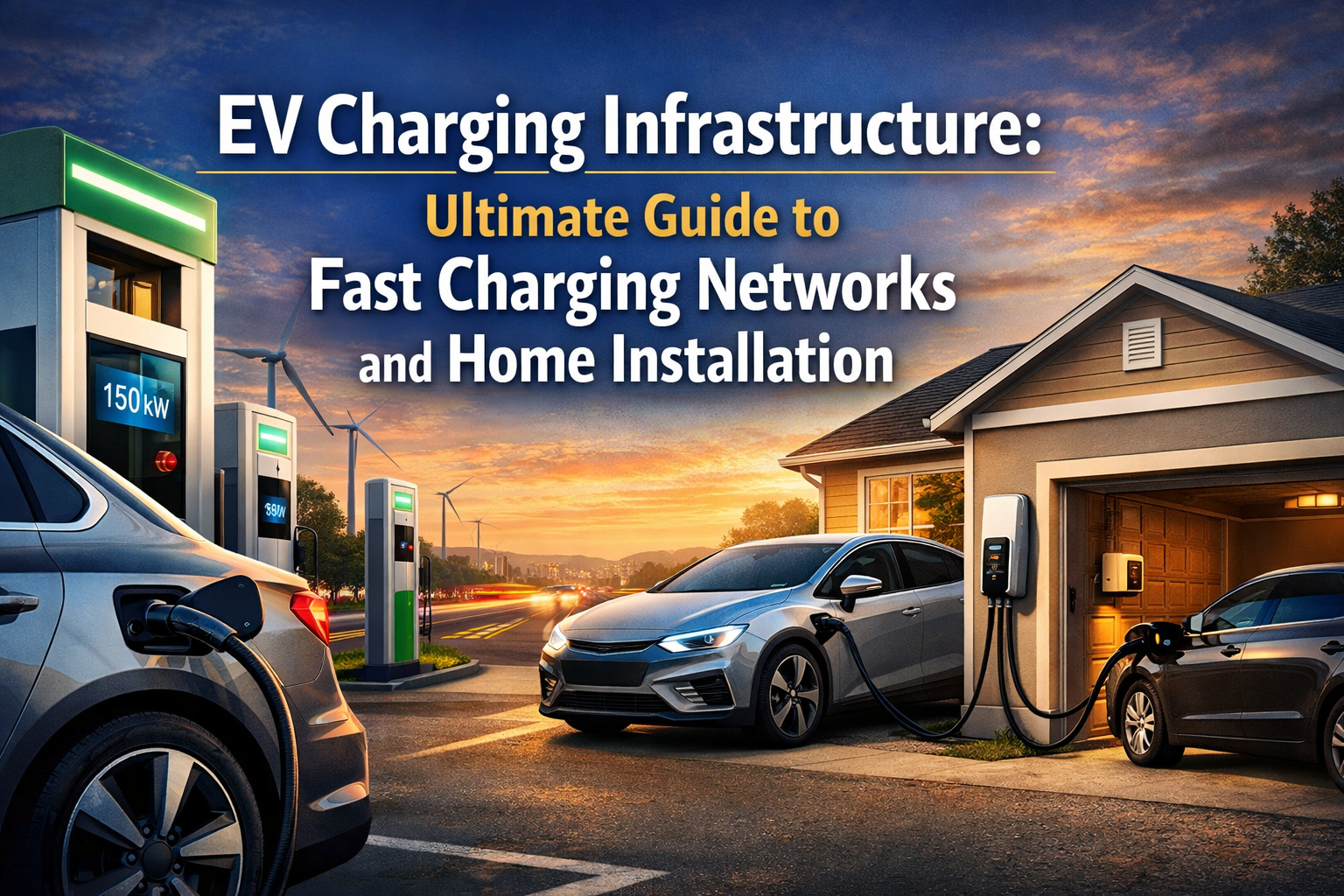
Learning EV Charging Infrastructure
The success of EV ownership is based on the availability of charging facilities. The modern EV charging system is a wide range of different ecosystems of charging technologies, including slow charging overnight at home to the high-speed public stations that can charge hundreds of miles of range in minutes. Infrastructure has been developed at a quick pace, and charges networks have increased by more than 30 percent a year in large markets.
The current charging system is designed with three major charging levels, which serve various purposes and have different charging speed rates. Knowing these differences enables the owners of EVs to make strategic decisions regarding the place and time of charging.
Charging is still in a dynamic state with the advent of new technology, such as vehicle-to-grid, intelligent AI-based energy control, and fast 350 kW+ charging that is transforming what is feasible. Key Trends: Vehicle-to-Grid (V2G) technology is now commercially viable, allowing drivers to sell power back, while AI makes it easier to manage the grid and keep chargers running.
Read more: Electric Vehicles vs. Autonomous Vehicles: Understanding the Key Differences
The Three Levels of EV Charging
The charging system is standardized and has three different levels that are applicable in different situations and vehicles. Level 1 charging is powered by a typical household power outlet (120-volt) and is the slowest, adding only 3-5 miles of range per hour. Although convenient in terms of charging overnight in the comfort of their home, Level 1 is not usually an effective charging option as far as the daily driver is concerned. Level 2 charging runs on 240 volt power; the same power as that of the electric dryers and ovens. This is the cushion in home charging, which provides 20-60 miles of range per hour to the vehicle based on the vehicle and charger specification.
The majority of EV owners place a Level 2 home charger, which makes it uncomplicated to charge overnight and it has removed range anxiety with regard to daily commuting. Public Level 2 stations are typical at work places, shopping centers and in the parking garages. DC fast charging is the ultimate charging speed, which does not rely on the onboard charger of the vehicle but charges it directly to the battery. Such stations can increment 100-200 miles of range in only 15-30 minutes, and the newest 350 kW ultra-fast chargers are even able to do more importantly. Here’s a detailed comparison:
| Charging Level | Voltage | Typical Speed | Best Use Case |
|---|---|---|---|
| Level 1 | 120V | 3-5 miles/hour | Emergency/overnight charging |
| Level 2 | 240V | 20-60 miles/hour | Home/workplace charging |
| DC Fast Charging | 400-800V DC | 100-200+ miles in 15-30 min | Road trips/quick charging |
The charging level you choose depends on your driving patterns, daily mileage, and available charging access. Most EV owners rely on Level 2 charging at home for daily needs and use DC fast charging for longer trips.
Read more: Autonomous Vehicle Systems & Levels
Navigating Fast Charging Networks
Public fast charging networks have transformed long-distance EV travel from challenging to convenient. The EV charging infrastructure market is projected to reach $90.4 billion by 2032, with major players like Tesla Supercharger, Electrify America, EVgo, and ChargePoint leading expansion efforts. These networks strategically position stations along highways and in urban centers to eliminate range anxiety.
Tesla’s Supercharger network remains the gold standard, offering over 50,000 stations globally with exceptional reliability and charging speeds up to 250 kW. Recently, Tesla began opening select Supercharger locations to non-Tesla vehicles, significantly expanding charging options for all EV drivers. Electrify America operates the largest open network in North America, with ultra-fast 350 kW chargers becoming increasingly common across their 900+ station locations.
When planning trips using fast charging networks, consider these factors: verify your vehicle’s maximum charging speed to avoid paying premium rates for speeds you can’t utilize, use network apps to check real-time station availability and pricing, and plan charging stops strategically during meal or rest breaks. Most networks offer membership programs with reduced per-kWh rates that quickly pay for themselves with regular use.
Read more: Understanding V2X Technology in Autonomous Driving
Home EV Charger Installation Guide
Installing a Level 2 home charger represents the most impactful investment in your EV charging infrastructure. Home charging typically costs 60-70% less per mile than public charging and offers unmatched convenience;you’ll wake up each morning to a fully charged vehicle. The installation process is straightforward but requires professional electrical work to ensure safety and optimal performance.
The first step is assessing your electrical panel capacity. Most homes have 100-200 amp service, and a Level 2 charger typically requires a dedicated 40-50 amp circuit. If your panel lacks available capacity, you may need an electrical panel upgrade, which adds $1,000-$3,000 to the project cost. Licensed electricians can evaluate your specific situation and provide accurate estimates.
Charger selection depends on your vehicle’s onboard charging capacity and your budget. Popular options include the ChargePoint Home Flex (adjustable amperage from 16-50 amps, $699), JuiceBox 40 (smart features and WiFi connectivity, $629), and Tesla Wall Connector (sleek design, $475). Total installation costs range from $500-$2,000 depending on the distance from your electrical panel to the charging location and any necessary electrical upgrades.
Don’t overlook available incentives. The federal tax credit provides up to 30% of installation costs (maximum $1,000), and many states and utilities offer additional rebates. Some utility companies even provide special EV charging rates with reduced electricity costs during off-peak hours, further lowering your charging expenses.
Read more: Autonomous Vehicle Technology Trends: AI, Sensors & Hardware
The Future of EV Charging Infrastructure
The evolution of EV charging infrastructure continues accelerating with transformative technologies on the horizon. Ultra-fast charging systems delivering 350 kW and beyond are becoming mainstream, with 20% of European Union chargers already operating at these speeds. These systems can add 200 miles of range in under 10 minutes, making charging times comparable to traditional gas station stops.
Vehicle-to-grid (V2G) technology represents another frontier, enabling EVs to return power to the grid during peak demand periods. This bidirectional charging capability transforms electric vehicles into mobile energy storage units, supporting grid stability while providing owners with additional revenue streams. AI-powered energy management systems are optimizing charging schedules based on electricity rates, renewable energy availability, and individual driving patterns.
Wireless charging technology, though still in early stages, promises even greater convenience by eliminating cables entirely. Companies are testing dynamic wireless charging systems that could charge vehicles while driving on specially equipped roads, potentially revolutionizing long-distance electric transportation.
Read more: Autonomous Vehicle Safety & Testing Protocols
Frequently Asked Questions
Here are the best simple answers to the most popular frequently asked questions about EV charging infrastructure:
How much does it cost to install a home EV charger?
Home EV charger installation costs $500-$2,000 depending on electrical panel distance and upgrades needed. Federal tax credits cover 30% of costs up to $1,000 maximum.
Can I use any public charging network with my EV?
Most EVs use standard CCS or CHAdeMO connectors compatible with major networks. Tesla vehicles require adapters for non-Tesla stations, though Tesla is opening select Superchargers. For safety and to keep charging equipment from breaking, it’s important to use official, approved adapters.
How long does it take to fully charge an electric vehicle?
Charging time varies by level: Level 1 takes 40-50 hours, Level 2 takes 4-10 hours, and DC fast charging reaches 80% in 20-40 minutes.
Related Contents:
- Autonomous Vehicle Safety & Testing Protocols
- Understanding V2X Technology in Autonomous Driving
- Autonomous Vehicle Technology Trends: AI, Sensors & Hardware
- Best GPS Navigation Systems for Autonomous Vehicles
- Top 10 Most Affordable Electric Vehicles
- Top 5 Electric Bikes For Daily Commuting
- Top 5 Electric Scooters for Urban Commuters
- Electric Vehicles vs. Autonomous Vehicles: Understanding the Key Differences
- Autonomous Vehicle Systems & Levels
- Sensor Fusion Technology in Autonomous Vehicles