
Written by: Segun Akomolafe
Choosing where to keep your reserve fund is one of the smartest financial decisions you can make. Your reserve fund needs to be accessible, safe, and ideally earning some return. This guide examines the best account options for your emergency savings, helping you make an informed decision that balances security with growth potential.
Quick Answer
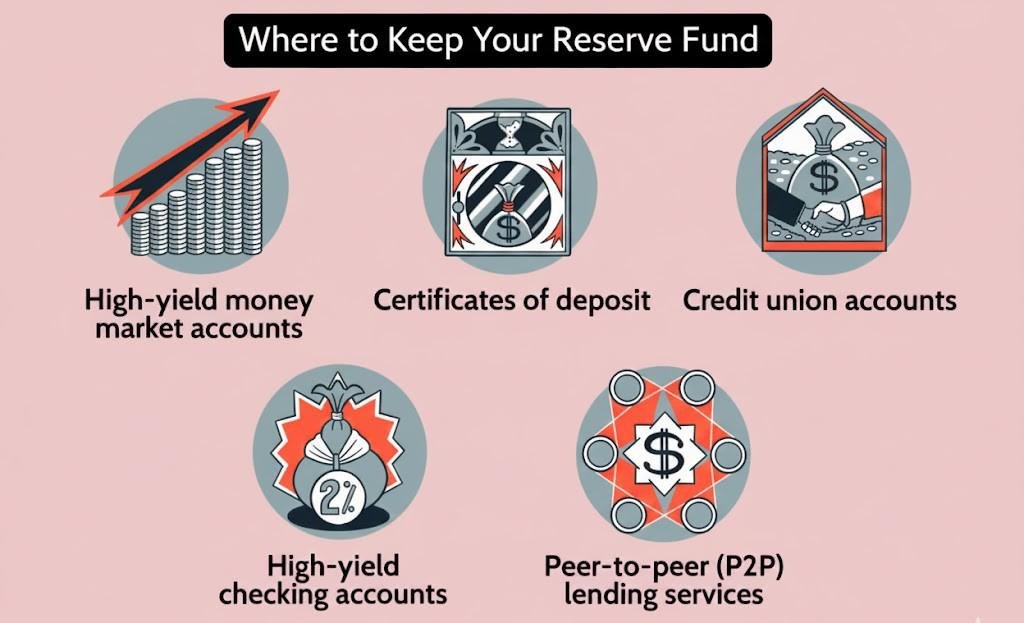
The best place to hold your reserve fund is a high-yield savings account because it’s FDIC insured up to $250,000, earns 4–5% APY and you can access your money within 1–2 business days. For larger reserve funds ($10,000+), split the balance between a high-yield savings account and a money market account for full liquidity and competitive rates.
Understanding Your Reserve Fund Needs
Before diving into specific account types, it’s essential to understand what makes a good home for your reserve fund. Financial experts typically recommend saving 3 to 6 months of living expenses in an easily accessible account. This money serves as your financial safety net for unexpected expenses like medical bills, car repairs, or sudden job loss.
When evaluating where to keep your reserve fund, you should prioritize three key factors: liquidity, safety and yield. Liquidity ensures you can access your money quickly when emergencies strike. Safety means your principal is protected from market volatility and loss. Yield, while less critical than the first two factors, helps your money maintain purchasing power against inflation.
Read more: How to Create a Debt-Free Budget: 5 Key Strategies
High-Yield Savings Accounts
High-yield savings accounts have become increasingly popular for reserve funds, and for good reason. Why? Because these accounts typically offer interest rates significantly higher than traditional savings accounts, often reaching 4% to 5% APY. Using top online banks to grow your emergency fund with compound interest helps you achieve your financial goals much faster. They’re FDIC-insured up to $250,000, meaning your money is protected even if the bank fails.
The primary advantage of high-yield savings accounts is their combination of accessibility and competitive returns. You can usually transfer money to your checking account within one to two business days, making them ideal for emergencies. Many online banks offer these accounts with no minimum balance requirements or monthly fees, maximizing your returns.
However, high-yield savings accounts do have limitations. Interest rates are variable and can decrease when the Federal Reserve lowers rates. Some accounts limit the number of withdrawals per month, though this restriction has become less common. Despite these minor drawbacks, they remain one of the strongest options when considering where to keep your reserve fund.
Read more: 20 Ways to Save Money in the New Year
Money Market Accounts
Money market accounts represent another excellent option for emergency savings. These accounts blend features of savings and checking accounts, often providing higher interest rates than traditional savings while offering check-writing privileges and debit card access. You need to find the best monthly maintenance fees and the highest fdic insurance protection limits from financial institutions to maximise yield liquidity.
Key benefits of money market accounts include:
- Competitive interest rates comparable to high-yield savings accounts
- FDIC insurance protection up to $250,000 per depositor
- Immediate access through checks and debit cards
- Tiered interest rates that reward higher balances
- Stability and safety for your principal investment
- High liquidity, no early withdrawal penalties (unlike Certificates of Deposit).
Money market accounts typically require higher minimum balances than savings accounts, often ranging from $1,000 to $10,000. They may also charge monthly maintenance fees if your balance drops below the minimum threshold. These requirements make them better suited for individuals who have already built a substantial reserve fund and want convenient access to their money.
Read more: How to Track Your Monthly Expenses: A Complete Guide to Financial Control
Certificates of Deposit (CDs)
While certificates of deposit earn competitive interest rates, they present challenges for reserve fund storage. CDs require you to lock up your money for a specific term, ranging from three months to five years. Why? Because withdrawing funds before maturity typically incurs early withdrawal penalties that can eliminate your earned interest and even eat into your principal.
For these reasons, traditional CDs aren’t ideal for your primary emergency fund. However, a CD ladder strategy can work as part of a broader reserve fund approach. This involves dividing your savings across multiple CDs with staggered maturity dates, ensuring some portion becomes available regularly.
No-penalty CDs, offered by some institutions, provide an alternative that allows withdrawals without penalties, though they typically offer lower rates than standard CDs.
Read more: How to Pay Off Debt Quickly
Traditional Savings Accounts
Traditional brick-and-mortar bank savings accounts remain a common choice, though they’re rarely the optimal solution when deciding where to keep your reserve fund. These accounts offer the convenience of in-person banking and the familiarity of established institutions. They’re FDIC-insured and provide easy access to your funds.
The significant drawback is their minimal interest rates, often below 0.5% APY. This means your money loses purchasing power to inflation over time. While the safety and accessibility are valuable, the opportunity cost of earning substantially less interest makes traditional savings accounts less competitive compared to online alternatives.
Read more: A Deep Dive into Secured vs Unsecured Loan
Comparison of Reserve Fund Account Options
In this section, I have included an updated table for comprehensive comparison of reserve fund account options.
| Account Type | Average APY | Liquidity | FDIC Insured | Minimum Balance | Best For |
|---|---|---|---|---|---|
| High-Yield Savings | 4.0-5.0% | High (1-2 days) | Yes | $0-$100 | Most reserve funds |
| Money Market Account | 3.5-4.5% | Very High (immediate) | Yes | $1,000-$10,000 | Larger reserve funds |
| No-Penalty CD | 3.0-4.0% | Medium (7 days) | Yes | $500-$1,000 | Disciplined savers |
| Traditional Savings | 0.1-0.5% | High (immediate) | Yes | $25-$100 | Branch banking needs |
| CD Ladder | 3.5-5.0% | Medium (staggered) | Yes | Varies | Long-term reserves |
Read more: How to Build Your Reserve Fund: A Step-by-Step Guide for the New Year
Making Your Decision
The answer to where to keep your reserve fund depends on your individual circumstances, but for most people, a high-yield savings account offers the best combination of accessibility, safety, and returns. These accounts have democratized competitive savings rates that were once available only to wealthy investors or those willing to accept restrictions on their money, helping everyday savers easily maximize interest growth and protect cash against inflation.
If you have a larger emergency fund exceeding $10,000, consider splitting your reserves between a high-yield savings account for immediate needs and a money market account for the remainder. This helps to secure your cash reserves with full FDIC insurance protection and maintain your immediate liquidity in a fluctuating interest rate environment. It also helps you to keep earning competitive rates on your entire balance while maximizing your overall wealth accumulation and optimizing your liquid cash management strategy safely.
Read more: 15 Best Online Banks for Reliable Savings
Optimizing Your Reserve Fund Strategy
Regardless of which account type you choose when determining where to keep your reserve fund, remember to shop around regularly by comparing high-yield savings accounts and money market yields. Interest rates fluctuate based on Federal Reserve policies and competitive pressures among financial institutions. What’s competitive today may be less attractive in six months, so review your options annually.
Additionally, ensure your chosen institution is FDIC-insured and has a solid reputation for customer service. In an emergency, you’ll want confidence that accessing your funds will be straightforward and stress-free. Read reviews, test the mobile app or online platform, and verify there are no hidden fees that could erode your savings.
Conclusion
Choosing where to keep your reserve fund is a critical decision that affects your financial security and peace of mind. High-yield savings accounts currently stand out as the optimal choice for most savers, offering the ideal balance of accessibility, safety, and competitive returns. Money market accounts serve as excellent alternatives for those with larger balances seeking additional convenience features.
Whatever option you select, the most important step is actually building and maintaining your reserve fund. By understanding the strengths and limitations of each account type, you can ensure your emergency savings work as hard for you as you worked to accumulate them. Your future self will thank you for both establishing this financial cushion and choosing the right home for it.
Related Contents:
- Debt Snowball vs. Avalanche Method: Which Pays Off Debt Faster?
- How to Track Your Monthly Expenses: A Complete Guide to Financial Control
- How to Create a Debt-Free Budget: 5 Key Strategies
- How to Pay Off Debt Quickly
- A Deep Dive into Secured vs Unsecured Loan
- Reserve Fund vs. Savings Account: What’s the Difference?
- 20 Tips For First-Time Home Buyers
- Savings Vs. Investing: Which One Should You Choose?
- 20 Ways to Save Money in the New Year
- How to Build Your Reserve Fund: A Step-by-Step Guide for the New Year