
Written by: Segun Akomolafe
When it comes to financial planning, understanding the differences between reserve fund vs. savings account can make a significant difference in achieving your goals. While both involve setting money aside, they serve different purposes and operate under distinct principles. This detailed guide will help you understand the nuances between these financial tools and determine which option best suits your needs.
Quick Answer
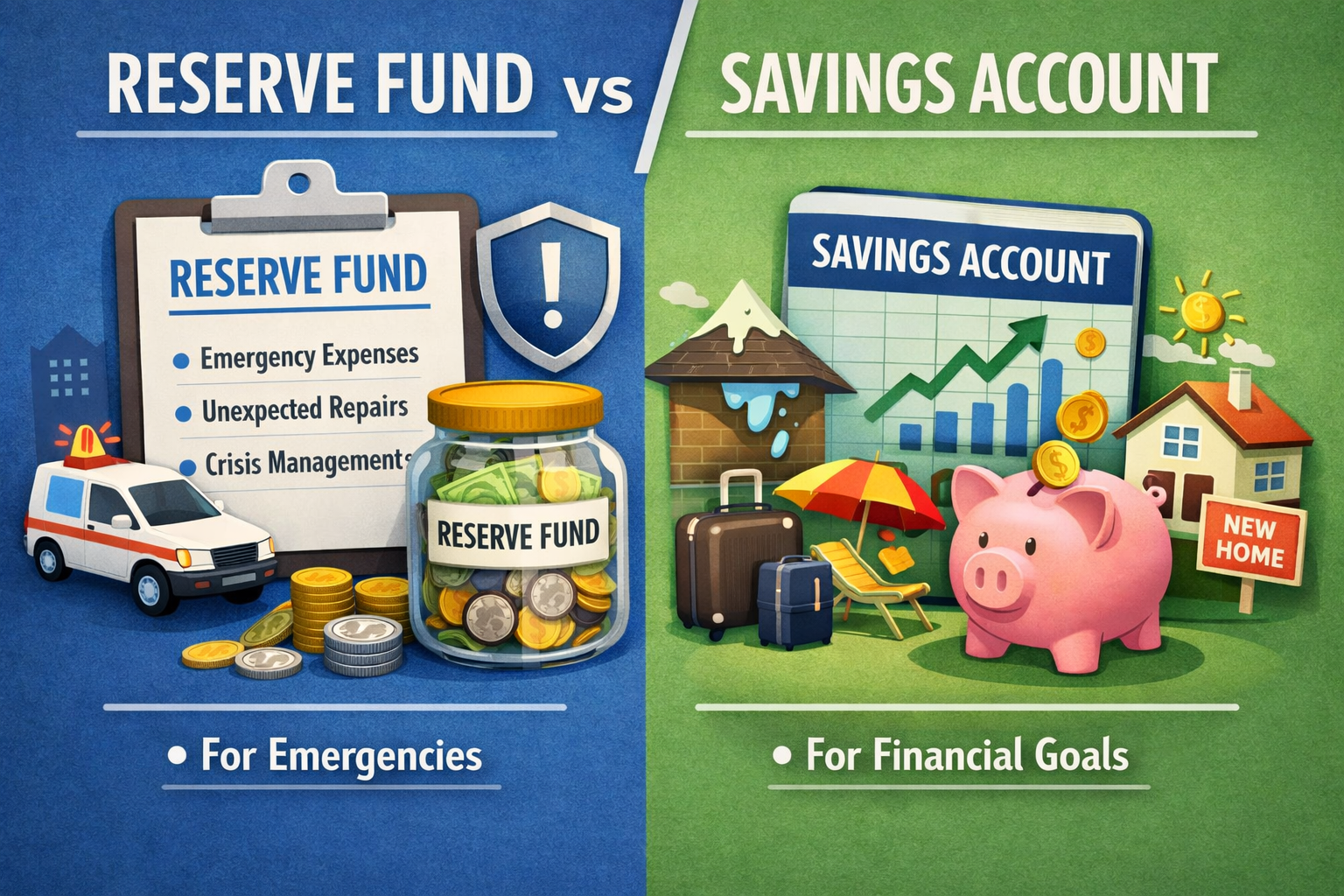
A savings account is for general goals and emergencies, offering high liquidity for unplanned needs. A reserve fund is money that is set aside for an anticipated future expense, such as equipment replacement or repairs to a HOA. These funds are less liquid.
Understanding the Basics
Before diving into the comparison, it’s essential to clarify what each term means. A savings account is actually a deposit account held at a financial institution that allows you to store money while earning interest. It’s a straightforward banking product that most people are familiar with and use regularly.
A reserve fund, on the other hand, is broader in concept. It refers to money set aside for specific purposes, emergencies, or future needs. Reserve funds can exist in various forms, including savings accounts, money market accounts, or even separate investment vehicles. The key distinction lies not in where the money is held, but in its designated purpose and the rules governing its use.
Read more: How to Create a Debt-Free Budget: 5 Key Strategies
The Purpose Behind the Money
The most fundamental difference in the reserve fund vs. savings account debate centers on intent and designation. Savings accounts are general-purpose vehicles where you can deposit money for any reason. You might save for a vacation, a new car, holiday shopping, or simply to build wealth over time. There’s flexibility in both deposits and withdrawals, and you decide how and when to use these funds.
Reserve funds are purpose-driven. They’re established with specific objectives in mind. For homeowners associations, a reserve fund covers major repairs and replacements of common property. For businesses, reserve funds might cover operational emergencies or economic downturns.
For individuals, a reserve fund typically means an emergency fund designed to cover three to six months of living expenses. The defining characteristic is that these funds are earmarked and protected for their designated purpose.
Read more: 20 Ways to Save Money in the New Year
Accessibility and Liquidity
When examining reserve fund vs. savings account options, accessibility plays a crucial role. Savings accounts offer high liquidity. You can typically withdraw money whenever needed, though some accounts may limit transactions to six per month under federal regulations. Online transfers, ATM withdrawals, and in-branch transactions make accessing your money straightforward and convenient.
Reserve funds, depending on their structure, may have more restrictions. While an individual’s emergency fund kept in a savings account remains accessible, organizational reserve funds often require approval processes before withdrawals.
Homeowners associations, for example, typically need board approval and may have legal requirements governing when reserve funds can be used. This restricted access serves an important purpose: it prevents the funds from being depleted for non-essential expenses.
Read more: How to Track Your Monthly Expenses: A Complete Guide to Financial Control
Growth and Interest Considerations
| Feature | Savings Account | Reserve Fund |
|---|---|---|
| Primary Goal | Flexible savings with modest growth | Preservation of capital for specific purpose |
| Interest Earnings | Variable rates, typically 0.01% to 5%+ | Depends on investment vehicle chosen |
| Risk Level | FDIC insured up to $250,000, minimal risk | Varies based on how funds are invested |
| Accessibility | High liquidity, easy withdrawals | May have restrictions or approval requirements |
| Ideal Use Cases | General savings, short-term goals | Emergency funds, planned major expenses, organizational needs |
The reserve fund vs. savings account comparison becomes more nuanced when considering growth potential. Traditional savings accounts offer modest interest rates that fluctuate with market conditions. High-yield savings accounts can provide better returns, but rates remain relatively conservative to maintain stability and liquidity.
Reserve funds may be invested more strategically depending on their purpose and timeline. Some organizations invest reserve funds in certificates of deposit, bonds, or diversified portfolios to generate better returns while managing risk.
However, the primary goal remains capital preservation rather than aggressive growth. The investment strategy for reserve funds balances the need for future availability with the desire for reasonable returns.
Read more: How to Pay Off Debt Quickly
Regulatory and Management Differences
Savings accounts operate under standard banking regulations. The Federal Deposit Insurance Corporation (FDIC) insures deposits up to $250,000 US dollars per depositor, per institution. Banks must follow federal and state banking laws, and consumers enjoy consistent protections regardless of where they open their accounts.
Reserve funds face different oversight depending on their context. Organizational reserve funds often must comply with governing documents, state laws, and industry regulations. For example, some states mandate that homeowners associations maintain minimum reserve levels.
Nonprofit organizations may face restrictions on how they invest and use designated funds. Individual emergency funds face no such regulations, giving savers complete discretion over management decisions.
Read more: A Deep Dive into Secured vs Unsecured Loan
Building and Maintaining Each Fund Type
The approach to building a reserve fund vs. savings account differs in discipline and strategy. Savings accounts can grow through:
- Regular automatic transfers from checking accounts
- Deposit of windfalls like tax refunds or bonuses
The pace and amount remain flexible based on your financial situation and goals. There’s no wrong way to save, and you can adjust contributions as circumstances change.
Reserve funds require more structured planning. Organizations typically conduct reserve studies to determine appropriate funding levels. These studies assess the condition of assets, estimate replacement costs, and establish contribution schedules.
Individual emergency funds follow guidelines suggesting three to six months of expenses, creating a clear target. The discipline lies in treating contributions as mandatory rather than optional, ensuring the fund reaches its designated level.
Read more: How to Build Your Reserve Fund: A Step-by-Step Guide for the New Year
Tax Implications
Understanding the reserve fund vs. savings account distinction matters for tax purposes. Business or HOA reserve fund interest rules and tax reporting obligations vary significantly depending on the specific entity type. Interest earned in personal savings accounts is taxable income reported on your annual tax return. The financial institution provides a 1099-INT form if you earn more than $10 in interest during the year.
Reserve funds held by organizations may receive different tax treatment. Nonprofit organizations often benefit from tax-exempt status, meaning interest and investment income may not be taxable. However, specific rules vary based on organizational structure and fund management. For individuals, reserve funds kept in standard savings vehicles face the same tax treatment as regular savings accounts.
Read more: 20 Tips For First-Time Home Buyers
Which Option Is Right for You?
The reserve fund vs. savings account question isn’t necessarily an either-or proposition. Most financial experts recommend maintaining both. A savings account serves as your flexible financial tool for planned purchases, goals, and general wealth building. It offers convenience and adaptability as your life circumstances change.
A reserve fund, specifically an emergency fund, provides financial security and peace of mind. By designating specific money for emergencies only, you create a buffer against life’s uncertainties without compromising your other financial goals. This separation helps maintain financial discipline and ensures you’re prepared when unexpected expenses arise.
For organizations, reserve funds aren’t optional, they’re essential to responsible financial management. They ensure long-term viability and protect against deferred maintenance becoming crisis management.
FAQs
Here are 3 FAQ entries that I have answered in an optimized way for your better understanding of reserve fund vs. savings account:
What’s the main difference between a reserve fund and savings account?
A reserve fund has a designated purpose like emergencies, while a savings account offers flexible access for any financial goal or expense. This separation prevents the accidental depletion of your emergency budget, protecting your long-term wealth from unexpected financial shocks or costly debt. To maximize your financial planning, maintain both a strict emergency buffer and an accessible account for wealth growth.
How much should I keep in my emergency reserve fund?
Financial experts recommend maintaining three to six months of essential living expenses in your emergency reserve fund for adequate protection. This basically ensures that you can cover unexpected job loss, medical bills, or urgent home repairs without resorting to high-interest debt or jeopardizing long-term investments. Building this cash reserve in a high-interest savings account enables you to earn maximum interest income while ensuring that the cash is entirely liquid.
Can I use a savings account as my reserve fund?
Yes, high-yield savings accounts work excellently as reserve funds, offering FDIC insurance, liquidity, and competitive interest rates for emergency savings. They also keep your cash safe and accessible, ensuring financial stability and peace of mind so you can quickly pay for unexpected expenses, such as car repairs or medical bills, while still earning decent interest, unlike a typical low-interest checking account. Maximizing your annual percentage yield with online banks helps build long-term wealth securely.
Conclusion
The distinction between reserve funds vs. savings account ultimately comes down to purpose, discipline, and designation. Savings accounts offer flexibility and convenience for general financial needs, while reserve funds provide structured, protected resources for specific purposes.
Understanding these differences empowers you to make informed decisions about your financial strategy. By maintaining both types of funds appropriately, you create a comprehensive approach to financial health that balances flexibility with security, ensuring you’re prepared for both planned goals and unexpected challenges.
Related Contents:
- Debt Snowball vs. Avalanche Method: Which Pays Off Debt Faster?
- How to Track Your Monthly Expenses: A Complete Guide to Financial Control
- How to Create a Debt-Free Budget: 5 Key Strategies
- How to Pay Off Debt Quickly
- A Deep Dive into Secured vs Unsecured Loan
- How to Improve Your Credit Utilization Ratio?
- 20 Tips For First-Time Home Buyers
- Savings Vs. Investing: Which One Should You Choose?
- 20 Ways to Save Money in the New Year
- How to Build Your Reserve Fund: A Step-by-Step Guide for the New Year