
Written by: Segun Akomolafe
You’ve probably seen them on your daily drive, sleek cars driving down the streets with little human input. But what differentiates experimental prototypes from trustworthy transportation? The answer is in rigorous safety frameworks that tell you if these machines are worthy of your trust.
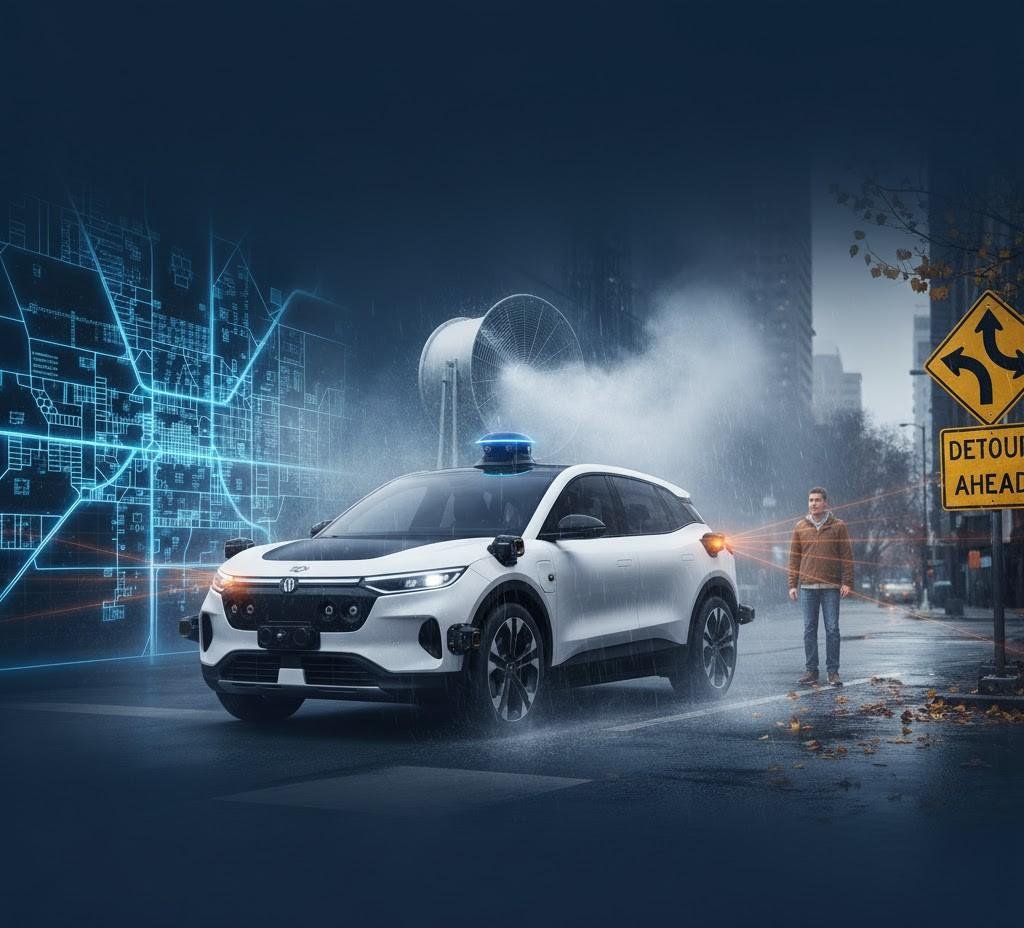
Quick Overview: Autonomous Vehicle Safety & Testing Protocols
Autonomous vehicle safety is dependent upon the existence of a comprehensive validation protocol. In order to make a transition from prototype to consumer vehicle, the self-driving system will have to clear itself through the safety protocols which consist of three key environments: simulation, test tracks, and public roads.
Why Testing Matters More Than You Think
When you hand over control to artificial intelligence traveling at highway speeds, you’re placing a bit of trust in systems most people never see. Autonomous vehicle safety & testing protocols represent the invisible shield between innovation and disaster, ensuring that algorithms make split-second decisions better than distracted, tired, or impaired human drivers ever could.
Traditional vehicles undergo crash tests and regulatory approval, but self-driving technology demands exponentially more scrutiny. You’re not just evaluating airbags and crumple zones, you’re assessing whether sensors detect pedestrians in rain, whether software handles construction zones, and whether systems respond appropriately when other drivers behave unpredictably.
Read more: Understanding V2X Technology in Autonomous Driving
The Multi-Layered Testing Ecosystem
Testing autonomous vehicles isn’t a single checkpoint but a comprehensive gauntlet that validates every component and scenario. Developers employ three distinct testing environments, each serving critical purposes:
Simulation Testing forms the foundation. Before any vehicle touches asphalt, you need millions of virtual miles testing edge cases—scenarios too dangerous or rare for real-world trials. Engineers create digital twins of cities, programming everything from sudden tire blowouts to deer crossing highways at dusk. These simulations run 24/7, exposing vehicles to centuries of driving experience compressed into weeks.
Read more: Autonomous Vehicle Technology Trends: AI, Sensors & Hardware
Closed-Course Testing bridges virtual and real worlds. Companies construct private facilities mimicking urban intersections, rural highways, and parking structures. Here, vehicles encounter controlled versions of challenging scenarios: mannequins darting between parked cars, sudden obstacles, adverse weather conditions generated by specialized equipment. You’ll find these proving grounds equipped with GPS jammers, radio frequency interference, and other technologies that stress-test sensor reliability.
Public Road Testing represents the ultimate validation. Real traffic patterns, unpredictable human behavior, and environmental variables that no simulation perfectly captures. This stage requires permits, safety drivers, and extensive documentation of every intervention, disengagement, and anomaly. California alone has logged over 5 million autonomous miles, generating invaluable data about real-world performance.
Read more: 25 Technology Innovations Driving Business Growth
Core Safety Components Under Examination
When you evaluate autonomous vehicle safety & testing protocols, you’re examining interconnected systems that must function flawlessly in concert:
| Safety Component | Testing Focus | Failure Consequence |
|---|---|---|
| Sensor Fusion | Object detection accuracy across LIDAR, radar, cameras | Collision with undetected obstacles |
| Decision Algorithms | Appropriate responses to traffic scenarios | Wrong maneuvers, rule violations |
| Redundancy Systems | Backup activation when primary systems fail | Total system failure, loss of control |
| Cybersecurity | Resistance to hacking, malware, unauthorized access | Vehicle hijacking, data breaches |
| Human-Machine Interface | Clear communication of vehicle status and intentions | Driver confusion, improper takeover |
Each component undergoes isolated testing before integration trials. Sensors face environmental chambers that simulate fog, blinding sun, and torrential downpours. Algorithms process millions of annotated images teaching them to distinguish plastic bags from pedestrians. Cybersecurity experts attempt breaching defenses using sophisticated attack vectors.
Read more: Wi-Fi 6 Vs. Wi-Fi 5: What are the differences?
Regulatory Frameworks Shaping the Industry
You might assume federal regulations govern autonomous testing uniform for navigating compliance across the modern autonomous vehicle market today, but the landscape remains fragmented. The National Highway Traffic Safety Administration provides voluntary guidelines rather than mandatory standards, leaving states to craft individual approaches.
This patchwork creates both innovation opportunities and compliance challenges. California requires comprehensive disengagement reporting, every instance when safety drivers override autonomous systems. Arizona initially embraced lighter regulation, attracting companies seeking faster deployment. Nevada pioneered licensing autonomous vehicles back in 2012, establishing precedents others followed.
International standards add another layer. The United Nations Economic Commission for Europe established requirements for automated lane-keeping systems, while ISO standards address functional safety for road vehicles. Companies developing vehicles for global markets must satisfy overlapping, sometimes contradictory requirements.
Read more: 5G Network: Everything You Need to Know
Metrics That Define Success
How do you measure whether an autonomous vehicle is “safe enough”? Autonomous Vehicle Safety & Testing Protocols establish quantifiable benchmarks:
- Miles Per Disengagement: Higher numbers indicate systems handling situations independently without human intervention
- Critical Event Frequency: Tracking near-misses, hard braking, and aggressive maneuvers per thousand miles
- Sensor Coverage Redundancy: Ensuring no “blind spots” where single sensor failures create detection gaps
- Response Time Latency: Measuring milliseconds between threat detection and corrective action initiation
- Weather Performance Degradation: Quantifying capability reduction in rain, snow, and fog
These metrics reveal more than averages—they expose outliers and edge cases where systems struggle. A vehicle might excel in suburban driving but show concerning patterns navigating dense urban intersections at rush hour.
The Human Element You Can’t Ignore
Despite “autonomous” implying independence, humans remain integral to safety validation. Professional safety drivers monitoring test vehicles require specialized training—staying alert during hours of monotonous autonomous driving while ready to intervene instantly when needed. This paradox of passive vigilance proves mentally exhausting and statistically risky.
Your role as a future passenger also matters. Autonomous vehicle safety & testing protocols increasingly incorporate human factors research, studying how people interact with autonomous features. Will you understand warnings? Trust the system appropriately without over-reliance? Provide clear inputs during edge cases requiring human judgment?
Companies conduct usability studies where you and other participants experience prototype interfaces, revealing confusion points and design flaws that pure engineering overlooks. Your feedback directly influences safety-critical interface decisions.
Read more: Top 5 Electric Scooters for Urban Commuters
Emerging Challenges Reshaping Testing
As technology evolves, so must validation approaches. Machine learning systems present unique challenges—they improve through experience but can develop unexpected behaviors. Unlike static code, neural networks create “black box” decision-making that even developers struggle to fully explain.
You’re witnessing the emergence of adversarial testing, where researchers intentionally trick perception systems. Subtle modifications to stop signs—invisible to humans—can confuse computer vision. Spoofed GPS signals misdirect navigation. These attacks inform defensive designs and validate system robustness against malicious actors.
Climate change introduces variables original protocols never anticipated. Wildfire smoke affects sensor performance. Extreme weather events become more frequent. Testing must evolve to address environmental conditions that historical data underrepresented.
What This Means for Your Safety
Autonomous vehicle safety & testing protocols ultimately exist to answer one question: Should you trust these vehicles with your life? Current evidence suggests autonomous technology already surpasses average human drivers in many scenarios, particularly those involving attention lapses, impairment, or fatigue, by continuously analyzing live sensor data, advanced machine learning algorithms, and comprehensive accident statistics across various complex modern traffic environments.
But getting everything perfect is still tough. Systems still have a hard time with construction areas that have confusing signs, and sensors can have issues in heavy rain. Those rare, strange situations keep showing where the limits are.
Thorough testing helps pinpoint these issues so that cars drive safely when things get uncertain.You shouldn’t just accept self-driving cars without knowing the facts. When you understand all the testing these systems go through, like millions of miles in simulations, tons of hours of real-world testing, and constant updates, you can make smart choices about this game-changing tech.
Read more: Top 5 Electric Bikes For Daily Commuting
Frequently Asked Questions
Here are some important questions that users have on autonomous vehicle safety & testing protocols with the respective optimized answers to each of them.
How many miles must autonomous vehicles drive before they’re considered safe?
There is no absolute yardstick; however, studies have estimated that an autonomous vehicle must show failure rates substantially below those of a human driver over hundreds of millions of miles before it can be considered safe. To attain this level, they have included information from simulation and actual driving to demonstrate their reliability by using extensive testing procedures and predictive analysis that guarantee safety on the public roads.
Who’s responsible if an autonomous vehicle causes an accident during testing?
Legal responsibility typically falls on the testing company and any safety driver present. Because analyzing complex AI and sensor data often reveals divided fault, insurers use digital evidence like event logs to determine liability. Manufacturers carry extensive insurance, and most states require bonds or coverage minimums before issuing testing permits, protecting victims from liability gaps. This process generally involves technical product liability claims when software bugs occur, since both human operators and tech developers can actually share blame depending on the exact crash circumstances.
Can autonomous vehicles operate safely in all weather conditions?
Current technology struggles with severe weather—heavy snow, dense fog, and torrential rain degrade sensor performance substantially. Most testing protocols acknowledge these limitations, restricting autonomous operation or requiring human takeover during extreme conditions. Engineers are also actively integrating advanced sensor fusion and predictive modeling through enhanced radar and LiDAR sensor upgrades to overcome these vulnerabilities and improve overall driving safety.
How do regulators verify companies follow proper testing protocols?
Methods vary by jurisdiction but typically include mandatory reporting, on-site inspections, review of disengagement data, and analysis of any incidents. California publishes annual disengagement reports publicly, creating transparency around each company’s performance. This regulatory oversight helps ensure that autonomous vehicle permit holders are complying with rigorous safety standards prior to deploying commercially on public roadways.
Are there standardized safety certifications for autonomous vehicles?
Not yet universally. While organizations like SAE International define automation levels and ISO develops safety standards, no single certification guarantees autonomous vehicle safety across all jurisdictions. The industry continues working toward harmonized international standards. ISO 26262 functional safety, ISO 21448 (SOTIF) and cybersecurity to guarantee AI dependability, validator testing and regulatory conformity across unpredictable urban environments.
Related Contents:
- Autonomous Vehicle Technology Trends: AI, Sensors & Hardware
- Understanding V2X Technology in Autonomous Driving
- 25 Technology Innovations Driving Business Growth
- Wi-Fi 6 Vs. Wi-Fi 5: What are the differences?
- 5G Network: Everything You Need to Know
- Top 5 Electric Scooters for Urban Commuters
- Top 5 Electric Bikes For Daily Commuting
- Top 10 Most Affordable Electric Vehicles