
Written by: Segun Akomolafe
The business landscape has transformed dramatically as digital transformation accelerates across every sector. Organizations that embrace cutting-edge solutions gain competitive advantages, streamline operations, and unlock new revenue streams. Understanding which technology innovations driving business growth matter most can determine whether companies thrive or fall behind in today’s hyper-competitive marketplace.
The Foundation: Infrastructure and Computing Power
Modern enterprises require updated technological foundations to support advanced capabilities. Here are the 25 technology innovations driving business growth;
1. Edge Computing
Edge computing processes data closer to its source rather than relying solely on centralized cloud servers. This architectural shift reduces latency from milliseconds to microseconds, enabling real-time decision-making critical for autonomous vehicles, manufacturing robotics, and financial trading platforms. Retail giant Walmart deployed edge computing across 4,700 stores, processing surveillance footage locally to detect theft and optimize inventory placement, resulting in a 30% reduction in shrinkage costs.
2. Quantum Computing
While still emerging, quantum computers solve complex optimization problems exponentially faster than classical systems. JP Morgan Chase uses quantum algorithms to optimize trading portfolios and risk assessment models, analyzing scenarios that would take traditional computers decades to process. Early adopters in pharmaceutical research, logistics optimization, and cryptography are already seeing breakthrough results.
3. 5G and Beyond
The 5G wireless networks deliver speeds up to 100 times faster than 4G with near-zero latency. Manufacturers leverage 5G for connected factory floors where thousands of IoT sensors coordinate production in real-time. Ericsson’s smart factory in Texas increased production efficiency by 65% after implementing 5G-enabled predictive maintenance systems.
4. Generative AI
Large language models like GPT-4 and Claude generate human-quality content, code, and creative assets. Businesses deploy generative AI for customer service automation, content creation, software development, and data analysis. Coca-Cola uses AI to create personalized marketing campaigns, testing thousands of message variations simultaneously to optimize engagement rates.
5. Computer Vision
Advanced image recognition systems now surpass human accuracy in specific visual tasks. Quality control systems in manufacturing detect microscopic defects invisible to human inspectors. Tesla’s Autopilot processes visual data from eight cameras simultaneously, making navigation decisions faster than human drivers while continuously learning from fleet-wide experiences.

6. Natural Language Processing
NLP systems understand context, sentiment, and intent within human communication. Customer service platforms analyze conversation patterns to route inquiries efficiently and detect dissatisfaction before escalation. Banks use NLP to process loan applications, extracting relevant information from unstructured documents and reducing approval times from weeks to hours.
Read more: 5G Network: Everything You Need to Know
7. Predictive Analytics
Machine learning models forecast trends by identifying patterns within historical data. Retailers predict demand fluctuations with 95% accuracy, optimizing inventory levels and reducing waste. Netflix’s recommendation algorithm, which accounts for 80% of content watched on the platform, demonstrates how predictive analytics directly drives engagement and revenue.
8. Robotic Process Automation
Software robots automate repetitive digital tasks like data entry, invoice processing, and report generation. Insurance companies deploy RPA to process claims 24/7, reducing processing time from days to minutes while eliminating human error. Deloitte reports organizations implementing RPA achieve ROI within 12 months on average.
9. Autonomous Mobile Robots
Unlike traditional fixed-path robots, AMRs navigate dynamically using autonomous sensors and AI. Amazon’s fulfillment centers use more than 520,000 autonomous robots to transport products, reducing order processing time by 50% while improving worker safety by handling heavy lifting. These scalable supply chain solutions also seamlessly optimize intralogistics reducing manual labor dependency, lowering operational costs, and boosting overall warehouse throughput.
10. Intelligent Document Processing
AI-powered systems extract structured data from unstructured documents like contracts, receipts, and forms. Legal firms process discovery documents 100 times faster, while healthcare providers automatically digitize patient records with 99% accuracy.
11. Hyper-Personalization Engines
Advanced algorithms create individualized experiences for each customer based on behavior, preferences, and context. Spotify’s Discover Weekly playlist, generated uniquely for 100 million users every Monday, drives 40% of new artist discovery on the platform, showcasing how personalization builds engagement.
Hyperautomation speeds up growth by automating complicated end-to-end processes, lowering operational costs, making decisions easier with AI, and making the business more scalable without much stress.
Read more: Top 10 Most Affordable Electric Vehicles
12. Augmented Reality (AR)
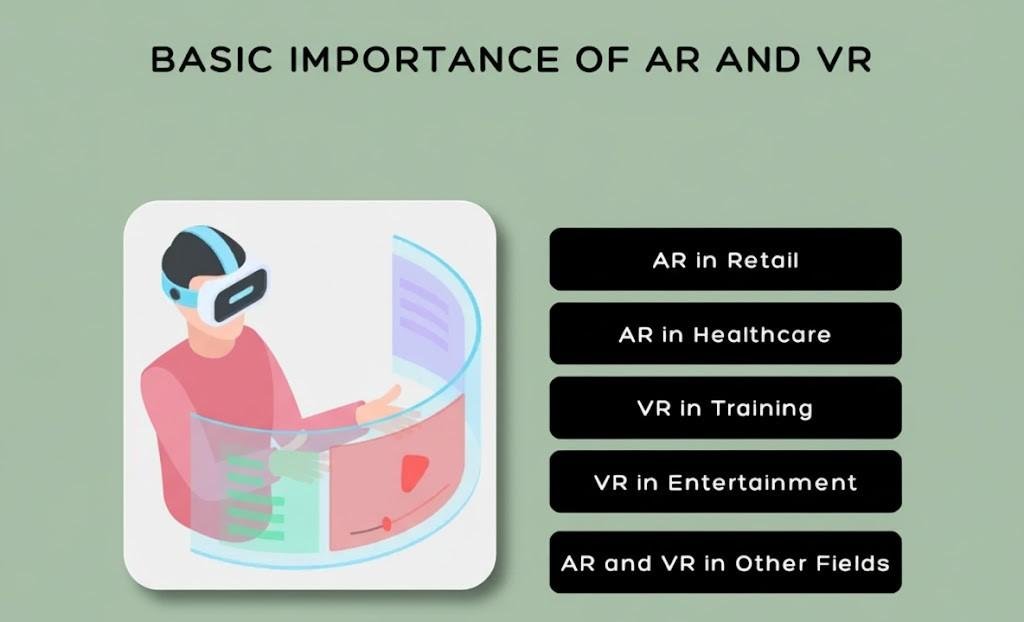
AR overlays digital information onto the physical world through smartphones or specialized glasses. IKEA’s Place app lets customers visualize furniture in their homes before purchasing, reducing return rates by 35%. Industrial companies use AR for maintenance training, projecting repair instructions directly onto equipment.
13. Virtual Reality (VR)
Immersive VR environments create engaging training simulations and virtual showrooms. Walmart trained over one million employees using VR scenarios for Black Friday preparation and active shooter response, improving knowledge retention by 75% compared to traditional training methods.
14. Conversational AI
Sophisticated chatbots handle complex multi-turn conversations with natural language understanding. Bank of America’s Erica virtual assistant has handled over 1.5 billion customer requests, resolving 90% of inquiries without human intervention while maintaining high satisfaction scores. By 2026, agentic AI has gone beyond just extraction. 70% of businesses now use Intelligent Document Processing to manage their entire workflow, cutting the time it takes to process an invoice from weeks to less than three days.
15. Blockchain and Distributed Ledgers
Blockchain creates tamper-proof transaction records without central authorities. Walmart tracks food supply chains using blockchain, tracing produce from farm to shelf in 2.2 seconds versus seven days previously, dramatically improving food safety response times.
16. Zero Trust Security Architecture
Modern security frameworks assume breach and verify every access request regardless of source. Companies implementing zero trust reduce data breach costs by 43% on average while enabling secure remote work at scale.
Read more: Top 5 Electric Bikes For Daily Commuting
17. Data Fabric Architecture
Unified data management platforms connect disparate systems, providing single-pane-of-glass visibility across the organization. Enterprises reduce data integration costs by 70% while accelerating analytics projects from months to weeks.
18. IoT Sensor Networks
Connected devices monitor equipment health, environmental conditions, and resource consumption in real-time. Smart buildings reduce energy costs by 30% through IoT-driven optimization of heating, cooling, and lighting based on occupancy patterns and weather forecasts.
19. Digital Twins
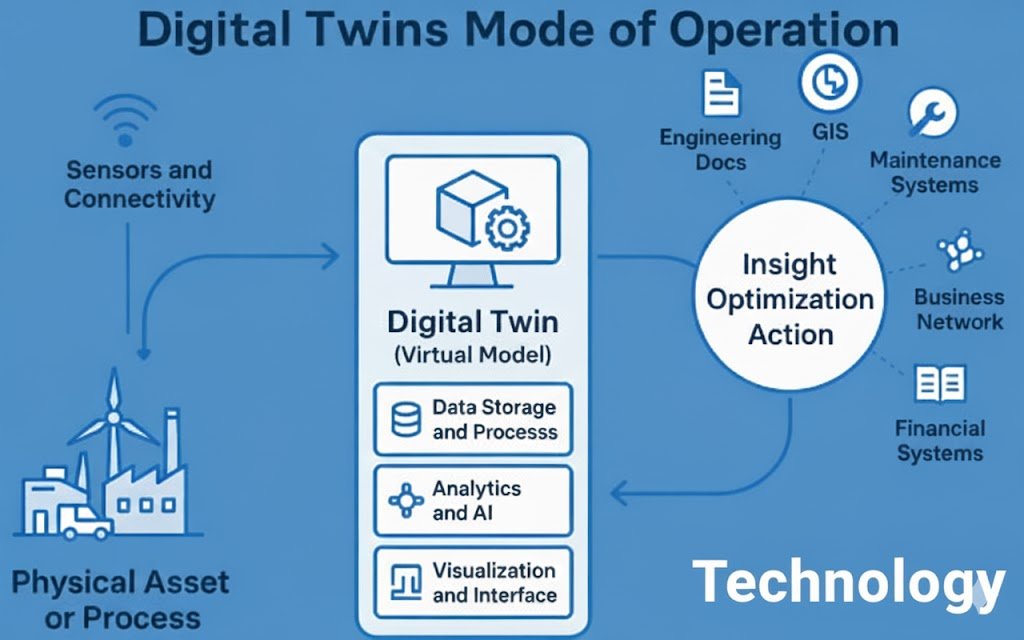
Virtual replicas of physical assets simulate performance under various conditions. Siemens creates digital twins of power plants to test maintenance scenarios virtually, reducing unplanned downtime by 50% and extending equipment lifespan by 20%.
20. Smart Energy Management
AI-powered systems optimize energy consumption across operations. Google’s DeepMind reduced data center cooling costs by 40% through machine learning algorithms that predict optimal cooling configurations based on weather, server load, and efficiency metrics.
21. Brain-Computer Interfaces
Neural interfaces enable direct communication between brains and computers. While consumer applications remain limited, early medical applications help paralyzed patients control prosthetic limbs and communication devices through thought alone, opening possibilities for hands-free business applications.
Read more: Top 5 Electric Scooters for Urban Commuters
22. Synthetic Biology
Engineered biological systems produce materials, chemicals, and pharmaceuticals more sustainably. Modern Meadow grows leather in laboratories without animals, while Ginkgo Bioworks engineers microorganisms that produce fragrances, flavors, and industrial chemicals at scale.

23. Nanotechnology
Molecular-scale engineering creates materials with revolutionary properties. Nanocoatings make surfaces self-cleaning and antimicrobial, reducing maintenance costs in healthcare facilities by 60% while improving infection control.
24. 3D Printing at Scale
Additive manufacturing produces complex parts on-demand without tooling costs. Aerospace companies print jet engine components that are 55% lighter than traditional parts while maintaining strength, reducing fuel consumption and carbon emissions.
25. Neuromorphic Computing
Chips designed to mimic brain architecture process certain tasks with 1,000 times greater energy efficiency than traditional processors. Intel’s Loihi chip enables always-on AI processing in edge devices, from security cameras to robotic systems, without draining batteries.
Strategic Implementation Framework
Organizations succeeding with technology innovations driving business growth follow proven implementation patterns. The table below outlines critical success factors versus possible risk:
| Success Factor | Possible Risk |
|---|---|
| Clear business objectives tied to specific metrics | Implementing technology for technology’s sake |
| Executive sponsorship with dedicated budgets | Underfunded pilot programs without scale pathways |
| Cross-functional teams including IT and business units | Siloed implementation without operational input |
| Phased rollout with measurable milestones | Big-bang deployments without testing |
| Continuous training and change management | Assuming adoption without supporting culture shift |
| Integration with existing workflows | Creating disconnected parallel systems |
Real-World Implementation: Case Studies
Examining how industry leaders successfully integrate advanced technologies to achieve measurable, transformative results in productivity, quality, and growth.
Manufacturing Excellence Through Convergence
Siemens’ Amberg Electronics Plant demonstrates how combining multiple technology innovations driving business growth creates compound effects. The facility produces one unit per second with 99.99885% quality through integrated systems. IoT sensors monitor 1,500 production parameters continuously while digital twins simulate production changes before implementation.
Predictive analytics schedule maintenance during optimal windows, and autonomous robots handle material movement. This convergence approach increased productivity by 1,400% since 1989 while keeping the workforce stable, proving that automation augments rather than replaces skilled workers when implemented strategically.
Financial Services Transformation
Goldman Sachs evolved from traditional investment banking to a technology-driven financial institution by embracing platforms and automation. The firm’s Marcus digital banking platform, built on cloud infrastructure with AI-powered risk assessment, attracted $110 billion in deposits within five years.
Automated trading systems execute thousands of transactions per second with AI models analyzing market sentiment from news, social media, and economic indicators simultaneously.
Read more: Wi-Fi 6 Vs. Wi-Fi 5: What are the differences?
Investment Priorities by Business Size
Different organizations require tailored approaches based on resources and maturity levels:
| Business Stage | Primary Focus Areas | Expected Timeline | ROI Expectations |
|---|---|---|---|
| Startups (1-50 employees) | Cloud infrastructure, automation tools, generative AI for content/code | 3-6 months | 200-400% within first year |
| Mid-Market (51-1000 employees) | Advanced analytics, RPA, customer personalization, IoT monitoring | 6-12 months | 150-300% within 18 months |
| Enterprise (1000+ employees) | Digital twins, edge computing, blockchain integration, quantum preparation | 12-24 months | 100-200% within 2-3 years |
Measuring Impact and ROI
Successful implementations of technology innovations driving business growth require disciplined measurement frameworks:
Efficiency Metrics
- Process automation saves 4-8 hours per employee weekly on average, translating to 15-30% productivity gains
- Predictive maintenance reduces equipment downtime by 30-50% while extending asset life 20-40%
- Intelligent routing and optimization algorithms cut logistics costs 10-25%
Customer Metrics
- Conversational AI resolves 70-90% of routine inquiries instantly, improving satisfaction scores
- AR/VR experiences increase engagement time 3-5x compared to traditional digital content
- Hyper-personalization reduces churn rates 15-25% in subscription businesses
Future-Proofing Your Organization
The competitive landscape will increasingly favor organizations that approach technology innovations driving business growth strategically rather than reactively. Three principles guide sustainable digital transformation:
Composable Architecture: Building systems from interchangeable components allows rapid adaptation as technologies evolve. Rather than monolithic platforms requiring years-long replacement cycles, composable approaches swap individual capabilities quarterly.
Continuous Learning Culture: Organizations investing 3-5% of employee time in technical skill development report 2.5x higher innovation rates than industry peers. Creating internal academies, hackathons, and experimentation time produces compounding advantages.
Ethical Frameworks: As AI systems make more decisions, transparent governance around data privacy, algorithmic bias, and accountability builds trust with customers and regulators. Companies with mature AI ethics programs face 40% fewer compliance issues and reputation crises.
The Compounding Effect
These 25 innovations rarely deliver maximum value in isolation. The most successful organizations identify synergies where combining technologies creates multiplicative rather than additive benefits. When edge computing enables real-time analytics from IoT sensors, feeding predictive models that optimize automated systems, the compound effect exceeds any single investment.
The democratization of advanced technologies through cloud platforms, open-source communities, and accessible APIs means organizations of any size can compete on innovation rather than just capital.
FAQs About Technology Innovations Driving Business Growth
These frequently asked questions address common concerns about implementing modern technologies, measuring returns, and overcoming adoption challenges to help organizations make informed strategic decisions.
1. What technologies are driving business growth in 2025?
Edge computing, generative AI, quantum computing, 5G networks, blockchain, IoT sensors, digital twins, RPA, and predictive analytics lead current business transformation initiatives.
2. How does edge computing improve business operations?
Edge computing processes data locally, reducing latency to microseconds. This enables real-time decisions for manufacturing, retail security, and autonomous systems with improved efficiency.
3. What ROI can businesses expect from AI implementation?
Startups see 200-400% ROI within one year, mid-market companies achieve 150-300% in 18 months, enterprises gain 100-200% within 2-3 years. These high levels of profitability are possible due to the automation of processes, reduction in cost structure, improved customer service, increased efficiency among employees, and decision-making informed by data.
4. Which industries benefit most from digital twins?
Manufacturing, energy, aerospace, and healthcare gain significantly. Digital twins reduce downtime by 50%, extend equipment lifespan 20%, and optimize maintenance scheduling.
5. How does 5G technology impact manufacturing?
5G enables real-time coordination of thousands of IoT sensors, supporting predictive maintenance and autonomous robotics, increasing production efficiency by up to 65%.
6. What is the difference between AI and generative AI?
Traditional AI analyzes and predicts; generative AI creates new content including text, code, images, and designs, enabling personalized marketing and automated development.
7. How does blockchain improve supply chain management?
Blockchain creates tamper-proof transaction records, enabling product tracing in seconds versus days. This improves food safety, reduces fraud, and ensures authenticity.
8. What are the main barriers to technology adoption?
Insufficient budgets, lack of executive sponsorship, inadequate training, resistance to change, integration challenges with legacy systems, and unclear ROI measurement frameworks.
9. How does RPA differ from traditional automation?
RPA automates digital tasks through software robots that mimic human actions across applications, requiring no infrastructure changes. Traditional automation requires custom coding.
10. What security challenges do new technologies introduce?
The introduction of new technology is a bit risky because more entry points and exposure to sensitive information result. Organizations must embrace these defense mechanisms to ensure compliance and keep out any potential threats. The mechanisms include expanded attack surfaces from IoT devices, data privacy concerns with AI, quantum threats to encryption, and insider risks, which may require zero-trust architectures.
11. Can small businesses afford advanced technologies?
Yes. Cloud platforms, SaaS models, and open-source tools democratize access. Small businesses can implement AI, analytics, and automation affordably with subscription-based pricing.
12. How long does technology implementation typically take?
Startups implement in 3-6 months, mid-market companies need 6-12 months, enterprises require 12-24 months depending on complexity and organizational readiness factors. Proper stakeholder training, ongoing change management and basic data migration planning are necessary to avoid common deployment delays, and to ensure long-term user adoption.
13. What is hyper-personalization and why does it matter?
Hyper-personalization uses AI to create individualized customer experiences based on behavior and preferences, increasing conversion rates 10-30% and reducing churn significantly. Companies can use real-time data analytics, machine learning algorithms and predictive modeling to provide personalized content and product recommendations, leading to a significant increase in customer engagement, loyalty and ROI.
14. How does predictive analytics drive revenue growth?
Predictive analytics forecasts demand, optimizes pricing, identifies high-value leads, and prevents churn, improving decision accuracy to 95% while reducing waste substantially.
15. What skills do employees need for digital transformation?
Data literacy, AI prompt engineering, automation workflow design, cybersecurity awareness, analytical thinking, adaptability, and continuous learning mindsets are essential for success. These competencies enable teams to harness cloud technologies, promote data-informed decision-making, and excel in agile, technology-driven business environments.
Related Contents:
- Top 10 Most Affordable Electric Vehicles
- Top 5 Electric Bikes For Daily Commuting
- 5G Network: Everything You Need to Know
- Top 5 Electric Scooters for Urban Commuters
- Wi-Fi 6 Vs. Wi-Fi 5: What are the differences?
- Understanding V2X Technology in Autonomous Driving
- Autonomous Vehicle Technology Trends: AI, Sensors & Hardware
- Autonomous Vehicle Safety & Testing Protocols